
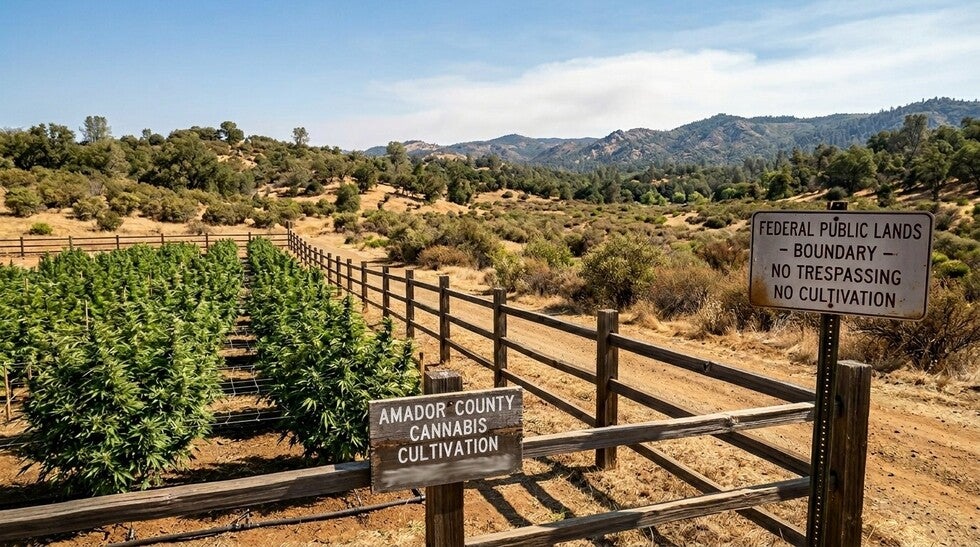
Cannabis Cultivation in Amador County can be legal, unlawful, or federally risky depending on the exact location, plant count, purpose, licensing status, local ordinance, and whether the conduct occurred on private land, unincorporated county land, incorporated city land, or federal land. California allows limited adult personal cultivation, but that does not mean every grow operation is protected from prosecution.
Under Health and Safety Code § 11358, unlawful cannabis cultivation can still lead to criminal charges. Related allegations may include possession for sale under HS § 11359, transportation or sale under HS § 11360, environmental violations, tax issues, child endangerment, firearms allegations, or federal drug charges. The defense must begin with the facts: how many plants, where they were located, who controlled the property, whether there was commercial activity, and whether the accused had a lawful basis to grow.
What Cannabis Cultivation in Amador County means under HS § 11358
HS § 11358 generally applies when a person unlawfully plants, cultivates, harvests, dries, or processes cannabis. After Proposition 64, adults 21 and older may generally cultivate up to six living cannabis plants for personal use under California law, subject to state and local rules. Cultivation beyond that limit can be charged as a misdemeanor in many cases, but felony exposure may arise in specific statutory circumstances, such as certain serious priors, repeat cultivation convictions, or environmental damage allegations.
Prosecutors may examine:
- Number of plants.
- Whether the plants were for personal use or sale.
- Whether the grow was indoors, outdoors, or in an accessory structure.
- Whether the plants were visible from a public place.
- Whether the location was locked and secure.
- Whether commercial licensing existed.
- Whether pesticides, water diversion, waste, or habitat damage were alleged.
- Whether the grow occurred on federal land.
County-specific cannabis defense can vary. A case involving cannabis charges under HS § 11358 and HS § 11359 in a rural cultivation county may raise similar plant-count, sales, and environmental issues, but Amador County's local ordinance and federal land boundaries require their own analysis.
Personal cultivation and the six-plant rule
California law generally permits adults 21 and older to cultivate up to six living cannabis plants for personal use per private residence, not per adult. The plants must be kept consistent with state and local requirements, commonly including rules about visibility, locked space, and access by minors.
Personal cultivation becomes risky when:
- More than six plants are present at one residence.
- Plants are grown outdoors where local rules prohibit or restrict outdoor cultivation.
- The grow appears connected to sales.
- Multiple adults claim separate six-plant allowances at the same residence.
- Plants are accessible to minors.
- Electricity, water, pesticides, or structural modifications create safety issues.
- The property is rented and cultivation violates lease terms or local rules.
In a criminal case, plant count is not always simple. Officers may count immature plants, clones, dead plants, or plants belonging to different people. The defense should examine photographs, bodycam footage, reports, plant condition, location, and whether the prosecution can prove the accused knowingly controlled the plants.
Amador County ordinance and local compliance
Amador County's local cannabis rules are an essential part of the defense. In unincorporated Amador County, local law has historically restricted commercial cannabis activity and limited personal cultivation to narrow circumstances. Incorporated cities may have their own rules, so the exact location matters.
A local ordinance violation does not always equal a criminal cultivation offense. Some local rules may create nuisance, abatement, permit, zoning, cost-recovery, or administrative consequences. But local noncompliance can still influence a criminal investigation if officers believe the grow exceeded personal-use limits, involved sales, created environmental harm, or violated a court or probation condition.
Defense review should include:
- Whether the property was inside unincorporated Amador County or an incorporated city.
- The zoning status of the property.
- Whether cultivation was indoors or outdoors.
- Whether the grow was inside a private residence or enclosed accessory structure.
- Whether the property owner, tenant, or another person controlled the plants.
- Whether local enforcement treated the issue as nuisance abatement or criminal conduct.
- Whether officers had a valid warrant or lawful exception to enter the property.
Local compliance documents, landlord communications, photographs, receipts, and county notices should be preserved immediately.
Commercial cultivation and DCC licensing
Commercial cannabis cultivation in California requires a valid license from the Department of Cannabis Control. The type of license depends on the activity, canopy size, lighting, nursery work, processing, and other operational details. A business may also need local authorization before it can lawfully operate.
The older term “CDFA licensing” still appears in some cannabis discussions because cultivation licensing used to be handled separately, but California now centralizes commercial cannabis licensing through the DCC. A defense should correct that issue immediately if a police report, business record, or witness statement uses outdated terminology in a way that creates confusion.
Commercial cultivation cases may involve:
- No DCC license.
- Expired or wrong license type.
- No local authorization.
- Unreported canopy expansion.
- Illegal processing, packaging, or distribution.
- Sales evidence under HS § 11359 or HS § 11360.
- Tax, track-and-trace, or inventory problems.
- Environmental enforcement.
The defense should distinguish a paperwork or compliance problem from criminal intent. Good-faith licensing efforts, pending applications, consultant errors, misunderstanding of local rules, or disputed control over the site may all matter.
Federal land boundary and Eldorado National Forest risk
California legalization does not protect cannabis cultivation on federal land. Cannabis activity on federal land can trigger federal investigation even when similar conduct might be treated differently under California law. In Amador County, the boundary between private property, county-regulated land, and federal land near Eldorado National Forest can be critical.
A backcountry cultivation case should begin with location proof. Maps, GPS coordinates, parcel records, trail access points, Forest Service information, photographs, and agency reports may determine whether the case belongs in state court, federal court, or both.
Federal land cases may involve:
- Controlled Substances Act charges.
- Environmental damage allegations.
- Firearms enhancements or prohibited-person issues.
- Water diversion or pesticide allegations.
- Public land trespass or resource damage claims.
- Federal search warrants and federal agents.
Federal marijuana policy has changed in limited ways, especially for some medical and licensed products, but federal changes do not mean adult-use cultivation is fully legal under federal law. The defense should evaluate federal marijuana rescheduling carefully before assuming it protects a cultivation site, business plan, or immigration status.
Possession for sale and transportation allegations
Cultivation cases often become more serious when prosecutors allege sales. HS § 11359 covers possession of cannabis for sale, and HS § 11360 can apply to unlawful sale, transport for sale, furnishing, or related conduct. These charges depend on more than plant count alone.
Sales indicators may include:
- Packaging materials.
- Scales and ledgers.
- Large amounts of cash.
- Messages suggesting sales.
- Multiple harvest cycles.
- Customer lists or delivery routes.
- Evidence of distribution beyond personal use.
The defense may argue that the cannabis was for lawful personal use, medical use, shared household use, or noncommercial purposes. In other cases, the issue may be whether the accused actually controlled the grow or whether someone else used the property without permission.
Immigration risks for H-2A, winery, and agricultural workers
Noncitizens should treat cannabis cases with extreme caution. Cannabis may be legal in California in certain circumstances, but it can still create immigration problems because federal immigration law continues to treat many cannabis-related activities as controlled-substance issues.
For H-2A workers, winery employees, agricultural workers, green card holders, visa holders, DACA recipients, and people seeking immigration benefits, cannabis employment or a cannabis conviction can create serious consequences. A person pursuing a family-based immigration petition should not assume that state legality eliminates federal immigration risk.
Immigration concerns may include inadmissibility, removability, naturalization problems, visa renewal issues, employment eligibility, and future discretionary findings. Public debates about California immigration policies do not change the federal analysis in a criminal or immigration proceeding.
Dismissals, immigration paperwork, and judicial review
A dismissal, diversion result, or reduced charge can help, but immigration paperwork must be handled carefully. Some immigration forms ask about arrests, citations, charges, or conduct, not only convictions. A person with a dismissed cannabis case should get advice before answering questions too narrowly or too broadly.
Questions about dismissed charges in immigration paperwork are especially important in cannabis cases because immigration agencies may focus on admissions, conduct, employment, or controlled-substance involvement even when the criminal court result appears favorable.
If immigration authorities rely on a cannabis case to deny relief, detain a person, or start removal proceedings, judicial review in immigration cases may be limited and deadline-driven. Criminal defense and immigration strategy should be coordinated before any plea, admission, or application is filed.
Travel, federal facilities, and reentry concerns
Cannabis cases can also affect travel and federal enforcement. A person involved in cannabis cultivation, transportation, or business activity may face questions at ports of entry, airports, border crossings, or federal facilities. Immigration and customs rules can treat controlled-substance activity harshly even when California law allows some cannabis conduct.
The rules involving immigration penalties and clearance restrictions show why transportation, travel, and federal documentation issues should be reviewed when cannabis activity intersects with immigration status or commercial movement.
For a person with a prior removal order, unlawful reentry history, or federal immigration exposure, cannabis allegations can make the situation more serious. A case involving federal immigration charges under 8 U.S.C. § 1326 illustrates how criminal and immigration systems can overlap when federal prosecutors become involved.
Where Cannabis Cultivation in Amador County cases are handled
State cannabis cases in Amador County are generally handled at the Superior Court of California, County of Amador, located at 500 Argonaut Lane, Jackson, CA 95642. Defendants should rely on court notices, attorney instructions, and official court communications for hearing dates, courtroom assignments, and appearance requirements.
A cannabis case may involve arraignment, discovery, search warrant review, bodycam footage, plant-count evidence, DCC licensing records, local ordinance documents, environmental reports, negotiations, motions to suppress, preliminary hearing in felony cases, and trial.
If the case involves federal land, federal agencies, or federal immigration consequences, the defense must also consider whether federal court, federal forfeiture, immigration court, or agency proceedings may become part of the larger strategy.
Defenses to Cannabis Cultivation in Amador County charges
Cannabis cultivation defense depends on the statute, property, location, plant count, licensing status, and intent evidence. A case may be defensible because the cultivation was lawful, because the accused did not control the plants, because the search was illegal, or because prosecutors overcharged a local compliance issue as a criminal case.
Potential defenses include:
- Personal cultivation within the legal limit.
- No knowledge or control over the plants.
- Incorrect plant count.
- Plants attributed to the wrong person.
- Invalid search warrant or unlawful entry.
- No evidence of sales or commercial intent.
- Good-faith compliance with licensing or local rules.
- Case is a local nuisance issue, not a criminal cultivation offense.
- Location was misidentified as federal or private land.
- Environmental allegations are unsupported or exaggerated.
The defense should also evaluate immigration consequences, employment impact, property forfeiture risk, probation status, firearm issues, and whether a negotiated outcome can avoid the most damaging long-term consequences.
What to do after a cannabis cultivation arrest in Amador County
After a cannabis cultivation arrest or search, do not explain plant counts, ownership, sales, licensing, water use, pesticides, or immigration status without legal advice. Statements made at the scene can become the strongest evidence in the case.
Important steps include:
- Invoke the right to remain silent.
- Do not consent to additional searches.
- Preserve warrants, notices, citations, and court papers.
- Save DCC applications, licenses, renewals, and compliance records.
- Preserve local ordinance communications or county notices.
- Identify the exact property, parcel, and GPS location.
- Save lease, ownership, access, or permission documents.
- For noncitizens, obtain immigration-aware criminal defense before any plea.
Early defense work can protect search challenges, licensing evidence, federal land analysis, immigration strategy, and the difference between a compliance problem and a criminal conviction.
Cannabis Cultivation in Amador County lawyers in California
Cannabis Cultivation in Amador County requires careful review of HS § 11358, HS § 11359, HS § 11360, Amador County's local ordinance, DCC licensing, plant counts, personal-use rules, federal land boundaries, immigration consequences, and search warrant evidence.
Bulldog Law defends California cannabis cases involving unlawful cultivation, possession for sale, transportation allegations, federal land issues, search challenges, immigration-sensitive pleas, licensing records, and property-based defenses. If you or your business is facing a cannabis cultivation investigation in Amador County, legal strategy should begin before statements are made, plant counts are accepted, or federal and immigration consequences are overlooked.