
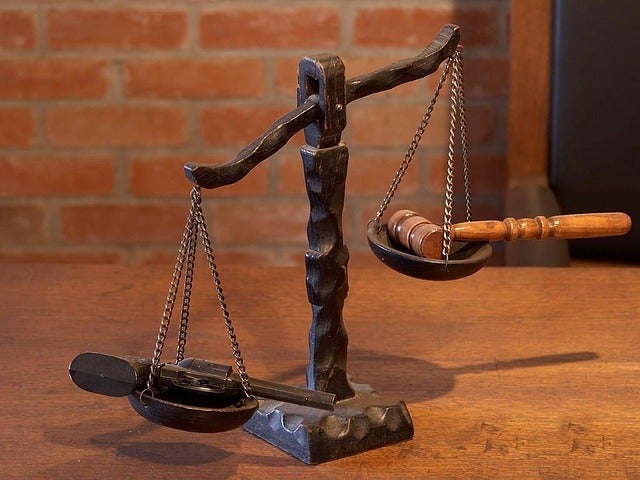
Being charged with brandishing a weapon can feel overwhelming, especially when the circumstances surrounding the incident are more complex than the police report suggests. California Penal Code Section 417 criminalizes displaying weapons in a threatening manner, but the law contains nuances and defenses that can make a significant difference in the outcome of your case. Understanding these legal complexities is essential for anyone facing these serious allegations.
What Does California Law Define as Brandishing?
Brandishing charges arise when someone displays a weapon in front of another person in a manner that appears rude, angry, or threatening. The law distinguishes between firearms and other deadly weapons, creating different penalty structures depending on what type of weapon was involved and where the incident occurred.
The prosecution must prove several specific elements beyond a reasonable doubt. First, they must establish that you actually drew or exhibited a weapon. Simply possessing a weapon is not enough. The weapon must have been displayed or shown to another person in some manner that made it visible.
Second, prosecutors must prove that you did so in the presence of another person. This requirement means that brandishing in complete isolation, where no one else could see the weapon, does not violate the statute. The law aims to protect people from feeling threatened or intimidated by weapon displays, so the presence of another person becomes a crucial element.
Third, the manner of display must be rude, angry, or threatening. This subjective element often becomes the focal point of defense strategies. What one person perceives as threatening, another might view as innocuous. Context matters enormously in evaluating whether the manner of display meets this legal standard.
Alternatively, the prosecution can prove brandishing by showing that you unlawfully used a weapon in a fight or quarrel. This provision captures situations where the weapon was not merely displayed but actually deployed during a confrontation, even if no one was injured.
Understanding the Different Penalty Structures
The penalties for brandishing vary significantly based on several factors, including the type of weapon involved, where the incident occurred, and who was present. These distinctions create a complex penalty framework that requires careful analysis.
For brandishing a deadly weapon other than a firearm, the offense is a misdemeanor carrying a mandatory minimum sentence of 30 days in county jail. Courts have discretion to impose longer sentences, but the law requires at least this minimum period of incarceration upon conviction.
When the weapon is a firearm, penalties escalate. If the incident occurred in a public place and involved a concealable firearm like a pistol or revolver, the mandatory minimum increases to three months in county jail, with a maximum of one year. Fines up to one thousand dollars may also be imposed. For firearm brandishing cases that do not involve public places or concealable weapons, the mandatory minimum remains three months, but the maximum sentence depends on judicial discretion within misdemeanor sentencing guidelines.
Certain locations and circumstances trigger even more severe penalties. Brandishing a loaded firearm on the grounds of a daycare center or facility serving minors can result in felony charges, with potential state prison sentences ranging from 16 months to three years. This enhancement reflects the legislature's strong interest in protecting children from exposure to weapons and violence.
Brandishing a firearm in front of a peace officer who is engaged in their duties carries particularly harsh consequences. If you knew or reasonably should have known the person was an officer performing their duties, the mandatory minimum jumps to nine months in county jail, with a maximum of one year. Alternatively, prosecutors can charge this as a felony with potential state prison time of 16 months to three years.
The Critical Importance of Self Defense
The single most important exception to brandishing laws involves self defense. California law explicitly exempts actions taken in self defense from criminal liability under Section 417. Understanding when and how self defense applies can provide a complete defense to brandishing charges.
Self defense requires several elements. First, you must have reasonably believed that you were in imminent danger of suffering bodily injury or being touched unlawfully. This belief must be objectively reasonable, meaning that a reasonable person in the same situation would have shared your perception of danger.
Second, you must have reasonably believed that the immediate use of force was necessary to defend against that danger. This element focuses on necessity and timing. If you had safe alternatives to displaying a weapon, such as retreating or calling for help, the self defense claim becomes more difficult to establish.
Third, you must have used no more force than was reasonably necessary to defend against the danger. This proportionality requirement means that your response should match the level of threat you faced. Displaying a weapon in response to a minor insult or verbal altercation typically exceeds what is reasonably necessary.
Defense attorneys carefully reconstruct the circumstances surrounding the incident to demonstrate that your actions fit within these self defense parameters. Witness statements, physical evidence, and your own account of events all contribute to building a compelling self defense narrative. In many cases, what police initially characterized as criminal brandishing was actually a lawful defensive display in response to a genuine threat.
Defending Against Allegations of Threatening Manner
One of the most contestable elements in brandishing cases involves whether the manner of display was actually rude, angry, or threatening. Prosecutors must prove this subjective element beyond a reasonable doubt, creating significant opportunities for defense counsel to raise questions and create doubt.
Consider situations where someone legally carrying a firearm accidentally exposed it while reaching for something else. The weapon became visible to others, but there was nothing rude, angry, or threatening about the manner of display. Similarly, lawful gun owners sometimes adjust their carry position for comfort or safety without any intent to threaten or intimidate anyone.
Defense attorneys examine the specific circumstances to determine whether your actions truly exhibited the threatening quality the statute requires. Was there any verbal threat accompanying the weapon display? What was your facial expression and body language? Did you point the weapon at anyone or simply expose it? These factual details can distinguish between criminal brandishing and innocent conduct.
Witness credibility also plays a crucial role. Sometimes alleged victims exaggerate their fear or mischaracterize innocent actions as threatening. Defense counsel investigates whether witnesses have biases, ulterior motives, or reasons to fabricate or embellish their accounts. Inconsistencies between different witnesses or between witness statements and physical evidence can create reasonable doubt about whether the manner of display was actually threatening.
The Question of What Constitutes a Deadly Weapon
Brandishing charges require proof that the item displayed was actually a deadly weapon. For firearms, this element is straightforward. But for other objects, whether something qualifies as a deadly weapon becomes a factual question that defense attorneys can challenge.
California law defines deadly weapons as objects inherently deadly or dangerous, or objects used in a manner likely to produce death or great bodily injury. Knives, clubs, and similar objects clearly fall within this definition. But what about pocket knives, tools, or everyday objects that could theoretically cause harm?
Defense counsel can argue that the object in question does not meet the legal definition of a deadly weapon. A small folding knife with a short blade, for example, might not qualify depending on how it was displayed and used. Similarly, objects designed for legitimate purposes like work tools may not be deadly weapons unless used in a manner demonstrating dangerous intent.
This defense strategy requires careful analysis of case law defining deadly weapons in various contexts. Courts consider factors like the size and design of the object, how it was used, and whether it was capable of inflicting serious injury under the circumstances. Successful arguments that an object was not a deadly weapon can result in charge reductions or dismissals.
Challenging the Presence of Another Person Element
The statute requires that brandishing occur in the presence of another person. While this might seem like a simple element, defense attorneys can sometimes challenge whether it was actually satisfied under the specific facts of a case.
If the alleged incident occurred in circumstances where no one else was actually present to witness the weapon display, the prosecution cannot prove this essential element. Sometimes police reports assume another person was present based on statements that turn out to be inaccurate upon investigation.
Defense counsel also examines whether the person allegedly present actually saw the weapon. If someone was nearby but had their back turned, was looking at their phone, or was otherwise not in a position to observe the weapon, the presence element may not be satisfied. The statute aims to punish weapon displays that create fear or intimidation in others, which cannot occur if no one actually witnessed the display.
Special Considerations for Enhanced Penalty Situations
Certain circumstances trigger enhanced penalties that can transform a relatively minor misdemeanor into a serious felony charge. Understanding these enhancements and how to defend against them becomes critical in specific situations.
The daycare and youth facility enhancement applies only when the weapon is a loaded firearm and the incident occurs during operating hours on the grounds of a covered facility. Defense strategies might include demonstrating that the firearm was not actually loaded, that the location does not qualify as a covered facility under the statute, or that the incident occurred outside operating hours.
For enhanced penalties involving peace officers, the prosecution must prove that you knew or reasonably should have known the person was an officer engaged in their duties. If the officer was not in uniform, did not identify themselves, or was not actually engaged in law enforcement duties at the time, the enhancement may not apply. Defense counsel carefully examines whether the officer's identity and purpose were clear under the circumstances.
The Role of Intent in Brandishing Cases
While the statute does not explicitly require specific intent, the circumstances surrounding weapon displays often reveal important information about your state of mind that can influence the case outcome. Defense attorneys explore whether you intended to threaten anyone or whether the weapon display was accidental, reflexive, or taken for legitimate defensive reasons.
Some weapon displays occur during heated arguments where emotions run high. While these situations may involve rude or angry manner, defense counsel can demonstrate that you did not intend to threaten violence but rather to deescalate or protect yourself. The distinction between displaying a weapon as a threat versus displaying it as a deterrent can be subtle but legally significant.
Other cases involve momentary loss of judgment or mistakes. Perhaps you gestured while holding an object, forgetting that you had a knife or tool in your hand. These situations, while technically meeting some elements of the statute, may warrant leniency through plea negotiations or alternative sentencing arrangements.
Constitutional Challenges and Second Amendment Considerations
California's brandishing laws must operate within constitutional limits, including Second Amendment protections for gun ownership and carry rights. While courts have generally upheld brandishing statutes as reasonable regulations that do not infringe on core Second Amendment rights, specific applications of these laws can raise constitutional concerns that defense counsel should explore.
If police arrested you while you were lawfully carrying a firearm and the weapon only became visible during lawful activity, constitutional arguments may support your defense. California recognizes rights to possess and carry firearms in certain circumstances, and those rights cannot be effectively nullified by overly broad application of brandishing laws.
Defense attorneys also examine whether enforcement of brandishing laws was pretextual or discriminatory. If similarly situated individuals were treated differently, or if your prosecution appears motivated by factors unrelated to public safety, constitutional equal protection principles may provide grounds for challenging the charges.
How Previous Convictions Affect Your Case
Unlike some California statutes that impose mandatory enhanced penalties for repeat offenders, Section 417 does not contain explicit provisions escalating punishment based on prior convictions. However, previous criminal history can still influence your case in several ways that defense counsel must address strategically.
Prosecutors may take a harder line in plea negotiations if you have prior convictions, particularly for weapons offenses or violent crimes. Judges may impose sentences at the higher end of the allowed range if your record suggests a pattern of similar conduct. Probation eligibility and terms may be affected by criminal history.
Defense attorneys work to contextualize any prior convictions, explaining circumstances, demonstrating rehabilitation, and arguing that past mistakes should not automatically dictate harsh outcomes in the current case. In some situations, previous convictions may be so old or unrelated that they should carry little weight in sentencing decisions.
Protecting Your Rights and Your Future
Brandishing charges threaten not only immediate criminal penalties but also long term consequences affecting your right to possess firearms, your employment prospects, and your reputation. A conviction can result in loss of gun rights under both California and federal law, creating permanent barriers to firearm ownership even for misdemeanor convictions.
Professional licenses may be jeopardized by weapons convictions, particularly in fields involving work with vulnerable populations or positions of trust. For more on licensing boards and criminal history, see California Specialized Licensing Boards.
Immigration consequences can also arise for non citizens, as weapons offenses may be considered crimes involving moral turpitude or aggravated felonies depending on the specific circumstances. Learn more here: Deportation Consequences of Criminal Convictions.
Working with experienced criminal defense counsel provides the best opportunity to minimize or avoid these consequences. Attorneys can negotiate for reduced charges that carry fewer collateral consequences, secure diversion programs that allow for dismissal upon completion, or win acquittals at trial by demonstrating that the prosecution cannot prove every element beyond a reasonable doubt. For a plain-English primer on evidentiary burdens, see Burden of Proof.
Why Immediate Legal Representation Matters
Brandishing cases often involve limited physical evidence, with outcomes depending heavily on witness testimony and interpretation of ambiguous circumstances. The earlier defense counsel becomes involved, the better positioned they are to investigate the scene, interview witnesses, and develop evidence supporting your version of events.
Police reports in brandishing cases frequently contain conclusions about your intent or manner of display that are not supported by objective evidence. Defense attorneys challenge these characterizations by uncovering facts that police overlooked or witnesses that police never interviewed. This investigative work becomes much more difficult as time passes and memories fade.
If you face charges under California Penal Code Section 417, consulting with knowledgeable defense counsel should be your first priority. The right legal team can evaluate your specific circumstances, identify available defenses, and develop a comprehensive strategy aimed at protecting your rights and achieving the best possible outcome in your case.