
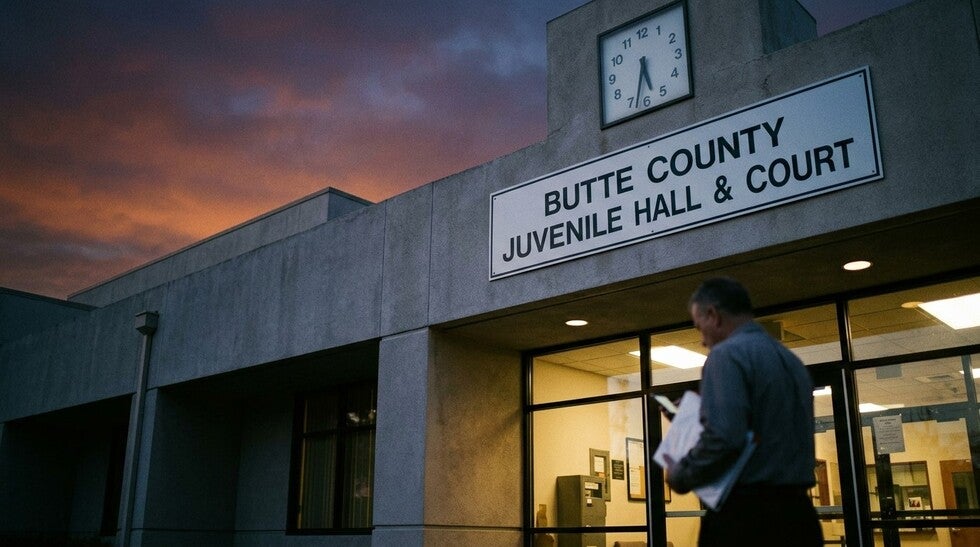
Juvenile Charges in Butte County can change quickly in the first 48 hours after a minor is cited, arrested, taken to juvenile hall, or contacted by probation. Those first decisions can affect whether the child goes home, whether a petition is filed under Welfare and Institutions Code section 602, whether the case stays informal, whether school discipline begins, and whether the family preserves evidence before it disappears.
California juvenile court is not the same as adult criminal court. The language is different, the goals include rehabilitation, and the record rules are different. But families should not mistake “juvenile” for “minor consequence.” A sustained petition can affect school, immigration, scholarships, sports, military options, licensing, employment, driving privileges, and future court exposure.
Juvenile Charges in Butte County under W&I § 602
Welfare and Institutions Code section 602 gives the juvenile court jurisdiction over many cases where a minor is accused of violating California law, federal law, or a local ordinance that would be a crime if committed by an adult. Most W&I § 602 cases involve youth between 12 and 17, although very serious allegations involving younger children require separate legal analysis.
A juvenile case does not usually result in an adult conviction. Instead, the court may decide whether the petition is “sustained.” If the court finds the allegations true, the minor may be declared a ward of the court and placed under court supervision, probation, home supervision, a program, placement, or detention depending on the facts.
A broader comparison of W&I § 602 juvenile cases in Sacramento County helps show how the same statewide law can produce different practical outcomes depending on county practice, probation recommendations, school issues, and the seriousness of the allegation.
Juvenile Charges in Butte County and the first 48 hours
The first 48 hours can determine whether the minor is released to a parent, held in juvenile hall, interviewed, referred to probation, diverted, or brought before the juvenile court. For detained youth, California law and court rules impose fast deadlines. A petition or notice generally must be filed within a short period to keep the youth detained, and the detention hearing must occur quickly after filing.
Families should act immediately because the early record often becomes the foundation for the case. Police reports, school statements, social media posts, videos, witness accounts, probation intake notes, and parent communications can shape whether the matter is treated as a low-level mistake or a serious delinquency case.
During the first 48 hours, families should focus on:
- Finding out whether the minor is detained or released.
- Preserving phone data, messages, photos, video, and location information.
- Identifying witnesses before students or friends coordinate stories.
- Not allowing the minor to make statements without legal advice.
- Saving school discipline notices, suspension letters, and incident reports.
- Documenting mental health, special education, disability, or medication issues.
- Preparing for probation intake or a detention hearing.
Butte County juvenile court process
Juvenile justice matters in Butte County are handled through the Superior Court of California, County of Butte. The Juvenile Division is located at the Butte County Courthouse, One Court Street, Oroville, CA 95965-3303. Juvenile justice records are generally confidential, and family members may need identification and legal authority to obtain information.
The court, probation department, district attorney's office, law enforcement agencies, schools, and juvenile hall are public institutions. Bulldog Law has no affiliation, endorsement, partnership, special access, or special relationship with any of them.
A juvenile case may involve intake, detention hearing, arraignment or initial appearance, jurisdiction hearing, disposition, probation terms, restitution, programs, community service, school conditions, review hearings, and later record sealing. The defense should address both the court case and practical consequences at school and home.
Release, detention, and probation intake
After a youth is taken into custody, probation may decide whether the child can be released to a parent or guardian, released with conditions, or detained pending court review. Detention is not supposed to be automatic. The decision may involve public safety, risk of flight, seriousness of the allegation, home supervision options, prior history, and whether a parent can ensure the youth appears in court.
Parents should be prepared to explain where the child will live, who will supervise, how school attendance will be handled, whether counseling is available, and why release is safe. The goal is to show the court and probation that the youth can be supervised in the community while the case proceeds.
A strong release plan may include:
- A stable address and responsible adult supervision.
- School attendance plan.
- Transportation to court and probation appointments.
- Counseling, mentoring, treatment, or special education support.
- No-contact plan if there is an alleged victim or co-participant.
- Phone and social media limits if digital evidence is involved.
School consequences and campus statements
Many Butte County juvenile cases begin at school, after school, at a game, on a bus, in a group chat, in a parking lot, or at a weekend event involving classmates. The school may start its own discipline process even before the juvenile court case is resolved.
Families should not assume that a school meeting is harmless. Statements made to administrators, school resource officers, teachers, coaches, or investigators may appear later in police reports or court records. If the child has an IEP, 504 plan, disability, trauma history, or mental health diagnosis, those facts may affect both school discipline and juvenile court strategy.
Parents should save notices of suspension, expulsion recommendations, threat assessments, behavior plans, emails, school videos, and witness names. The defense should coordinate the juvenile case with the school process so that one response does not damage the other.
Graffiti, vandalism, and community service
Graffiti and vandalism cases are common juvenile matters because they often involve schools, parks, bathrooms, bridges, downtown areas, abandoned structures, or social media posts. These cases can lead to restitution, cleanup orders, community service, probation conditions, and consequences for parents in some circumstances.
A graffiti case should still be defended carefully. The defense may involve identity, tagging crew assumptions, value of damage, repair cost, intent, mistaken association, coerced statements, or whether the alleged writing was actually caused by the minor. Bulldog Law's article on juvenile graffiti charges and community service explains why even a case that looks low-level can create serious obligations.
Deferred entry of judgment and diversion options
Some juvenile cases may qualify for diversion, informal supervision, deferred entry of judgment, or another rehabilitative path that avoids a sustained petition if the youth completes requirements. Eligibility depends on the charge, age, record, facts, suitability, prosecutor position, probation recommendation, and court approval.
Deferred entry of judgment under Welfare and Institutions Code section 790 can apply to certain eligible felony petitions where the youth meets statutory criteria and the court finds the youth suitable for education, treatment, and rehabilitation. It is not automatic. The youth usually must admit the allegations, comply with conditions, and complete the program successfully to obtain dismissal and sealing benefits.
Bulldog Law's juvenile deferred entry of judgment guide is relevant when the family's goal is rehabilitation without allowing one mistake to define the child's future.
Immigration and DACA risks for youth
Juvenile cases can create immigration concerns even when the case does not produce an adult criminal conviction. Non-citizen youth, DACA recipients, undocumented youth, visa holders, and mixed-status families should get immigration-informed defense advice before admitting allegations or accepting a disposition.
The immigration analysis can depend on the conduct, the record, the plea or admission language, whether the case involves drugs, violence, theft, weapons, gangs, sexual conduct, or trafficking allegations, and whether the youth is applying for renewal or future immigration benefits.
Bulldog Law's overview of the DACA program helps explain why deferred action is not the same as permanent immigration status. Current renewal concerns are also important, and Bulldog Law's article on DACA renewal requirements in California is relevant when a juvenile matter may affect work authorization, renewal timing, or long-term immigration planning.
Common defenses in Butte County juvenile cases
Juvenile defense should focus on the elements of the allegation and the child's circumstances. A defense lawyer should not treat the case as a formality simply because the youth is young or because the court system uses rehabilitative language.
Common defense issues include:
- Mistaken identity or group blame.
- False accusation by another student or co-participant.
- Unreliable school investigation.
- Illegal search of backpack, phone, vehicle, locker, or room.
- Coerced or misunderstood statements.
- Lack of intent required for the allegation.
- Self-defense or defense of another student.
- Insufficient proof of damage, value, injury, or possession.
- Failure to consider disability, trauma, or mental health context.
The defense should also consider outcome strategy. Sometimes the best result is dismissal. In other cases, the strongest path may be diversion, reduced allegations, informal supervision, counseling, restitution, school-based resolution, or a disposition that positions the youth for sealing.
Record sealing and the future
Juvenile record sealing can be one of the most important goals in the case. Depending on the statute and outcome, records may be sealed after satisfactory completion of probation, diversion, or another qualifying program. Some serious offenses may have different rules, and not every record disappears automatically from every agency or context.
The defense should plan for sealing early. That means avoiding unnecessary admissions, completing conditions, paying restitution where required, following probation rules, attending school, and documenting rehabilitation. Families should ask what record will exist, who can see it, and what must happen for sealing.
A juvenile case should be handled with the future in mind: college, employment, scholarships, immigration, military, housing, licensing, and professional goals.
How Butte County juvenile cases compare with other counties
California juvenile law applies statewide, but local practice matters. Butte County cases may involve Chico schools, CSU Chico-related youth events, rural communities, Paradise and Magalia families, Oroville-area incidents, Gridley agricultural families, and limited transportation to court or programs.
Other counties may involve different patterns. San Jose juvenile crime cases under W&I § 602 may involve larger urban school systems and technology-related evidence. Fresno County juvenile defense may involve Central Valley probation practices, agricultural communities, and different school districts. San Francisco juvenile cases may involve different diversion resources, urban transit issues, and local court culture.
What parents should do in the first 48 hours
Parents should move quickly, but not emotionally. The goal is to protect the child, preserve evidence, and avoid statements that make the case worse.
Steps to take immediately include:
- Find out whether the child is detained, released, cited, or referred to probation.
- Do not let the child explain the incident to police or school officials without legal advice.
- Save phones, messages, videos, photos, usernames, and group chats.
- Write down names of witnesses and involved students.
- Preserve school emails, discipline notices, and meeting invitations.
- Gather IEP, 504, therapy, medication, or disability records if relevant.
- Prepare a release plan if the child is detained.
- Ask counsel about immigration, DACA, school, and sealing consequences before any admission.
Juvenile Charges in Butte County lawyers in California
Bulldog Law helps families facing Juvenile Charges in Butte County, including W&I § 602 petitions, detention hearings, probation intake, school-related allegations, graffiti and vandalism cases, deferred entry of judgment, diversion, immigration and DACA concerns, record sealing, and juvenile court proceedings in Oroville.
No lawyer can promise dismissal, release, diversion, sealing, or a specific court outcome. What Bulldog Law can do is respond early, protect the minor's rights, preserve evidence, challenge weak allegations, coordinate school and immigration consequences, and build a defense focused on the child's future.