
By the The Bulldog Law Criminal Defense Team • Reviewed by a licensed California criminal defense attorney
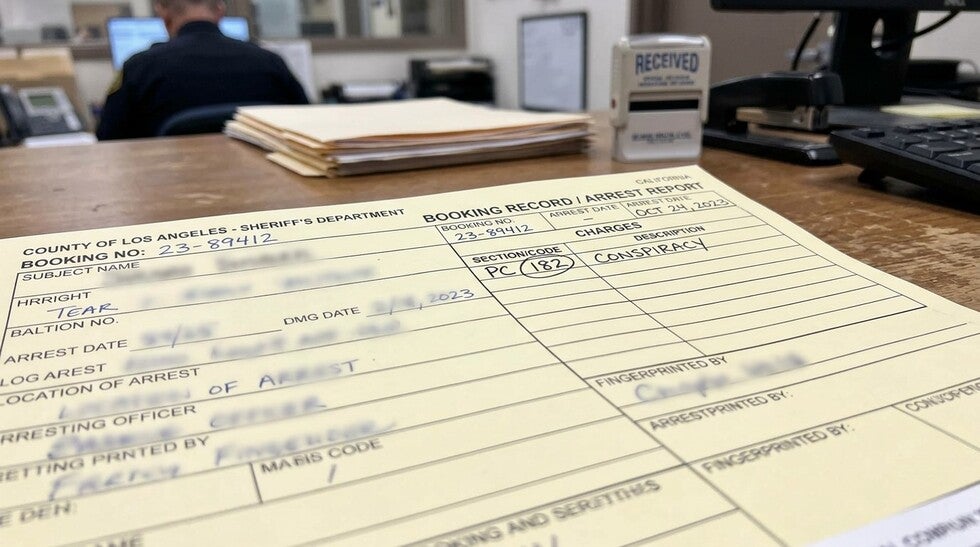
If you're looking at a jail booking record or inmate locator that says “182,” “PC 182(a)(1),” or “BK 182” your person is charged with CRIMINAL CONSPIRACY: an agreement between two or more people to commit a crime, plus at least one “overt act” by any member toward carrying it out.The stakes surprise families every time: conspiracy to commit a FELONY is punished the same as the target felony itself conspiracy to commit murder carries first-degree murder's 25-years-to-life, with no shot ever fired and the doctrine's vicarious-liability rules can hang one member's acts on everyone who “agreed.” But the same word that builds the charge is where it collapses: AGREEMENT must be proven, and presence, friendship, and knowing about a crime are not agreeing to it. This guide from The Bulldog Law's criminal defense team explains the booking code, the elements, the liability math, and the defenses that dismantle conspiracy counts.
Why Does the Booking Sheet Say “182”?
Jail systems list charges by Penal Code number “182” is simply the conspiracy statute (usually rendered PC 182(a)(1): conspiracy to commit a crime), and “BK” on lookup screens just means BOOKING.Reading the rest of the line matters: 182 rarely travels alone it's booked ALONGSIDE the target crime (182 + 211 means conspiracy to commit robbery; 182 + 187 means conspiracy to commit murder; 182 + 11351/11352 means a drug-sales conspiracy) and the pairing tells you the real exposure, because felony conspiracy borrows the target felony's punishment. Practical next steps for families: note every code on the booking line, note the bail amount, don't discuss the case on RECORDED jail calls (conspiracy prosecutions are BUILT from those calls more below), and get defense counsel engaged before the arraignment. The full charge-code index translates the rest of the sheet.
The Elements: Agreement + Overt Act
- An agreement between two or more people to commit a crime express or implied, proven almost always by circumstantial evidence: coordinated conduct, communications, division of roles. This is the battleground element.
- Specific intent to agree AND to commit the target offense; joking, bravado, and talk without criminal purpose fail it.
- An overt act California requires at least ONE step by ANY conspirator toward the plan buying supplies, scouting, a phone call arranging logistics. The act itself needn't be criminal; its function is proving the agreement left the realm of talk. No overt act, no conspiracy a genuine and litigated element.
The uncomfortable math: punishment for conspiring to commit a felony equals the felony's own punishment and conspiracy is complete BEFORE the target crime occurs, which is why prosecutors love it: it criminalizes the planning stage and lets them charge everyone the agreement touched. Conspiring to commit a misdemeanor is itself a wobbler meaning two people agreeing to a misdemeanor can each face a FELONY, one of the code's strangest escalators.
The Liability Trap: One Person's Acts, Everyone's Sentence
Conspiracy law's reach is its danger: each conspirator is criminally liable for the target crime and for crimes committed by co-conspirators in furtherance of the plan the getaway driver who “only drove” answers for what happened inside; the small role inherits the big plan's exposure. The stacking follows: conspiracy counts ride alongside gang enhancements under § 186.22 (where AB 333's reforms now help), firearm enhancements, and the substantive counts themselves; and drug conspiracies routinely jump to FEDERAL court 21 U.S.C. § 846 needs NO overt act at all and carries mandatory minimums making federal defense capability essential the moment agents, not officers, are asking questions. How these cases get built: recorded jail calls, informants and cooperators trading testimony for deals, message threads read with maximum sinister inference, and wiretaps in the larger cases which is why the first defense instruction is absolute: no case discussion on any monitored line, ever, with anyone.
Defenses: Where Conspiracy Cases Fall Apart
- No agreement the master defense: mere PRESENCE at scenes, ASSOCIATION with the wrong people, and KNOWLEDGE that others planned a crime are all legally insufficient the state must prove YOU joined the agreement, and group-chat membership and friendship are not signatures.
- No overt act talk that never produced a single step is not conspiracy in California; the charged “acts” are contested (innocent conduct recast) and required.
- Withdrawal genuinely quitting the conspiracy communicated to co-conspirators before the target crime cuts off liability for what follows; documented exit beats whispered regret.
- The cooperator problem conspiracy cases lean on accomplice testimony purchased with leniency; California requires corroboration of accomplices, and cross-examining the deal is often the trial.
- Entrapment and manufactured plots sting-born conspiracies where the informant supplied the idea, the urgency, and the plan implicate entrapment squarely the complete recordings, not excerpts, prove who authored the “agreement.” Every one of these attacks compounds through the standard weak-case checklist because a charge built on inference inherits inference's weaknesses.
Frequently Asked Questions
What does ‘182' or ‘BK 182' mean on a booking record?
A criminal conspiracy charge Penal Code § 182, usually shown as 182(a)(1) (conspiracy to commit a crime), with ‘BK' just meaning booking. Read the companion codes on the same sheet: 182 is charged WITH a target crime (182+211 robbery conspiracy, 182+187 murder conspiracy, 182+drug codes for sales conspiracies), and the pairing defines the real exposure, since felony conspiracy carries the target felony's punishment. Immediate family to-dos: record every code and the bail line, warn your person that jail calls are recorded and case talk on them builds the prosecution, and get counsel before arraignment.
How much time does a conspiracy charge carry?
The target crime's time: conspiracy to commit a felony is punishable identically to that felony conspiracy to commit murder means 25-to-life; conspiracy to commit robbery means robbery's 2–5 years plus enhancements; and conspiracy toward a misdemeanor is a wobbler that can itself be a felony. Add co-conspirator liability for others' acts and the routine stacking with gang and gun enhancements, and small alleged roles carry large exposure which is exactly why the agreement element, not the sentence chart, is where these cases are fought.
Can I be charged for just being there or knowing about it?
Not lawfully convicted presence, association, and knowledge are each legally insufficient for conspiracy: the prosecution must prove you AGREED to the crime with intent to see it committed, plus an overt act by someone. But you can absolutely be ARRESTED and charged on those thin facts sweep arrests booking everyone at a scene under 182 are common and the sorting happens afterward, through counsel: the mere-presence defense, the group-chat-isn't-agreement argument, and the corroboration rules for cooperator testimony. Say nothing, sign nothing, and let the insufficiency be argued by a lawyer rather than explained to a detective.
Is conspiracy a federal or state charge?
Both exist, and the difference matters enormously. California's § 182 requires an overt act and is charged in state court alongside the target crime. Federal conspiracy 18 U.S.C. § 371 generally, and § 846 for drugs reaches broader: drug conspiracy needs NO overt act, sentences follow federal guidelines and mandatory minimums, and the tools (wiretaps, cooperators, cross-district reach) are heavier. Multi-county drug and fraud cases routinely go federal. If federal agents are involved anywhere in the case or your person is in federal custody you need counsel experienced specifically in federal conspiracy defense from day one.
Conspiracy is the prosecutor's favorite charge because it convicts plans and groups and it is the defense's opportunity because it rests entirely on an inferred agreement and a purchased witness. Make them prove the joining. The Bulldog Law's criminal defense team defends § 182 and federal conspiracy cases across California. Contact the firm online or call (888) 928-1609 free, confidential, 24/7.