
Updated September 2026 | The Bulldog Law | California Criminal Defense and Personal Injury
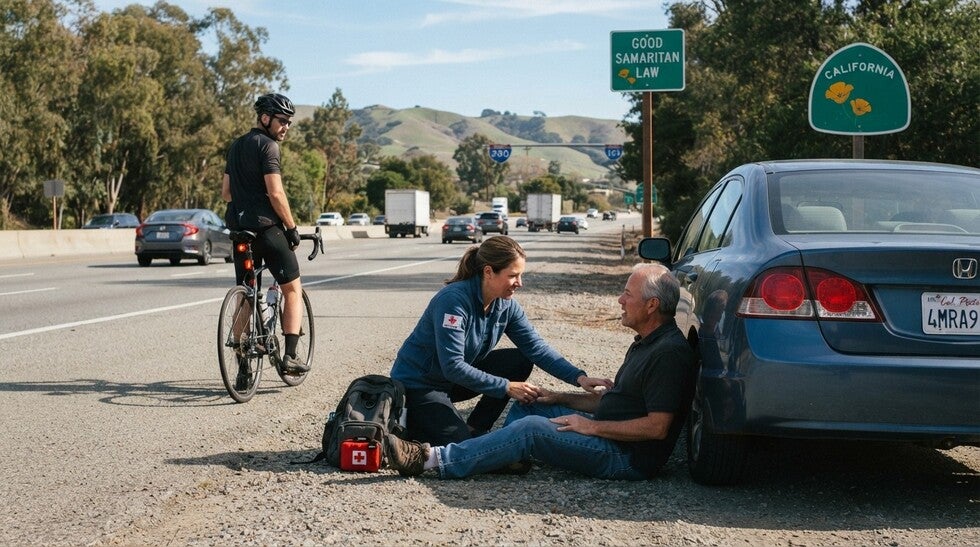
California's Good Samaritan law, Health and Safety Code 1799.102, protects anyone who provides emergency medical or nonmedical care at the scene of an emergency, in good faith and without expecting payment, from civil liability for the help they give. The protection disappears only for gross negligence or willful misconduct. A separate statute, Health and Safety Code 11376.5, adds criminal protection: a person who calls 911 for someone overdosing cannot be arrested or prosecuted for personal-use drug possession discovered because they sought help. What no California law does is force a bystander to act. With narrow exceptions, there is no duty to rescue a stranger here.
The Bulldog Law's attorneys get two very different phone calls about the Good Samaritan law. The first is from someone who helped at a crash or an overdose and is now worried, or already charged, because of what police found when they arrived. The second is from someone who was hurt and wants to know whether the person who tried to help them, badly, can be held responsible. Both answers live in the same handful of statutes, and both come with history that changes how the rules work in practice. Call us at (888) 928-1609 or reach our team online if either call sounds like yours.
Start with the surprise: nobody has to help
California follows the traditional American rule. A bystander who watches a stranger drown, choke, or bleed commits no crime and no tort by doing nothing. Juries hate it, ethics classes debate it, and it remains the law. The duty to act arises only in specific situations: a special relationship, such as parent and child, caregiver and patient, school and student; a person who created the danger, who must then help the person they endangered; a person who starts a rescue, who cannot abandon it in a way that leaves the victim worse off; and a driver in a collision, who must stop and render reasonable aid, because leaving is hit-and-run.
One criminal statute deserves its own sentence. Penal Code 152.3, passed after seven-year-old Sherrice Iverson was murdered in a Nevada casino while a witness walked away, requires anyone who witnesses the murder, rape, or forcible molestation of a child under 14 to notify law enforcement. Failing to do so is a misdemeanor. It is California's only true bystander-reporting crime, and it exists because one man's silence disgusted an entire legislature.
The civil shield: HSC 1799.102 and the lawsuit that broke it
The statute most people mean when they say Good Samaritan law is Health and Safety Code 1799.102. No person who, in good faith and not for compensation, renders emergency medical or nonmedical care at the scene of an emergency is liable for any civil damages resulting from an act or omission, with no protection for gross negligence or willful misconduct. The scene of an emergency means out in the world, not inside a hospital, and the no-compensation requirement is why the statute protects bystanders rather than working paramedics, who have their own rules.
The phrase medical or nonmedical is doing quiet, important work, and there's a story behind it. Until 2009, the statute covered only medical care. In Van Horn v. Watson, a woman pulled her friend from a crashed car fearing it would catch fire; the friend was left paralyzed and sued, claiming she was yanked out like a rag doll. The California Supreme Court held, in 2008, that the Good Samaritan statute didn't apply because pulling someone from a car is rescue, not medical care. The rescuer could be sued. The public reaction was immediate, the Legislature amended the statute within a year, and nonmedical emergency assistance has been covered ever since. Our team tells the story to every client who asks whether the law really protects them: it does now, because once it didn't.
What still isn't covered is gross negligence, which courts describe as a want of even scant care, an extreme departure from what a reasonably careful person would do. Moving a conscious person with an obvious spinal injury for no reason, attempting a procedure you saw on television, driving the victim yourself at 100 miles an hour instead of calling paramedics: those are the fact patterns that lose the shield. Honest mistakes, cracked ribs from CPR, a splint applied imperfectly, keep it. Anyone weighing a claim on the other side of that line can talk to our personal injury attorneys about how negligence is actually proven in California.
CPR, AEDs, and naloxone
The Legislature has layered extra protection over the interventions it most wants bystanders to attempt. Civil Code 1714.21 protects anyone who, in good faith, uses an automated external defibrillator on a person in cardiac arrest, trained or not. Civil Code 1714.22 protects anyone who administers naloxone to someone they believe is overdosing on opioids, and pharmacists can dispense naloxone without a prescription precisely so that friends and family can carry it. Off-duty doctors and nurses who stop at emergencies have their own Good Samaritan provisions in the Business and Professions Code. The consistent legislative message for twenty years has been: act, and the law will stand behind you.
The criminal shield: the 911 overdose law
The call our defense attorneys care most about is the one people are afraid to make. Someone is turning blue at a party, everyone in the room is holding something illegal, and the group is deciding whether to dial 911 or drag the person to the porch and hope. California answered that fear in 2013 with Health and Safety Code 11376.5, the 911 Good Samaritan law.
The rule: a person who, in good faith, seeks emergency medical assistance for someone experiencing a drug overdose cannot be arrested, charged, or prosecuted for possessing a personal-use amount of a controlled substance, possessing drug paraphernalia, or being under the influence, if the evidence came from seeking that help. The person overdosing gets the same protection. The point is to remove the exact hesitation that kills people, and it works when people know about it.
The limits are just as important, because our attorneys see the cases where they bite. The immunity covers personal-use quantities, not amounts that support a sales charge. It does not cover driving under the influence, weapons, or violence at the scene. It does not erase an existing arrest warrant, and it does not stop a probation officer from treating the night as a violation, a gap we've written about in our page on probation and supervision. And good faith matters: the statute protects the person who called for help, not the dealer who fled and phoned from three blocks away to launder the scene. Even with those limits, the advice we give is unconditional. Make the call. A possession case is a problem our drug crimes team solves routinely; a death is not. If officers arrive and start asking questions beyond the emergency, the right to remain silent still applies to everything the immunity doesn't cover.
The underage drinking version
A parallel rule protects minors. Under Business and Professions Code 25667, a person under 21 who calls 911 for another minor suffering from alcohol poisoning, stays at the scene, and cooperates, is immune from prosecution for underage possession or consumption. Parents should make sure their teenagers know it exists; the Legislature wrote it because too many did not.
Rescuing animals and children from hot cars
California added a right-to-rescue statute in 2017 after a string of dogs died in parking lots. Civil Code 43.100 shields a person from civil liability for damaging a vehicle to rescue an animal, if the conditions are met: the animal faces imminent danger, the car is locked and there's no reasonable alternative, you contact law enforcement or 911 before breaking in, you use no more force than necessary, and you remain with the animal nearby until responders arrive. Skip the steps, especially the 911 call first, and the shield weakens.
For a child, the calculus is different and simpler. The person facing charges in a hot-car case is the one who left the child, under Kaitlyn's Law, Vehicle Code 15620, and potentially child endangerment. A genuine rescue of a child in distress is protected by the ordinary doctrine of necessity, and we are not aware of a California prosecutor pursuing a bystander who broke a window to save a child in real danger. If you were the driver, and the situation was more complicated than the police report suggests, that's a conversation to have with a defense lawyer, not with the officer at the scene.
The rescuer as plaintiff
One last corner of the doctrine runs in the helper's favor. California follows the rescue doctrine: danger invites rescue, and a person injured while reasonably attempting to save someone imperiled by another's negligence can sue the person who created the danger. The drunk driver who causes a crash owes a duty not only to the people he hits but to the passerby who tears a shoulder pulling them out. Our personal injury team has brought rescuer claims, and insurance adjusters routinely undervalue them because the rescuer feels awkward claiming anything. Don't. The law was built for exactly that person.
Frequently asked questions
What is the Good Samaritan law in simple terms?
It's a shield, not a sword. California's Good Samaritan laws protect a person who voluntarily helps someone in an emergency from being sued or prosecuted for the help itself, as long as they acted in good faith, weren't being paid, and weren't grossly negligent. The laws do not force anyone to help. There is no general legal duty in California to rescue a stranger.
Am I legally required to help someone in danger in California?
Usually no. California follows the American rule that bystanders have no duty to rescue. The exceptions matter, though: parents must aid their children, caregivers their patients, and anyone who caused the danger must help the person they put at risk. Drivers involved in a crash must stop and render reasonable assistance. And under Penal Code 152.3, anyone who witnesses the murder, rape, or serious molestation of a child under 14 must report it to police, a law passed after the Sherrice Iverson case.
Can I be sued for giving CPR or using an AED?
The protection here is strong. Health and Safety Code 1799.102 covers good-faith emergency medical care at the scene, and separate statutes protect untrained bystanders who use an automated external defibrillator. You lose the protection only for gross negligence or willful misconduct, which courts read as conduct far beyond an honest mistake. Broken ribs from properly performed CPR have never, in our experience, supported a viable lawsuit in California.
If I call 911 for a friend's overdose, will I be arrested for the drugs?
California's 911 drug overdose law, Health and Safety Code 11376.5, says a person who seeks emergency help for someone overdosing, in good faith, cannot be arrested, charged, or prosecuted for personal-amount possession, being under the influence, or paraphernalia found because they sought help. The same protection covers the person overdosing. It does not cover sale quantities, driving under the influence, weapons, or unrelated warrants, so the immunity is real but narrow. Call anyway. Our attorneys have never seen a case where staying silent made things better.
Can I break a car window to save a dog or a child?
For an animal, yes, if you follow the steps in Civil Code 43.100: the animal must be in imminent danger, the car locked with no reasonable alternative, you must call 911 first, use no more force than necessary, and stay with the animal until responders arrive. For a child, officers and courts have consistently treated a genuine rescue as justified by necessity, and the person who left the child in the car is the one facing charges under Kaitlyn's Law. If you ever end up cited after a rescue, talk to a lawyer before paying anything.
Related reading from our attorneys
- Drug crimes defense in California
- How negligence is proven in a California injury case
- Miranda rights: what they mean and why they matter
Helped someone and ended up in trouble? Call us
The Bulldog Law defends people charged after overdose calls, accident scenes, and rescues that police read the wrong way, and our injury attorneys represent rescuers and victims on the civil side. One firm, both directions, and the immigration consequences of any charge handled in-house; if you're not a citizen, ask us about how a charge affects your status before you talk to anyone else. Call (888) 928-1609 or message our team. The consultation is confidential.