
By the The Bulldog Law Criminal Defense Team • Reviewed by a licensed California criminal defense attorney
California's hit-and-run law is two statutes: Vehicle Code § 20002 makes leaving the scene of an accident with PROPERTY damage a misdemeanor (up to 6 months and $1,000), and § 20001 makes leaving the scene of an accident involving INJURY or death a wobbler up to a year as a misdemeanor, 16 months to 3 years as a felony, and 2, 3, or 4 years when someone died or suffered serious permanent injury, with 5 MORE years stacked if you fled after vehicular manslaughter.The fact that surprises everyone:
FAULT IS IRRELEVANT. The other driver can have run the red light, been drunk, and hit YOU if you leave without stopping and exchanging information, you committed the crime and they didn't. This guide from The Bulldog Law's criminal defense team covers the duties the law imposes, both statutes' penalties, the parked-car rule, the police knock that comes days later and the defenses and quiet resolutions that end these cases.
What the Law Actually Requires After an Accident
Involved in a collision any collision, at fault or not you must: stop immediately at (or safely near) the scene, provide your name, address, registration, and insurance to the other party or police, show ID on request, and if anyone is hurt, render reasonable assistance, which today means calling 911.For unattended property the parked car, the fence, the mailbox § 20002 gives a specific alternative: locate the owner, or leave a written note with your name, address, and an explanation, securely placed, AND notify police or CHP without unnecessary delay. That note-plus-report combination is the complete legal exit from a parked-car scrape; skipping either half is what converts a $600 insurance matter into a criminal case. The duties exist to guarantee injured people get help and damaged people get identified which is why prosecutors treat the leaving, not the driving, as the moral core of the charge.
VC § 20002 vs. § 20001: The Penalty Ladder
- 20002 property damage only: misdemeanor, up to 6 months county jail and $1,000, plus 2 DMV points. The everyday cases: parking lots, sideswipes, fences and the most civil-compromise-friendly charge in the Vehicle Code (below).
- 20001 injury to another: a wobbler up to 1 year as a misdemeanor, or 16 months / 2 / 3 years as a felony, with fines to $10,000. The charging decision tracks injury severity, flight circumstances, and record.
- 20001(b)(2) death or permanent, serious injury: 2, 3, or 4 years, with even the misdemeanor alternative carrying mandatory minimum jail.
- 20001(c) the stack: fleeing the scene after vehicular manslaughter adds a consecutive 5 years the Legislature's answer to drivers who flee precisely because they were impaired.
- Everyone's collaterals: license points, insurance consequences, restitution to the victim and the parallel civil lawsuit, since hit-and-run findings follow drivers into injury litigation (where, for victims reading this, our personal injury team represents the other side of these cases, including through uninsured-motorist claims when the driver is never found).
Why People Leave and Why It Always Makes It Worse
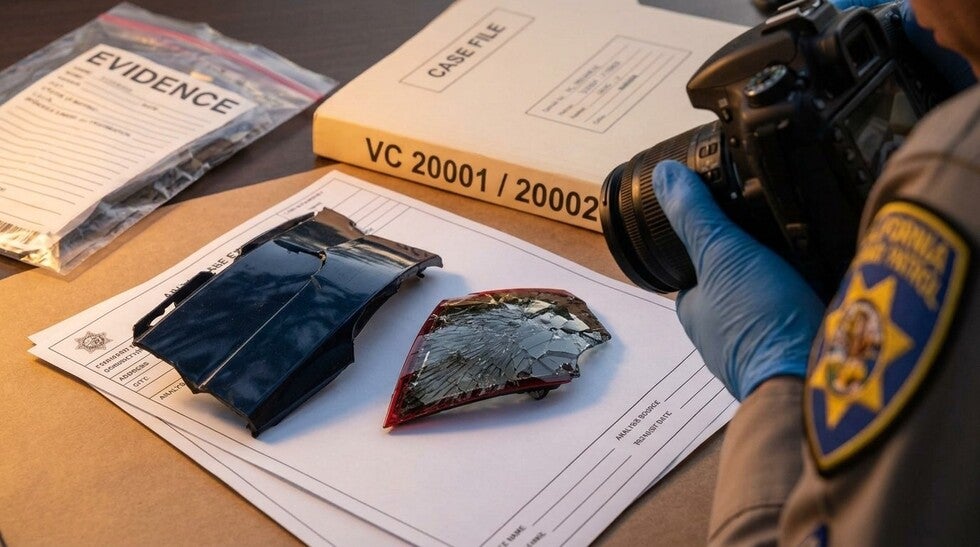
The three real reasons: panic, no license or insurance, and the one prosecutors assume impairment: drivers flee to let the alcohol clear, trading a possible DUIfor a certain hit-and-run. Each trade is worse than it looks. The panicked driver who returns in twenty minutes has still “left the scene,” though prompt voluntary return is powerful mitigation. The unlicensed driver converts an infraction-level problem into a misdemeanor with a warrant risk. And the DUI-flight calculation fails both directions: prosecutors charge the flight AS consciousness of guilt, the § 20001(c) enhancement exists exactly for the fatal version, and modern cases get solved anyway plate readers, doorbell cameras, paint transfer, and the debris field with your headlight housing in it. The honest math: stopping is almost always the cheaper crash.
The Knock on the Door: How These Cases Are Actually Built
Most hit-and-run cases begin days later, when officers visit the REGISTERED OWNER's home with friendly questions “Is this your car? How'd it get that damage? Were you driving Tuesday night?” because what they usually have is a plate and damage, and what they usually LACK is proof of who was driving.That gap is the case. The registered owner is not automatically the driver, and the doorstep interview exists to close the gap with your own words. The rule, delivered with love: say nothing about the car, the damage, or the night “I'd like to speak with a lawyer before answering questions” and call counsel that day. Early attorney involvement in this window does real work: pre-filing communication with the detective or city attorney, civil compromise negotiations (§ 20002 misdemeanors can be DISMISSED under Penal Code §§ 1377–1378 when the property owner is made whole the quiet ending most parking-lot cases deserve), and insurance coordination that resolves the money before it becomes the sentence.
Defenses That Win Hit-and-Run Cases
- You didn't know knowledge of the accident (and, for § 20001, of injury or its probability) is an element: low-impact contact, highway noise, a trailer strike you never felt genuine no-knowledge cases are common, especially in parked-car and sideswipe allegations.
- You weren't the driver the registered-owner inference isn't proof; without a witness ID, camera image, or your statement, the driving element fails which is why the doorstep interview matters so much.
- No injury to another / only your property 20001 requires injury to someone else; single-car accidents and self-injury don't qualify, and damage-only cases belong in § 20002's misdemeanor lane, not felony filings.
- Compliance and safe-relocation facts stopping around the corner from a hostile scene, leaving to summon help, the note the wind took the duties are judged reasonably, and road-rage and unsafe-scene circumstances justify relocating before exchanging.
- Resolution engineering civil compromise dismissals, restitution-driven reductions, wobbler misdemeanor outcomes, and clean-record dispositions then expungement Prosecutors' files in these cases are thinner than their charges the standard weak-case checklist applies with force.
Frequently Asked Questions
Is a hit and run a felony or misdemeanor in California?
It depends on what was hit. Property damage only (VC 20002) is always a misdemeanor up to 6 months. Injury to another person (VC 20001) is a wobbler: misdemeanor up to a year, or felony up to 3 years, prosecutor's choice based on severity and circumstances. Death or serious permanent injury raises felony exposure to 2/3/4 years, and fleeing after a vehicular manslaughter adds a consecutive 5. The wobbler decision is negotiable injury documentation, flight facts, and early restitution regularly move filings down the ladder.
What should I do if I hit a parked car and the owner isn't there?
Two steps, both required: leave a securely placed note with your name, address, and a brief explanation of what happened AND report the collision to local police or CHP without unnecessary delay. The note alone is not full compliance; the report alone isn't either. Do both and you have satisfied VC 20002 completely the matter becomes an insurance claim, not a crime. Photograph the scene, the note, and the damage for your own record. If you already left without doing this, talk to a lawyer before talking to anyone else civil compromise can often still end it quietly.
The police left a card at my house about my car what now?
Do not call back and chat, and do not answer questions about the car, its damage, or who was driving the investigation almost certainly has a plate but not a driver, and the interview exists to fill that gap with your words. Politely decline (‘I'll have my attorney contact you') and get counsel the same day. This pre-filing window is the most valuable phase of a hit-and-run case: attorney contact, insurance coordination, restitution, and civil-compromise groundwork frequently resolve matters before any charge is filed outcomes that disappear once statements are made.
Can a hit and run charge be dismissed if I pay for the damage?
For misdemeanor property-damage cases (VC 20002), often yes California's civil compromise statutes (PC 1377–1378) allow a judge to dismiss a misdemeanor when the injured party is fully compensated and acknowledges satisfaction. Courts and prosecutors vary in enthusiasm, but parking-lot and sideswipe cases are its natural habitat, and a defense lawyer who initiates restitution early builds exactly that record. Injury cases (20001) can't be civilly compromised, but full restitution still drives reductions, misdemeanor outcomes, and sentencing mercy making the victim whole is the single most productive dollar spent in a hit-and-run defense.
Hit-and-run cases are unusual: the crime is a decision made in ten panicked seconds, and the outcome is decided by what happens in the days after the interview declined, the restitution offered, the compliance proven. Handle those days right and most of these cases end small. The Bulldog Law's criminal defense team handles VC 20001 and 20002 cases across California including pre-filing representation. Contact the firm online or call (888) 928-1609 for a free, confidential consultation.