
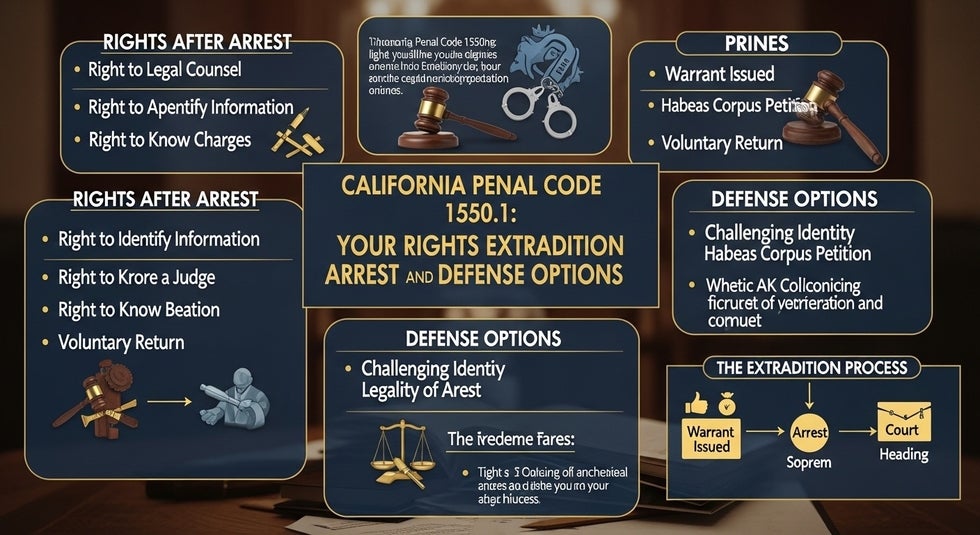
Being arrested on an extradition warrant represents one of the most stressful experiences anyone can face. However, California law provides critical protections for people arrested on out of state warrants.
Penal Code Section 1550.1 establishes mandatory procedures that law enforcement and courts must follow, and understanding these rights can make the difference between immediate transfer to another state and successful defense against unlawful extradition.
Immediate Rights Upon Extradition Arrest
The moment law enforcement arrests you on an extradition warrant, California law requires specific procedures designed to protect your constitutional rights. Section 1550.1 mandates that no person arrested on an extradition warrant can be handed over to agents from the demanding state until they first appear before a magistrate.
This requirement isn't a formality. It creates an essential opportunity for you to understand the charges against you, learn about your legal options, and begin mounting a defense. Many people arrested on extradition warrants don't realize they have rights and options available to challenge the extradition process.
The magistrate must inform you of several critical matters: the demand made for your surrender, the specific crime you're charged with in the demanding state, and your right to obtain legal counsel. These requirements ensure you're not kept in the dark about why you're being held or what legal protections are available.
Your Right to Legal Counsel in Extradition Cases
One of the most important protections in Section 1550.1 is the explicit right to demand and procure counsel. Extradition proceedings involve complex legal questions that require experienced legal representation. Without an attorney who understands extradition law, you risk being transferred to another state even when valid legal defenses exist.
The right to counsel in extradition cases encompasses more than just having a lawyer present. It means having adequate time to consult with an attorney, explain your circumstances, and allow your lawyer to investigate the facts and legal issues in your case. Defense attorneys experienced in extradition proceedings know how to identify weaknesses in the demanding state's case and exploit procedural defects to protect their clients.
Many people mistakenly believe that extradition is automatic once a warrant is issued. This misconception can lead to giving up without a fight. In reality, extradition can be challenged through various legal mechanisms, and skilled counsel can often find grounds to prevent transfer to the demanding state.
Testing the Legality of Your Arrest Through Habeas Corpus
Section 1550.1 provides a powerful tool for challenging extradition: the writ of habeas corpus. If you or your attorney want to test whether your arrest is legal, the magistrate must remand you to custody and set a reasonable timeframe for filing a habeas corpus petition.
Habeas corpus represents one of the oldest and most fundamental protections in Anglo-American law. It allows you to challenge whether the government has legal authority to detain you. In the extradition context, habeas corpus petitions can raise numerous defenses that might prevent your transfer to the demanding state.
The statute specifically contemplates that you might need to file multiple habeas petitions if the first is denied. If a court denies your initial writ but probable cause exists to seek relief from another court, judge, or justice, the denying order must set a reasonable time for you to file another petition. This layered approach ensures you have meaningful opportunities to challenge unlawful detention.
Strategic Use of Habeas Corpus in Extradition Defense
Filing a habeas corpus petition in an extradition case isn't simply a delaying tactic. It creates a formal legal proceeding where your attorney can present evidence and arguments about why extradition should be denied.
Common grounds for habeas relief in extradition cases include challenging your identity as the person named in the warrant, arguing that you didn't flee from the demanding state, demonstrating defects in the extradition documents, or showing that you're not actually a fugitive from justice.
Experienced criminal defense attorneys understand how to craft habeas petitions that address the specific legal standards California courts apply in extradition cases. These petitions must be carefully drafted to raise all available defenses while presenting evidence that supports your claims.
Notice Requirements and Procedural Protections
Section 1550.1 includes important notice provisions designed to ensure fairness in extradition proceedings. When you or your attorney files a habeas corpus application, California law requires that copies be served on both the district attorney in the county where you're held and the agent from the demanding state.
These notice requirements serve several purposes. They ensure that prosecutors have an opportunity to respond to your arguments, create a complete record of the proceedings, and provide transparency in the extradition process.
From a defense perspective, these notice provisions also mean that your habeas petition will receive careful scrutiny from multiple parties. This makes thorough preparation and strong legal arguments essential. Hastily drafted petitions that fail to address potential counterarguments typically won't succeed.
The Presumption of Warrant Validity
Section 1550.1 creates a statutory presumption that warrants issued under California's extradition procedures are valid. This presumption means the burden falls on you to demonstrate why extradition should be denied rather than on the state to prove extradition is proper.
While this presumption might seem to favor the demanding state, it doesn't prevent successful challenges to extradition. The statute specifically identifies several grounds that can overcome the presumption and result in your release.
Specific Defenses That Overcome the Presumption
California law recognizes that extradition must be denied if a court finds any of the following circumstances:
First, you're not the same person named in the warrant. Mistaken identity occurs more frequently than many people realize, especially when individuals share common names or when identification is based on incomplete or inaccurate information.
Second, you're not a fugitive from justice or otherwise subject to extradition. This defense applies when you didn't flee from the demanding state, weren't present when the alleged crime occurred, or don't meet the legal definition of a fugitive.
Third, no criminal charge or criminal proceeding is actually pending against you in the demanding state. Sometimes warrants remain active even after charges are dismissed, cases are resolved, or prosecutions are abandoned.
Fourth, the extradition documents aren't proper on their face. This defense involves examining whether the demanding state submitted all required paperwork, whether documents are properly authenticated, and whether technical requirements are satisfied.
Each of these defenses provides a pathway to defeating extradition, but successfully raising them requires careful legal analysis and persuasive advocacy.
The Bail Prohibition in Extradition Cases
One of the harshest provisions in Section 1550.1 states that persons arrested on extradition warrants are not eligible for release on bail. This means that unless you successfully challenge the extradition through habeas corpus or other legal mechanisms, you'll remain in custody throughout the proceedings.
The bail prohibition underscores why immediate legal representation is so critical in extradition cases. Every day spent in custody awaiting resolution represents lost time, potential employment consequences, family disruption, and other serious hardships.
From a defense standpoint, the inability to obtain bail makes winning habeas corpus relief even more important. If you can demonstrate that extradition should be denied based on one of the statutory grounds, you gain immediate release rather than remaining incarcerated pending transfer to the demanding state.
Challenging Detention Through Vigorous Defense
Given the bail prohibition, your best option for regaining freedom involves mounting an aggressive legal challenge to the extradition itself. This requires experienced counsel who can quickly assess the strengths and weaknesses of your case, identify viable defenses, and present compelling arguments to the court.
Defense strategies might include gathering evidence that you're not the person named in the warrant, obtaining documentation showing you didn't flee from the demanding state, demonstrating defects in the extradition paperwork, or proving that charges in the demanding state have been resolved or dismissed.
Time is of the essence in these cases. The sooner your attorney begins investigating and preparing your defense, the better your chances of success.
Identity Challenges in Extradition Proceedings
Mistaken identity represents one of the most straightforward defenses to extradition, yet it requires careful proof. Simply claiming you're not the person named in the warrant isn't sufficient. You need to present concrete evidence that creates reasonable doubt about identity.
Evidence supporting identity challenges might include fingerprint comparisons, photographs showing physical differences, documentation of your whereabouts when the alleged crime occurred, or testimony from witnesses who can verify your identity and distinguish you from the actual suspect.
Defense attorneys handling identity challenges often work with investigators to gather evidence, obtain records from the demanding state, and build a comprehensive case proving mistaken identity. Courts take these challenges seriously because extraditing the wrong person violates fundamental due process rights.
Fugitive Status and Flight Requirements
To justify extradition, the demanding state must establish that you're a fugitive from justice. This requires more than simply being charged with a crime in another state. The demanding state must prove you were physically present when the crime allegedly occurred and that you subsequently fled.
Many extradition demands fail on fugitive status grounds. Perhaps you moved to California before any charges were filed, relocated for legitimate reasons unrelated to avoiding prosecution, or never actually left the demanding state in a manner constituting flight.
Your attorney can challenge fugitive status by presenting evidence about your movements, reasons for relocating, timeline of events, and other facts showing you don't meet the legal definition of a fugitive. This defense often succeeds when people moved between states for ordinary life reasons like employment, education, or family.
Document Deficiencies and Technical Defenses
California law requires demanding states to submit specific documents that meet technical requirements. When these documents are deficient, courts can deny extradition even if charges exist in the demanding state.
Common document defects include missing authentication, improper certifications, charging documents that don't substantially allege a crime, warrants lacking required elements, or submissions missing mandatory components.
Examining extradition documents for technical defects requires detailed knowledge of both California extradition law and the demanding state's procedures. Experienced defense counsel scrutinizes every document, checking signatures, seals, dates, and substantive content to identify potential deficiencies.
The Importance of Immediate Legal Action
Everything about Section 1550.1 emphasizes the need for quick action when facing extradition. The statute's provisions for habeas corpus, notice requirements, and prohibition on bail all point toward the importance of mounting an immediate defense.
Waiting to seek legal help puts you at a significant disadvantage. Evidence becomes harder to gather over time, witnesses' memories fade, and opportunities to challenge extradition diminish. The strongest defense strategies in extradition cases almost always involve early intervention by experienced counsel.
If you're arrested on an extradition warrant, requesting an attorney immediately and refusing to make statements about the underlying charges protects your interests. Everything you say can potentially be used against you both in California extradition proceedings and in any eventual prosecution in the demanding state.
Building a Comprehensive Defense Strategy
Successful extradition defense requires a multi-faceted approach that addresses every potential weakness in the demanding state's case. Your attorney should investigate the facts, analyze the legal issues, examine all documents for defects, gather supporting evidence, and prepare persuasive arguments for court.
This comprehensive approach often involves working with investigators, obtaining records from multiple jurisdictions, consulting with experts, and developing testimony from witnesses who can support your defenses. The investment in thorough preparation frequently pays dividends in the form of successful habeas petitions and denial of extradition.
Understanding California Penal Code Section 1550.1 empowers you to recognize that rights and options exist even after arrest on an extradition warrant. With experienced legal counsel who knows how to leverage these protections, you can fight unlawful extradition and protect your freedom.
For a free consultation, call our law firm toll free at (888) 928-1609 or contact us by email