
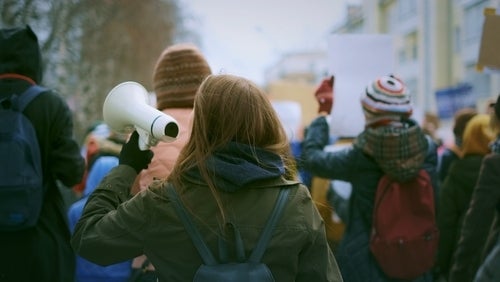
California Penal Code Section 404.6 defines incitement to riot and sets the limits of criminal liability when speech and protest activity are accused of crossing into unlawful conduct. If you face allegations under California Penal Code Section 404.6, understanding the statute's elements, penalties, and constitutional defenses is essential to building a focused defense strategy.
California Penal Code Section 404.6: elements the state must prove
To convict, prosecutors must establish three core elements beyond a reasonable doubt:
- Specific intent: the defendant purposefully urged a riot or encouraged others to use force, violence, or destroy property.
- Urging conduct: the words or actions went beyond abstract advocacy and exhorted unlawful behavior.
- Clear, present, and immediate danger: the conduct created an imminent risk that violence or property damage would occur.
These elements are cumulative. Heated rhetoric, absent proof of purpose and immediacy, is not enough under California Penal Code Section 404.6.
First Amendment limits and the “clear and present and immediate danger” test
Courts evaluate alleged incitement against strong speech protections. The state must link specific words or acts to an immediate risk of violence, not a speculative future possibility. Timing, crowd mood and size, location, and whether disorder erupted right after the statements all factor into the analysis. Complete recordings and unedited video often decide whether the danger was immediate or theoretical.
Penalties and sentencing under California Penal Code Section 404.6
Most cases are misdemeanors punishable by up to one year in county jail, fines up to $1,000, or both. Collateral consequences can include employment, licensing, and immigration impacts. If incitement occurs within a jail or prison and results in serious bodily injury, punishment can escalate, including potential state prison under realignment when the enhanced circumstance is properly alleged and proven.
How 404.6 compares to nearby public-order offenses
Protest cases often involve overlapping statutes. Where conduct involves noise, fighting, or offensive words without proof of intent to spark a riot, prosecutors sometimes rely on California disturbing the peace charges instead. If the setting is a K–12 or college campus, authorities may allege disturbing the peace on school grounds depending on how the disturbance unfolded.
Interactions with officials and post-event contacts
Demonstrations occasionally lead to confrontations with public officials. When the accusation centers on obstruction or threats directed at certain officers rather than inciting a crowd, the focus may shift to resisting or threatening an executive officer. After events, investigators may interview bystanders and participants; understanding California witness laws helps protect your rights and avoid missteps during those contacts.
Evidence the defense should prioritize in a California Penal Code Section 404.6 case
Modern incitement cases hinge on digital records. A targeted evidence plan includes:
- Unedited media: raw video and audio with timestamps, livestream archives, body-worn camera footage, and complete transcripts.
- Metadata and platform exports: original files from social media platforms, not screenshots.
- Context records: permits, event plans, safety marshal instructions, messages urging peaceful conduct, and de-escalation protocols.
- Witness mapping: identify neutral vantage points and potential perception limits in chaotic scenes.
Defenses that commonly defeat California Penal Code Section 404.6 charges
- Lack of specific intent: demonstrate the purpose was lawful advocacy, crowd safety, or de-escalation. Prior peaceful organizing can support this showing.
- No immediate danger: establish that any later disorder was temporally or geographically removed from the speech.
- As-applied overbreadth or vagueness: argue the state's theory sweeps protected speech beyond the statute's narrow reach.
- Identification errors: fast-moving crowd dynamics can produce mistaken attributions of statements.
- Evidentiary integrity: challenge edited clips, unreliable captions, and incomplete productions.
Procedure and timeline in a California Penal Code Section 404.6 case
- Early assessment: obtain the complaint, police reports, all media, and dispatch timelines; build a chronology keyed to each element of California Penal Code Section 404.6.
- Motions: compel full media production and metadata; move to exclude unduly prejudicial or incomplete recordings; litigate suppression where identification procedures were suggestive.
- Negotiation posture: where proof of intent or immediacy is thin, leverage constitutional defenses to pursue reductions, diversion, or dismissal.
- Trial strategy: use experts in crowd psychology, linguistics, and digital forensics to explain why the speech did not create an immediate risk of violence.
Practical guidance for clients and families
- Preserve everything: save raw videos, photos, posts, and planning materials; do not delete or alter content.
- Document peacemaking: collect messages and instructions that urged nonviolence and exit routes.
- Build a timeline: list speakers, police announcements, any declaration of unlawful assembly, and when any disorder began.
- Limit statements: avoid informal interviews with police or media without counsel.
- Plan logistics: arrange work coverage and transportation for court dates to reduce stress and ensure consistency.
Applying California Penal Code Section 404.6 to real scenarios
Example 1: A speaker urges attendees to petition officials and disperse peacefully. Hours later, a separate group vandalizes a storefront across town. Without a direct, immediate call for violence tied to that act, the immediacy and intent elements are not met.
Example 2: A person seizes a megaphone and commands the nearby crowd to break into a building “right now,” and damage follows within minutes at that location. Those facts can satisfy the statute's requirements, subject to proof of identity and intent.
Riot charges attorney in California
If you face an incitement accusation, Bulldog Law analyzes intent, immediacy, and causation under California Penal Code Section 404.6, audits the completeness of digital evidence, and advances constitutional defenses tailored to your facts. We also advise on adjacent issues that often arise in protest cases, including California disturbing the peace charges, and protections that flow from California witness laws. Our goal is to protect your record and your rights while pursuing the most favorable outcome available.