
Updated September 2026 | The Bulldog Law | California Criminal Defense
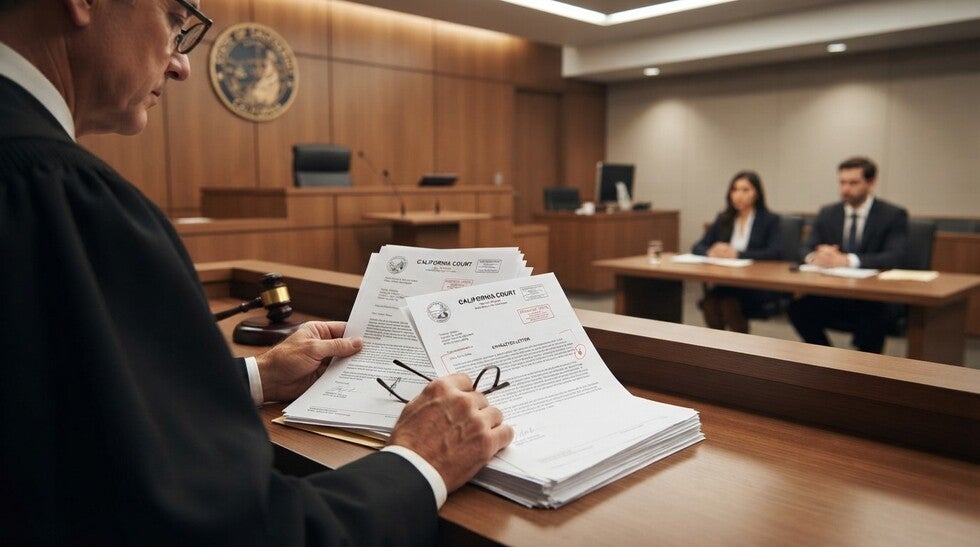
A character letter for court is a one-page letter to the sentencing judge from someone who knows the defendant well, describing specific things they've seen the person do that show who they are outside the offense. In California, the letters go to the defense attorney, who files them with the sentencing memorandum or attaches them to the probation report under Rule of Court 4.423 as evidence of mitigating circumstances. Judges read them, but they read for specifics: a supervisor describing five years of reliability carries weight, a cousin calling someone a good person does not.
A character witness is different: a live person testifying under oath, usually at sentencing, occasionally at trial, where calling one opens the door to rebuttal the defense may not want.
The Bulldog Law's attorneys ask for character letters in nearly every case that ends in a sentencing hearing, and we've read enough of them, good and useless, to know exactly where they succeed and fail. What follows is the guidance we give our own clients and their families, including the outline we hand them, because a well-built letter packet routinely turns a custody sentence into probation, a felony into a misdemeanor, or a bail argument into a release. If you're gathering letters for a hearing that's already on calendar, call us at (888) 928-1609 or message our team.
Where the letters actually matter
Sentencing is the main event. After a plea or verdict, the judge decides between probation and custody, picks a term within the statutory range, and chooses whether multiple counts run concurrently or consecutively. California's Rules of Court list the circumstances in mitigation the judge is supposed to consider, and several of them, no significant prior record, remorse, voluntary restitution, a mental or physical condition that reduces culpability, are things a letter writer can speak to from personal knowledge. The letters are how the human being reaches the bench.
Bail and release hearings are second. A judge deciding whether to release someone on their own recognizance wants proof of community ties, and a letter from an employer confirming a job is waiting, or from a landlord confirming a stable address, does more than any argument a lawyer can make. Probation violation hearings, motions to reduce a felony to a misdemeanor, applications for alternative sentencing programs, and requests to terminate probation early all run on the same fuel. Immigration proceedings use them too, and our immigration side asks for a separate set when a criminal case has consequences for status.
Who should write, and who should not
The letter is only as credible as the writer's vantage point. Judges instinctively rank them. At the top: employers and supervisors, because they have nothing to gain and can describe years of behavior under real-world pressure. Close behind: teachers, coaches, clergy, treatment counselors and sponsors, military superiors, and longtime neighbors.
In the middle: friends and coworkers who can describe specific events. Near the bottom, through no fault of their own: parents, spouses, and siblings, whose loyalty is assumed. Family should still write, especially about the practical consequences of custody on children or dependents, but a packet of six family letters and nothing else tells the judge the defendant's life outside the family is unknown.
Who should not write: anyone with a criminal record the prosecutor can wave around, anyone who was involved in the offense, anyone who will use the letter to attack the victim or the police, and the victim, whose views reach the court through the prosecutor and the probation department. A codefendant's mother is not a character reference. Neither, usually, is a person who met the defendant last month.
What makes a letter work
Specific incidents. That's nearly the whole answer. A judge has read the words honest, hardworking, and kind ten thousand times and they have stopped meaning anything. What a judge has not read is that the defendant drove a coworker to dialysis every Tuesday for a year, or rebuilt the church's stairs without being asked, or was the employee who stayed late to cover a shift when the writer's father died. One concrete story a judge can picture is worth a page of adjectives, and it is also the thing that makes a letter sound like a real person rather than a form.
Acknowledgment of the offense. Writers who pretend not to know why they're writing lose the judge on the first read. A single sentence confirming the writer knows the charge and isn't excusing it establishes that the rest of the letter was written with eyes open. Writers who then argue innocence, insist the victim exaggerated, or blame the police, convert themselves from witness to advocate, and judges skip to the next letter.
Knowledge of what has changed. If the defendant entered treatment, started counseling, took a batterer's program voluntarily, paid restitution early, or got a job since the arrest, the writer who has seen it firsthand should say so. Rehabilitation the judge can verify from someone outside the family is the most persuasive thing in the packet.
A modest ask. Letters that tell the judge what sentence to impose overstep. Letters that say I hope the court will consider probation, or I am prepared to employ him the day he is released, or my family would be devastated by a custody sentence for these reasons, give the judge something usable.
What gets a letter thrown out, or worse
Some mistakes are worse than a bad letter; they hurt the client. Sending the letter straight to the judge is the most common. California judges cannot receive one-sided communications about a pending case, and a letter mailed to chambers gets returned, forwarded to the district attorney, or, occasionally, mentioned in open court in a way nobody wanted. Every letter goes to the defense lawyer first, and our attorneys read every one before it's filed, because we have pulled letters that would have done real damage: a writer volunteering that the client drinks too much, a pastor mentioning an earlier incident nobody had charged, an employer noting the client will be fired if convicted, which the prosecutor then quotes as proof the client has nothing to lose.
Other reliable failures: form letters where five writers used the same template and the same phrases; letters longer than a page; letters that are really about the writer; letters full of legal argument copied from the internet; letters that promise the defendant will never do it again, which nobody can promise; and letters that contain anything untrue. A false statement in a letter is not perjury, but a prosecutor who catches one will use it to discredit every other letter in the stack.
A one-page outline that doesn't read like a template
Our attorneys give clients structure, not a script, because judges recognize scripts. The letter should look like this, in the writer's own words.
Heading. Writer's full name, address, phone, and email. The date. The Honorable [Judge's full name], Judge of the Superior Court of California, County of [County]. Re: People v. [Client's full name], Case No. [number]. Then Dear Judge [Last name] or Your Honor.
First paragraph, three sentences. Who the writer is, including occupation. How they know the defendant and for how long. One sentence acknowledging the charge or conviction and stating the writer isn't asking the court to excuse it.
Second paragraph, the heart of it. One or two specific things the writer has personally seen the defendant do that show the trait the writer wants the judge to know about: dependability, generosity, honesty under pressure, devotion to children, sobriety since the arrest. Names, places, dates where possible. No adjectives without a story behind them.
Third paragraph. What the writer knows about the defendant's current circumstances and plans: the job waiting, the treatment program, the children who depend on them, the steps taken since the arrest. If the writer is an employer, a sentence confirming continued employment. If the writer is a counselor, the dates of attendance.
Closing, two sentences. A modest request, phrased as a hope, and an offer to answer questions. Sincerely, signature, printed name. That's the page. Writers who follow the shape but use their own sentences produce letters that judges read to the end, which is the only goal.
Live character witnesses: sentencing versus trial
At a sentencing hearing, a live witness adds something a letter can't: presence. An employer who took the morning off to stand in a courtroom and say the job is still there makes an impression, and California judges generally allow brief statements in mitigation. Our attorneys use live witnesses sparingly, one or two at most, chosen for credibility and composure, and prepare them for the possibility that the prosecutor asks a question or two.
At trial, a character witness is a strategic decision with a price. Under Evidence Code 1102, a defendant may offer evidence of their own good character, through reputation or opinion testimony, to suggest they didn't commit the offense; a witness might testify that the defendant has a reputation for peacefulness in an assault case, or for honesty in a theft case.
The moment that door opens, the prosecution may walk through it with rebuttal evidence of bad character on the same trait, including prior conduct the jury would otherwise never hear. For a defendant with a clean history, character testimony can be powerful. For anyone else, it is often a trap, and the decision belongs in a conversation with counsel, not in a family's enthusiasm. Witnesses who are reluctant, or who need a subpoena to appear, are a separate problem; our pages on what happens when a witness refuses to testify cover that ground.
Federal court
In federal sentencing, letters carry even more weight, because the judge is required under 18 U.S.C. 3553(a) to consider the history and characteristics of the defendant, and defense sentencing memoranda in federal court routinely attach twenty or thirty letters. The rules of the road are the same: specific, honest, acknowledging the offense, delivered through counsel. Our page on federal sentencing explains where letters fit in the guidelines process.
Timing
Letters take longer to collect than anyone expects. Writers procrastinate, drafts come back needing edits, and the sentencing memorandum has a filing deadline, typically several days before the hearing, with the probation report due earlier still. Our attorneys start collecting letters the day a plea is entered, sometimes before, since the same letters support a plea negotiation and a bail argument. Ask writers for a two-week turnaround, expect three, and send a polite reminder at one. A late letter is a letter the judge never sees.
Frequently asked questions
Who should write a character letter for court?
People who know the defendant well in a specific role and can describe conduct they've actually seen: an employer or supervisor, a teacher or coach, a pastor or imam, a treatment counselor, a longtime neighbor, a coworker. Family members can write, and should, but judges weigh them less because they're expected to be loyal. The best packet our attorneys can hand a judge is five to eight letters from different corners of a person's life that tell consistent, specific stories.
Should the letter mention the crime?
Yes, briefly. A letter that ignores the charges reads like the writer doesn't know about them, and judges discount it. One sentence is enough: I am aware that Marcus has pleaded guilty to a DUI, and I am not writing to excuse it. Then move on to what you know. Never argue that the defendant is innocent, that the victim is lying, or that the police got it wrong. That is the lawyer's job, at a different hearing, and it makes the writer sound like an advocate instead of a witness.
How do I address a character letter to a judge in California?
Address it to The Honorable [Judge's full name], Judge of the Superior Court of California, County of [County], with the case name and number under the date. Open with Dear Judge [Last name] or Your Honor. Then give the letter to the defense attorney, not the court. Judges cannot receive communications about a pending case from one side, and a letter mailed directly to chambers is usually returned unread or forwarded to the prosecutor.
How long should a character letter be?
One page. Judges read dozens of these, often the morning of the hearing, and a letter that fills a second page with adjectives gets skimmed. Three or four short paragraphs: who you are and how you know the person, what you've seen them do that shows their character, what you know about their circumstances and plans, and what you're asking for. Specific beats long every time.
Is a character witness the same as a character letter?
No. A character witness testifies live, under oath, and can be cross-examined. Character letters are written statements the judge reads. At sentencing, letters do most of the work and live witnesses are rare. At trial, a character witness is a real strategic decision: under Evidence Code 1102, the defense may call witnesses to the defendant's character, but doing so lets the prosecution rebut with evidence of bad character the jury would otherwise never hear. Our attorneys make that call case by case.
Related reading from our attorneys
- The California probation guide
- Alternative sentencing options in California
- Concurrent vs. consecutive sentences
Sentencing coming up? Let us build the packet with you
The Bulldog Law's defense attorneys prepare sentencing memoranda, collect and edit character letters, select and prepare live witnesses, and argue for probation and alternatives to custody in courts across California, including domestic violence and felony cases where the letters carry the most weight. Call (888) 928-1609 or reach our team online. The earlier the packet starts, the better the hearing goes.