
Updated November 2026 | The Bulldog Law | California Criminal Defense
When a loved one is sentenced, the question of family visits can feel like a lifeline.
In California, those visits are called family visiting (overnight), a privilege that can keep a marriage intact even after a long prison term. Understanding who qualifies and what limits exist is essential for families facing sentencing.
What Conjugal (Family) Visits Are and How California Defines Them
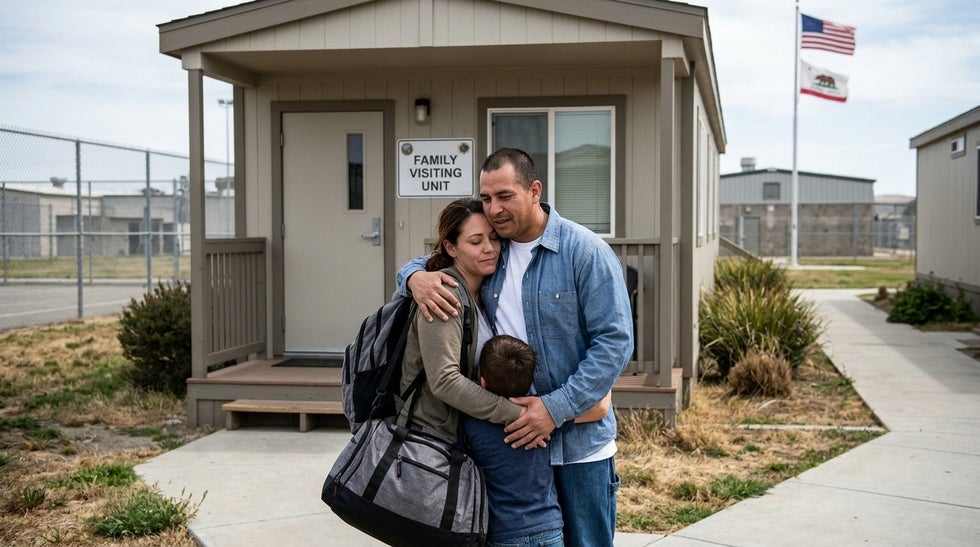
Conjugal visits in California are officially called family visiting (overnight) and are governed by Title 15 section 3177. The program lets a spouse, registered domestic partner, or close relatives stay in a small, furnished unit on prison grounds for 30 to 40 hours.
These visits are unsupervised, meaning staff do not remain in the unit. The inmate must still report for count at set times, and the unit and everyone entering it are subject to search. The privilege can be granted, limited, or revoked based on the inmate's conduct.
Definition and Scope of Family Visiting in California
Family visiting is a private, overnight stay that allows a spouse, registered domestic partner, and certain relatives to live together in a prison unit. The program is designed to preserve family bonds during long sentences.
California's regulations list parents, children, siblings, grandparents, and grandchildren as eligible visitors. The program is not a constitutional right; it is a privilege subject to prison rules and policy.
Regulatory Language and Physical Setting of the Visits
Title 15 section 3177 describes the unit as a small, furnished space with a kitchen, bathroom, and one or two bedrooms. The unit is located within the secure perimeter of the prison.
Staff do not stay in the unit, but the inmate must present for count at set times. The unit and everyone entering it are subject to search, ensuring security while allowing family time.
Legal Precedent: Overton v. Bazzetta and the Privilege Doctrine
In Overton v. Bazzetta (2003), the Supreme Court affirmed that prison officials have wide latitude over visiting programs, treating them as privileges rather than rights.
California follows this doctrine, granting family visiting under its regulations while allowing the state to restrict or deny access based on legitimate penological interests.
Eligibility Requirements for Incarcerated Persons and Visitors
In my experience defending California felony cases, I've seen how the eligibility rules for family visiting can make or break a family's hope for contact.
The rules involve three key tests: facility, work group, and offense exclusions. Readers comparing related California statutes also review our guide on violating a protective order under Penal Code 273.6.
California Penal Code 2600 requires restrictions to be reasonably related to legitimate penological interests, while Penal Code 2601 preserves an inmate's right to marry. These statutes shape the family visiting privilege.
Inmate Eligibility: Facility, Work Group, and Offense Exclusions
Only inmates housed in state prisons or conservation camps run by CDCR can apply. County jails and federal facilities do not offer family visiting.
Inmates must be assigned to a qualifying work and privilege group. Group A inmates have full access; Group B inmates may have one visit every six months; lower groups have none.
Inmates must not be barred by offense exclusions or custody and discipline exclusions listed in Title 15 section 3177. They also must not be under any current order restricting or suspending visits.
Visitor Eligibility: Immediate Family and Domestic Partners
Visitors must be immediate family: a legal spouse, registered domestic partner, parent, stepparent, foster parent, child, stepchild, sibling, grandparent, or grandchild. Same-sex spouses and registered domestic partners are treated the same.
Girlfriends, boyfriends, fiancés, cousins, and friends do not qualify, no matter how long the relationship. Minors generally need an adult escort, with exceptions the warden can approve for the inmate's own children, stepchildren, and siblings.
Impact of County Jail Sentences Under Penal Code 1170(h)
Many felonies are now sentenced under Penal Code 1170(h) and served in county jails, which do not have family visiting. A local sentence may be preferable for families, but it limits contact opportunities.
County jail inmates cannot participate in the program, so families must consider whether a state sentence is more suitable for maintaining family ties.
|
Statute |
Key Requirement |
Penalty |
|---|---|---|
|
Penal Code 2600 |
Reasonableness test |
Restriction justified |
|
Penal Code 2601 |
Right to marry |
Preserved |
|
Penal Code 1170(h) |
County jail sentencing |
No family visiting |
|
Penal Code 273.5 |
Domestic violence |
Exclusion |
Offense and Custody Exclusions That Bar Family Visits
Family visiting is subject to a detailed exclusion list in Title 15 section 3177. Some exclusions are permanent, tied to specific convictions, while others are temporary and depend on discipline or housing.
Violations of the victim-relationship test for homicide and assault, as well as certain sex offenses, can permanently bar an inmate from family visits.
The 2016 amendment to Penal Code 6404 changed the rule for lifers. Readers comparing related California statutes also review our guide on corporal injury charges under Penal Code 273.5 in Calaveras County.
Statutory Exclusions: Domestic Violence (PC 273.5) and Sex Offenses (PC 290)
Domestic violence convictions under Penal Code 273.5 and sex offenses under Penal Code 290 are listed in Title 15 section 3177 as permanent exclusions. These crimes trigger automatic denial of family visiting.
Inmates convicted of these offenses must meet strict criteria to regain eligibility, and many never qualify again. The exclusion list is broad, and a conviction not named can still be treated as disqualifying if it is of the same character.
Victim Relationship Test for Homicide and Assault Convictions
For homicide and assault, the exclusion turns on whether the victim was a family member or a minor. If the victim falls into those categories, the inmate is barred from family visiting.
The victim-relationship test is recorded in the plea and probation report and follows the person for the entire term, affecting eligibility even years later.
Life Sentences, Death Row, and the 2016 Amendment to Penal Code 6404
Until 2016, California barred anyone serving a life term from family visits. Penal Code 6404 now says a person cannot be denied family visits based solely on a life sentence without parole or a life sentence with no parole date.
Murder convictions still exclude inmates if the victim was a family member or a minor, and death-row inmates remain excluded from family visiting.
How to Apply for a Family Visit and What to Expect
In my experience, families often feel lost when they first learn about the family visiting process. The key is to start early and keep every form and document ready.
Once the inmate sends a written request to the prison's family visiting coordinator, the coordinator reviews eligibility, sends the required forms, and places the request on the waiting list. Regular visiting approval is a prerequisite for family visits.
Step-by-Step Application Procedure and Required Forms
The inmate initiates the process by submitting a written request to the family visiting coordinator. The coordinator checks the inmate's classification group and confirms the visitor's relationship.
Visitors must complete the CDCR visitor application, provide a marriage certificate or registered domestic partner registration, and submit any required identification.
The coordinator then places the request on the waiting list. Readers comparing related California statutes also review our guide on Penal Code 288 felony defense in California.
Once approved, the visitor receives a scheduled visit date and time. The visitor must arrive by the specified time and bring any approved items. Failure to arrive on time can lead to a six-month suspension of privileges.
Financial Responsibilities: Meals, Unit Use, and Accommodation Fees
The unit itself is free, but meals are not. Inmates must order meals in advance through the coordinator, and the cost is paid by the inmate or the visitor, depending on the facility's policy.
Conservation camps require visitors to bring their own food, while state prisons allow pre-ordered meals. The visitor must also cover any accommodation fees if the visit lasts more than the standard 30-40 hours.
Timing, Late Arrivals, and Suspension Risks
Visitors must report to processing by 11:00 a.m. On the day of the visit. Arriving late without prior approval can cancel the visit and suspend the privilege for six months.
Disability accommodations require at least 72 hours' notice. If the inmate or visitor fails to provide adequate notice, the request may be denied or delayed.
When a Family Visit Is Denied and How to Appeal
In my practice, I see families frustrated when a denial letter arrives. Understanding the reasons and the appeal path can save time and stress.
Denials usually stem from offense exclusions, disciplinary sanctions, or incomplete paperwork. The inmate has the right to request a written explanation and can appeal to the classification committee.
Common Reasons for Denial and How They Relate to Statutes
Offense exclusions listed in Title 15, section 3177 automatically bar certain crimes, such as violent felonies. Disciplinary sanctions, like a positive drug test, can also trigger a denial.
Incomplete paperwork, such as missing marriage certificates, leads to administrative denial. The inmate can correct the paperwork and reapply, but the denial remains on the record until resolved.
Administrative Appeal Process Within CDCR
The inmate may file an appeal with the classification committee within 30 days of the denial. The committee reviews the inmate's file, the denial reason, and any new evidence. Readers comparing related California statutes also review our guide on probation violations under Penal Code 1203.2.
If the committee upholds the denial, the inmate can request a hearing before the CDCR Board of Prison Commissioners. The board may reverse or modify the decision if it finds procedural errors.
Judicial Review Options Under Penal Code 2600
Under Penal Code 2600, a denial must be reasonably related to legitimate penological interests. Courts can review arbitrary denials for constitutional violations.
Although no constitutional right to a conjugal visit exists, courts may grant relief if the denial violates the reasonableness standard. The inmate can file a petition for judicial review in the appropriate California court.
Comparison of California's Conjugal Visit Program with Other States
California is one of only four states that still allow conjugal visits, and it runs the largest program in the nation. Understanding how other states compare helps families set realistic expectations.
Other states vary in eligibility, duration, and program scope. Some limit visits to spouses only, while others include children and other family members.
States That Currently Permit Conjugal or Family Visits
California, Connecticut, New York, and Washington all maintain family visiting programs. Mississippi and New Mexico ended theirs in 2014, and federal prisons do not permit conjugal visits.
Connecticut's program includes children, Washington limits visits to spouses, and New York's program is the second largest in the country.
Key Differences in Eligibility, Duration, and Program Scope
Eligibility varies: Connecticut allows visits for parents, children, and spouses; Washington restricts to spouses; New York permits a broader range of relatives.
Typical visit lengths differ: California offers 30-40 hours, New York offers up to 48 hours, and Washington limits to 24 hours.
Why California's Program Is the Largest in the Nation
California's program benefits from a large inmate population and generous funding. The state's regulations, such as Penal Code 2600, provide a system that balances security with family contact. Readers comparing related California statutes also review our guide on felony hit and run under Vehicle Code 20001.
California's program also offers more flexible scheduling and a larger number of units, making it the most accessible for families nationwide.
|
State |
Eligibility |
Typical Visit Length |
Lifers Allowed? |
|---|---|---|---|
|
California |
Spouse, partner, parents, siblings, grandparents, grandchildren |
30-40 hours |
No |
|
Connecticut |
Spouse, partner, parents, children, siblings, grandparents |
30-40 hours |
No |
|
New York |
Spouse, partner, parents, siblings, grandparents, grandchildren |
Up to 48 hours |
No |
|
Washington |
Spouse, partner only |
24 hours |
No |
How The Bulldog Law Can Protect Your Family Visiting Rights in California
Our California criminal defense team reviews every piece of evidence, from police reports to prison records, to safeguard your loved one's constitutional rights. We move quickly, filing motions and objections from day one.
We fight to keep family-visiting privileges intact while you face charges, and we guide you through every step of the process. Call (888) 928-1609 for a confidential case review.
Full statutory definitions and statewide court rules are maintained by Title 15, section 3177 and Penal Code 6404 for criminal proceedings across all 58 California counties.
Frequently Asked Questions
What are the legal requirements for a spouse to obtain a conjugal visit in California?
The inmate must be in a state prison, belong to a qualifying privilege group, and have no serious discipline findings in the past 12 months. The visitor must be an immediate family member, such as a legal spouse.
Sex offenders, violent offenders against minors, death-row inmates, and those in restricted housing are barred. The program is governed by Title 15, § 3177 of the California Code of Regulations.
Are conjugal visits currently allowed in any California state prisons or jails?
Family visits are offered only at California Department of Corrections and Rehabilitation state prisons and conservation camps. No county jail or federal facility provides overnight conjugal visits.
Eligibility depends on the prison's privilege groups and unit availability; waiting lists of several months are common. The rule is set by California Code of Regulations Title 15.
How does California's policy on conjugal visits compare to neighboring states like Nevada and Oregon?
California is one of four states that still allow family visits, alongside Connecticut, New York, and Washington. Nevada and Oregon have eliminated overnight conjugal visits entirely.
Unlike its neighbors, California's program lasts 30-40 hours and is limited to state prisons, not local jails. This distinction is outlined in Penal Code 6404 and related regulations.
What is the process for applying for a family visit for an inmate serving a life sentence in California?
The inmate must submit a family-visit application through the CDCR, confirming no disqualifying offenses and a clean disciplinary record. All other privilege-group requirements apply equally to lifers.
Since 2016 Penal Code 6404, the Department cannot deny a visit solely because the inmate is serving life with or without parole. The application is reviewed by the prison's visiting-unit staff.
Can a conviction under Penal Code 273.5 permanently block a family visit?
A conviction for domestic violence under Penal Code 273.5 does not automatically bar a family visit, but the inmate must still meet all privilege-group and discipline criteria.
If the offense involved a minor or a family member, the inmate may be excluded under the program's violent-offender exclusions, which are enforced on a case-by-case basis.
What costs are associated with meals and accommodations during a California family visit?
The CDCR provides the private unit and basic furnishings at no charge. However, the visiting family is responsible for any meals, personal items, and optional services they choose.
Costs vary by facility, but typical expenses include groceries and transportation. No additional fees are imposed by the prison for the use of the unit itself.
If a family visit is denied, what appeal options does the inmate have?
The inmate can request a written reconsideration from the prison's visiting-unit supervisor, citing any errors or new information that addresses the denial.
If the supervisor's decision remains unfavorable, the inmate may file a writ of administrative mandate in the Superior Court, challenging the denial under Penal Code 6404 and related regulations.