
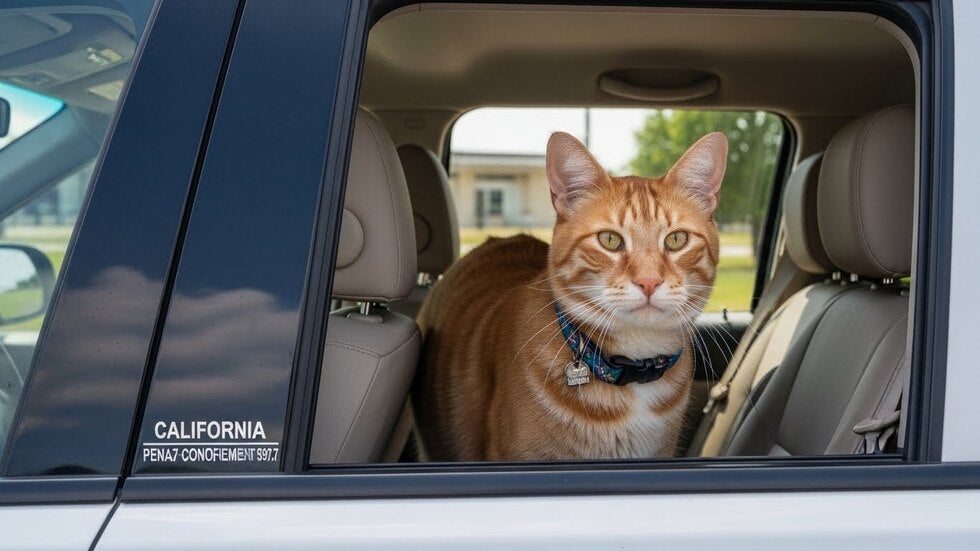
California Penal Code Section 597.7 criminalizes leaving animals unattended in motor vehicles under conditions that could endanger their health or well-being. While this law serves the important purpose of protecting animals from harm, it can also result in criminal charges against well-meaning pet owners who face unexpected circumstances or brief delays.
Understanding the specific legal requirements and available defenses is crucial for protecting your rights when facing these emotionally charged allegations.
Understanding California's Vehicle Animal Confinement Law
Penal Code Section 597.7 reflects California's strong commitment to animal welfare, but its broad language can criminalize conduct that poses minimal risk to animals or occurs under circumstances beyond the defendant's control. The statute requires prosecutors to prove that conditions actually endangered the animal's health or well-being, creating opportunities for effective legal defense.
The law operates within California's broader animal cruelty framework, working alongside PC 597 and other animal protection statutes to create comprehensive protection for animals while establishing criminal liability for their mistreatment. However, this protective intent doesn't eliminate the need for careful legal analysis and aggressive defense when charges are filed.
Essential Elements Prosecutors Must Prove
Unattended Vehicle Requirement
PC 597.7 requires that animals be left "unattended" in vehicles, but this element can be challenged when owners remain nearby, return quickly, or take reasonable steps to monitor their animals. Your defense attorney should examine the specific circumstances to determine whether the vehicle was truly "unattended" within the statute's meaning.
If you remained within reasonable proximity to your vehicle, checked on your animal regularly, or had someone else monitoring the situation, the prosecution may be unable to establish the unattended element required for conviction.
Dangerous Conditions Analysis
The prosecution must prove that conditions in the vehicle could endanger the animal's health or well-being due to heat, cold, lack of ventilation, or other dangerous circumstances. This requirement provides substantial defense opportunities when examining actual conditions and their potential impact on the specific animal involved.
Your defense team should investigate weather conditions, vehicle characteristics, duration of confinement, and the animal's breed, age, and health status to challenge claims that dangerous conditions actually existed.
Causation and Harm Requirements
While PC 597.7 doesn't require actual harm to animals, prosecutors must establish that conditions could reasonably cause harm. This causation requirement creates opportunities to challenge prosecution theories when conditions were mild, duration was brief, or other factors minimized risk.
Expert testimony about animal physiology, environmental conditions, and risk assessment can effectively challenge prosecution claims about potential harm.
Common Defense Strategies
Duration and Timing Challenges
Many PC 597.7 cases involve brief stops where owners intended to return quickly but faced unexpected delays. Your defense should present evidence about your original intentions, the circumstances that caused delays, and the reasonableness of your initial plan.
If you left your animal for a brief period expecting to return quickly, encountered unexpected delays, or took reasonable precautions, these circumstances may support defense arguments about lack of criminal intent or dangerous conditions.
Weather and Environmental Conditions
California's diverse climate creates varying risks for animals left in vehicles, with some conditions posing minimal danger while others create serious hazards. Your attorney should carefully analyze actual weather conditions during the time period in question.
Meteorological evidence, temperature readings, and expert testimony about environmental risks can challenge prosecution claims when conditions were mild or posed minimal danger to animals.
Vehicle Modification and Ventilation
Some vehicles include features specifically designed to protect animals, such as specialized ventilation systems, temperature controls, or monitoring devices. Your defense should present evidence about any safety features or modifications that reduced risks to your animal.
Documentation about vehicle equipment, manufacturer specifications, and safety features can support arguments that adequate protection was provided even during your temporary absence.
Animal-Specific Factors
Different animals have varying tolerance for environmental conditions based on breed, age, size, health status, and acclimation. Your defense should present evidence about your specific animal's characteristics and how they affect susceptibility to harm.
Veterinary records, breed information, and expert testimony about animal physiology can challenge prosecution assumptions about potential harm based on general rather than specific risk factors.
Emergency and Necessity Defenses
Medical Emergencies
When animal confinement occurs during medical emergencies or other urgent situations, necessity defenses may apply even if technical violations occurred. Your attorney should examine whether emergency circumstances justified your actions.
If you faced medical emergencies, family crises, or other urgent situations that required immediate attention, these circumstances may provide complete defenses to PC 597.7 charges.
Lack of Reasonable Alternatives
California law recognizes necessity defenses when defendants faced situations where reasonable alternatives were unavailable. Your defense should examine whether practical alternatives existed for animal care during the time period in question.
If no reasonable alternatives were available for animal supervision, if emergency circumstances prevented other arrangements, or if you took all reasonable precautions under the circumstances, necessity defenses may apply.
Challenging Rescue and Reporting Procedures
Civil Code Section 43.100 Implications
California Civil Code Section 43.100 provides immunity for individuals who damage vehicles while rescuing animals, but this provision can create complications for PC 597.7 defenses when rescue attempts occurred. Your attorney should examine whether rescue was actually necessary or appropriate under the circumstances.
If animals were rescued unnecessarily, if proper procedures weren't followed, or if conditions didn't actually justify intervention, these factors may support defense arguments about the absence of dangerous conditions.
Witness Credibility Issues
Many PC 597.7 cases begin with reports from concerned citizens who may lack expertise in animal welfare or may misinterpret normal animal behavior as distress. Your defense should carefully examine witness qualifications and the reliability of their observations.
Challenging witness expertise, examining their ability to assess animal welfare, and presenting alternative explanations for observed animal behavior can undermine prosecution cases based on civilian reports.
Constitutional and Procedural Defenses
Fourth Amendment Search Issues
PC 597.7 investigations often involve searches of vehicles and examination of animals that must comply with Fourth Amendment protections. Your attorney should examine whether proper authority existed for any searches and whether constitutional violations occurred.
If law enforcement exceeded their authority, conducted searches without proper justification, or violated constitutional protections during evidence gathering, suppression motions may eliminate crucial prosecution evidence.
Due Process and Notice Requirements
The broad language of PC 597.7 may create due process concerns when individuals cannot reasonably understand what conditions constitute criminal violations. Your defense should consider constitutional challenges when the statute's application is unclear or overly broad.
Selective Enforcement Challenges
If enforcement patterns suggest discriminatory application based on economic status, location, or other factors unrelated to animal welfare, equal protection challenges may be appropriate.
Expert Testimony and Technical Evidence
Veterinary Expert Witnesses
Qualified veterinarians can provide crucial testimony about animal physiology, environmental risks, and the specific conditions that actually endanger different types of animals. Your defense team should consider retaining veterinary experts who can challenge prosecution theories.
This testimony can address breed-specific tolerances, the actual health impact of environmental conditions, and whether observed animal behavior indicates distress or normal responses to confinement.
Environmental and Engineering Experts
Complex cases may require expert testimony about vehicle design, environmental conditions, or engineering factors that affect animal safety. These experts can provide technical analysis contradicting prosecution claims about dangerous conditions.
Mitigation and Alternative Sentencing
Animal Care Education Programs
First-time offenders who demonstrate genuine concern for animal welfare may be eligible for educational programs or community service related to animal care rather than traditional criminal penalties.
Your attorney should explore diversion programs that address animal welfare concerns while avoiding criminal convictions that can affect employment, professional licenses, and personal reputation.
Demonstrating Animal Welfare Commitment
Evidence about your history of animal care, veterinary records, and commitment to animal welfare can support mitigation arguments and demonstrate that violations were aberrational rather than reflecting indifference to animal suffering.
Collateral Consequences and Professional Impact
Professional License Implications
PC 597.7 convictions can affect professional licenses, particularly for individuals working in animal care, veterinary medicine, or other fields where animal welfare is relevant to professional qualifications.
Your defense strategy must consider these collateral consequences and work to minimize their impact through aggressive defense or favorable plea negotiations.
Civil Liability Concerns
Animal cruelty convictions can expose defendants to civil liability from animal welfare organizations or individuals who may claim emotional distress or other damages related to animal mistreatment allegations.
Building Your Defense Strategy
Immediate Investigation Needs
PC 597.7 cases require immediate investigation to preserve evidence about environmental conditions, vehicle characteristics, and animal welfare at the time of alleged violations. Delays in investigation can result in lost evidence that supports your defense.
Your attorney should immediately begin documenting conditions, interviewing witnesses, and preserving evidence that supports alternative explanations for the circumstances that led to charges.
Character and Mitigation Evidence
Comprehensive character evidence about your relationship with animals, history of responsible pet ownership, and circumstances leading to the alleged violation can prove crucial in achieving favorable outcomes.
Protecting Your Rights and Reputation
PC 597.7 charges carry significant social stigma beyond criminal penalties, as animal cruelty allegations can damage personal and professional relationships even when charges are ultimately dismissed or reduced.
The emotionally charged nature of animal welfare cases requires skilled legal representation that understands both the technical legal requirements and the broader social context of these prosecutions. Contact experienced criminal defense counsel immediately to begin protecting your rights and reputation against these serious allegations.
Call us at (888) 928-1609 or send an email to get started.