
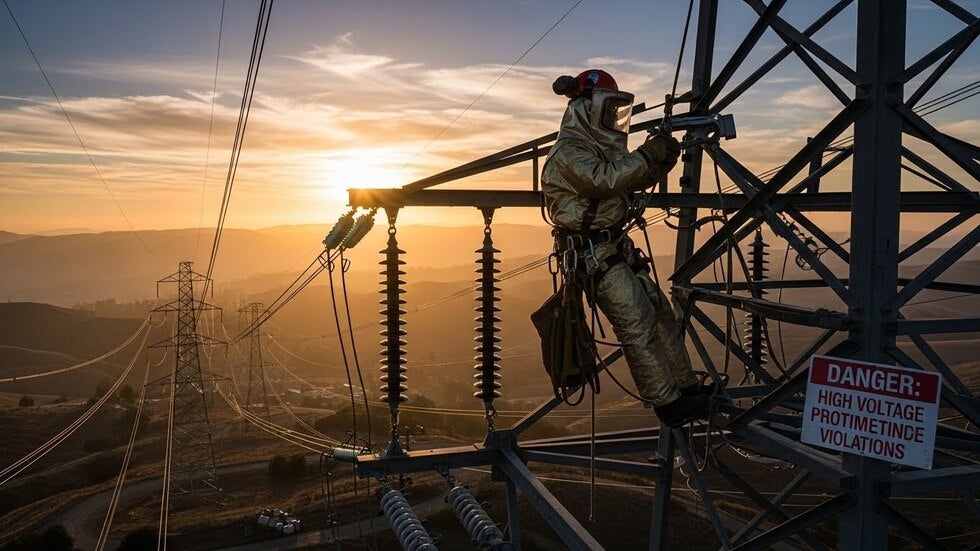
California Penal Code Section 385 addresses safety violations involving work near high voltage overhead power lines. If you or your business are facing charges under this statute, understanding the technical requirements, available defenses, and the context of these safety regulations is crucial. While these laws exist to prevent serious injuries and deaths, charges can arise from situations where no actual danger occurred or where compliance was attempted in good faith.
What California Penal Code 385 Prohibits
California Penal Code Section 385 makes it a misdemeanor to operate, place, erect, or move tools, machinery, equipment, materials, buildings, or structures within six feet of a high voltage overhead conductor. The statute applies whether you personally performed the work, directed employees or agents to do so, or acted as an employee or agent of another party.
Additionally, the law requires owners and operators of certain equipment capable of vertical, lateral, or swinging motion to post specific warning signs visible to operators. Equipment covered by this requirement includes cranes, derricks, power shovels, drilling rigs, hay loaders, hay stackers, pile drivers, and similar apparatus. Failing to post or maintain these required warning signs constitutes a separate misdemeanor violation for each day the sign is absent.
Understanding both aspects of this statute is important because charges can arise from actual proximity violations or from administrative failures to maintain proper signage, even when no proximity violation occurred. Your defense strategy must address whichever violation you are accused of committing.
Defining High Voltage Under California Law
Section 385 specifically defines "high voltage" as voltage exceeding 750 volts, measured either between conductors or between a conductor and the ground. This definition is critical because it determines which electrical lines trigger the six foot clearance requirement and which do not.
Not all overhead power lines carry high voltage under this statutory definition. Residential service lines, for example, typically carry much lower voltages and do not fall within Section 385's scope. Your defense attorney should verify that the power lines near your work site actually met the statutory definition of high voltage.
This verification requires expert analysis and often cooperation from utility companies to determine the actual voltage of specific lines. If the prosecution cannot prove that the lines in question carried more than 750 volts, the charges cannot stand regardless of how close your equipment came to the conductors. Never assume the prosecution has correctly identified line voltage without demanding proof.
Understanding Overhead Conductor Requirements
The statute defines "overhead conductor" as any electrical conductor, bare or insulated, installed above ground except those enclosed in iron pipe or other metal covering of equal strength. This definition creates an important exception that may apply to your situation.
If the electrical lines near your work site were enclosed in protective metal coverings meeting the statutory standard, they may not qualify as overhead conductors under Section 385. Underground cables, conduits, and properly enclosed lines fall outside the statute's reach. Your defense should examine exactly what type of electrical infrastructure existed at the work site and whether it meets the definition requiring six foot clearance.
Photographs, utility company records, and expert testimony can establish whether lines were actually overhead conductors or fell within the protective enclosure exception. This technical distinction can mean the difference between conviction and complete dismissal of charges.
The Six Foot Clearance Requirement and Measurement Issues
Section 385 requires maintaining at least six feet of distance from high voltage overhead conductors. While six feet might seem straightforward, measuring this distance accurately in real world work environments presents challenges that create defense opportunities.
How is the six foot distance measured? From the closest point of equipment to the nearest conductor? Does swaying of power lines in wind affect the measurement? What about equipment that moves or extends during operation? These questions matter enormously when determining whether a violation actually occurred.
Your defense attorney should investigate the specific circumstances of the alleged violation including weather conditions, equipment positioning, and how measurements were made. If prosecution evidence relies on estimates, photographs from unclear angles, or assumptions rather than precise measurements, reasonable doubt may exist about whether the six foot threshold was actually breached.
Additionally, if your equipment came within six feet only momentarily due to wind gusts, ground shifting, or other factors beyond your control, this context is relevant to questions about criminal intent and the reasonableness of your safety precautions.
Challenging Warning Sign Violation Charges
The second major provision of Section 385 requires posting durable warning signs on equipment capable of vertical, lateral, or swinging motion. These signs must be legible at twelve feet and must read: "Unlawful to operate this equipment within six feet of high voltage lines."
If you are charged with failing to post or maintain required signage, several defenses may apply. Perhaps signs were posted but became damaged or illegible due to weather, wear, or vandalism. Maybe signs were present but positioned where they were not immediately visible to inspectors. Or possibly your equipment does not actually fall within the categories requiring signage.
The statute lists specific equipment types including cranes, derricks, power shovels, drilling rigs, hay loaders, hay stackers, and pile drivers, then adds "or similar apparatus." This catch all phrase creates ambiguity about what other equipment requires signs. Your defense can argue that your particular equipment is not sufficiently similar to the specifically listed types to trigger the signage requirement.
Photographs showing that signs were present, maintenance records documenting sign replacement or repair, and testimony from workers about sign visibility can all support defenses against signage violations. Even if signs were temporarily absent, evidence of good faith compliance efforts may support reduced charges or alternative dispositions.
The Daily Violation Provision and Excessive Penalties
Section 385 states that each day of failing to post or maintain required warning signs constitutes a separate violation. This provision means that extended periods without proper signage can result in dozens or even hundreds of individual misdemeanor charges, each carrying potential fines and jail time.
While prosecutors technically could charge multiple violations for each day, defending against such excessive charging is possible. Arguments based on proportionality, due process, and prosecutorial discretion can convince judges that multiple charges for what amounts to a single administrative failure constitute overreach.
Your defense attorney can negotiate with prosecutors to consolidate charges or limit the number of days for which separate violations will be pursued. Demonstrating that you took prompt corrective action once the signage problem was discovered supports arguments that multiple charges are unwarranted.
Statutory Exemptions and Their Application
Section 385 contains three important exemptions that provide complete defenses if they apply to your situation. Understanding these exemptions and gathering evidence to support them is crucial.
First, the statute does not apply to construction, reconstruction, operation, or maintenance of high voltage overhead conductors or their supporting structures by persons authorized by the owner. If you were working on the power lines themselves or on related infrastructure with proper authorization, this exemption provides a complete defense.
Second, the law exempts operation of standard rail equipment normally used for transporting freight or passengers, as well as relief trains and emergency railroad equipment operated by authorized persons. If your work involved railroad operations within this exemption, charges should be dismissed.
Third, construction, reconstruction, operation, or maintenance of overhead structures covered by Public Utilities Commission rules for overhead line construction are exempt. This exemption recognizes that some work is already regulated by specialized PUC safety requirements and should not face additional criminal liability under Section 385.
Your defense must carefully document that your activities fell within one of these exemptions. Written authorizations, contracts, permits, and testimony from utility company representatives can establish exemption eligibility. Even if some aspects of your work did not qualify for exemption, proving that the specific conduct charged falls within an exception defeats the prosecution's case.
The Role of Industry Standards and Best Practices
While Section 385 establishes a bright line six foot rule, industry standards and best practices for working near power lines provide important context for your defense. Organizations like OSHA, utility companies, and trade associations publish detailed safety guidelines that often require greater clearances or additional precautions beyond the statutory minimum.
If you followed industry best practices, maintained safety protocols that exceeded legal requirements in most respects, and employed qualified personnel trained in electrical hazard awareness, this evidence demonstrates good faith efforts to maintain safety even if a technical violation occurred. Courts and prosecutors recognize that construction and utility work involves inherent risks and that responsible contractors who prioritize safety deserve consideration even when mistakes happen.
Expert witnesses from the construction, utility, or safety industries can testify about standard practices, the reasonableness of your safety measures, and whether your conduct fell within acceptable norms. This testimony humanizes your case and shows that any violation represented an isolated incident rather than reckless disregard for safety.
Employment Relationships and Liability Issues
Section 385 creates liability for multiple parties including individuals who personally commit violations, employers whose employees or agents violate the statute, and employees or agents acting on behalf of others. This broad liability framework means that both workers and their supervisors or employers can face charges arising from a single incident.
If you are an employee charged under Section 385, your defense may focus on whether you received adequate training, whether you followed instructions from supervisors, and whether you had authority to make decisions about equipment placement or safety protocols. Employees directed to perform dangerous work by supervisors who ignored safety concerns may have defenses based on duress or lack of criminal intent.
Employers facing charges must examine whether their safety training programs, supervision systems, and policies adequately addressed power line proximity hazards. Evidence of robust safety programs, regular training, written policies, and disciplinary systems for safety violations demonstrates that any violation represented employee misconduct rather than corporate negligence or indifference.
The Absence of Actual Harm and Proportionate Justice
One important consideration in defending Section 385 cases involves whether any actual harm or danger resulted from the alleged violation. While the statute aims to prevent injuries and deaths, many prosecutions involve situations where equipment came near power lines but no contact occurred, no one was injured, and no property was damaged.
Courts have discretion in sentencing, and judges often consider whether real harm occurred when fashioning appropriate penalties. If your case involves a technical violation with no adverse consequences, presenting evidence of your safety record, lack of prior violations, and the absence of any actual danger supports arguments for minimal punishment or alternative dispositions.
This does not mean that violations causing no harm are defensible or unimportant. Electrical contact with high voltage lines causes horrific injuries and deaths every year, and California's strict liability approach serves legitimate safety interests. However, proportionate justice requires distinguishing between reckless conduct creating serious risks and technical violations occurring despite good faith safety efforts.
Workplace Safety Culture as Mitigation
Even if conviction cannot be avoided, presenting evidence about your overall commitment to workplace safety can significantly influence sentencing. Documentation of safety meetings, training programs, equipment inspections, incident reports, and safety investments demonstrates that you take worker protection seriously.
Testimony from employees, safety consultants, and industry experts about your safety culture provides context showing that any violation was aberrational rather than representative of your standard practices. This evidence supports arguments for probation, reduced fines, or alternative sentences focused on education rather than punishment.
Working with Experienced Defense Counsel
Successfully defending charges under California Penal Code Section 385 requires attorneys who understand electrical safety regulations, construction industry practices, employment law, and criminal defense strategy. Your criminal defense lawyer should investigate the technical aspects of the alleged violation, retain appropriate experts, examine whether statutory exemptions apply, and present compelling arguments about your safety efforts and good faith compliance attempts.
These cases often involve complex factual disputes about measurements, equipment capabilities, industry standards, and employment relationships. Thorough investigation and expert testimony can create reasonable doubt or establish complete defenses based on statutory exemptions. Even when the underlying facts are not strongly disputed, skilled advocacy regarding appropriate disposition and sentencing can dramatically affect outcomes.
Taking Action to Protect Your Rights and Business
If you are facing charges under Section 385, consulting with a criminal defense attorney immediately is essential. These charges threaten not only potential jail time and fines but also your business reputation, professional licenses, and future ability to obtain construction or utility work. Early intervention provides the best opportunity to investigate the case thoroughly, preserve evidence, and develop effective defense strategies that protect both your legal rights and your business interests.