
If You Need Help Right Now
National Domestic Violence Hotline: call 1-800-799-7233 (1-800-799-SAFE), text START to 88788, or chat at TheHotline.org, free, confidential, 24/7, in more than 200 languages.
In immediate danger: call 911 if it is safe to do so.
If you are worried your device or internet activity is being monitored, consider using a safer phone or computer, and clearing your browser history after visiting resource websites. A full list of resources appears later in this article.
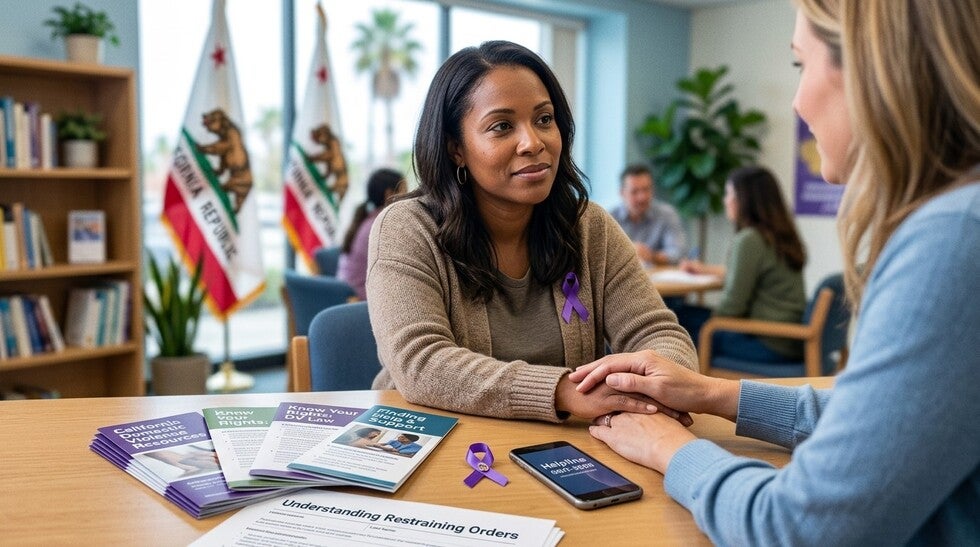
October is Domestic Violence Awareness Month, a nationwide observance dedicated to honoring survivors, remembering those whose lives were lost, and connecting people affected by abuse with support and safety. It is a month for education, for community, and above all for making sure that no one who is experiencing abuse believes they are alone or without options.
Domestic violence touches every kind of community in California, urban and rural, wealthy and struggling, across every cultural and demographic group. Awareness is the first step toward prevention, intervention, and healing. This guide explains what the observance means, what the data shows, how California law defines domestic violence, and where survivors and those affected can find confidential help.
As a criminal defense firm, The Bulldog Law encounters the legal side of these situations every day. We believe that raising awareness, sharing accurate information, and pointing people toward real resources is part of our responsibility to the communities we serve, and that a legal system built on both safety for survivors and fairness for the accused serves everyone better.
What Is Domestic Violence Awareness Month?
Domestic Violence Awareness Month is an annual observance held every October to raise public awareness of domestic violence, support survivors, and unite the many organizations working to end abuse.
It grew out of the "Day of Unity" first observed in October 1981 by the National Coalition Against Domestic Violence, which evolved into a week and then, in 1987, into the first national Domestic Violence Awareness Month. The purple ribbon is its enduring symbol.
The Three Goals of the Observance
The observance has three closely connected purposes: mourning those who have died because of domestic violence, celebrating those who have survived, and connecting those who work to end it.
Throughout October, domestic violence organizations, community groups, schools, and workplaces across California hold candlelight vigils, awareness events, fundraisers, and educational programs. The goal is not only to mark a month on the calendar but to keep a conversation going, because abuse depends on silence to continue. When communities talk openly about these issues, survivors feel less alone, and prevention becomes possible.
How Common Is Domestic Violence in the U.S. and California?
Domestic violence is far more common than many people realize. According to the Centers for Disease Control and Prevention's National Intimate Partner and Sexual Violence Survey, more than one in three women and more than one in six men experience physical violence, sexual violence, or stalking by an intimate partner in their lifetime. The CDC also estimates that nearly twenty people per minute are physically abused by an intimate partner in the United States, adding up to more than ten million people every year.
The Numbers in California
California reflects the national picture closely. According to figures compiled by the National Coalition Against Domestic Violence, roughly 34.9% of women and 31.1% of men in California experience physical violence, sexual violence, or stalking by an intimate partner during their lifetime.
In a single recent year, California law enforcement agencies received over 160,000 domestic-violence-related calls, and nearly half of those calls involved a weapon. The danger that weapons add to these situations is severe, the presence of a firearm in a domestic violence situation increases the risk of homicide by roughly 500%, according to the NCADV.
The impact reaches far beyond the two people directly involved. Research indicates that about one in fifteen children are exposed to intimate partner violence each year, and roughly ninety percent of those children witness it firsthand. This is a reminder that domestic violence is a public health issue affecting whole families and future generations, not a private matter confined to two people.
Because domestic violence remains one of the most underreported crimes, experts widely agree that the true numbers are higher than any survey captures. Many survivors do not come forward out of fear, financial dependence, or lack of access to support. That is exactly why awareness, resources, and community education matter so much.
What Does California Law Define as Domestic Violence?
Under California law, domestic violence is abuse or threats of abuse committed against someone with whom the person has a close relationship, such as a spouse, former spouse, cohabitant, dating partner, co-parent, or close family member.
The Key California Statutes
California addresses domestic violence through several statutes, and understanding them matters whether you are a survivor seeking protection or someone navigating the legal process.
Penal Code § 273.5 makes it a crime to inflict a corporal injury resulting in even a minor traumatic condition on an intimate partner. Penal Code § 243(e)(1) covers domestic battery, an unwanted, harmful, or offensive touching of an intimate partner, even where no visible injury results. Penal Code § 273.6 makes it a crime to violate a protective order or restraining order.
California law defines abuse broadly. It is not limited to physical harm, it can include sexual abuse, threats, stalking, harassment, and behavior that causes another person to reasonably fear serious harm. Emotional abuse, financial control, and isolation are also widely recognized as forms of intimate partner violence, even where they do not always trigger a specific criminal charge on their own.
Civil Protective Orders in California
California also provides civil protective orders, including emergency protective orders, temporary restraining orders, and longer-term domestic violence restraining orders, that can require an abuser to stay away, move out of a shared home, or surrender firearms. To understand how these orders work and the differences between them, our guide on temporary vs. permanent domestic violence restraining orders in California explains the process clearly.
These civil protections exist independently of any criminal case, and a survivor can seek them whether or not criminal charges are ever filed. A local domestic violence organization or family law self-help center can help a survivor understand and pursue these options safely. If children are involved, it is also worth knowing how child custody and domestic violence interact under California law, as protective orders and custody arrangements often affect each other directly.
Where Can People Affected by Domestic Violence Find Help in California?
Confidential help is available at any hour, for free, throughout California, starting with the National Domestic Violence Hotline and California's statewide network of local organizations. No one has to navigate this alone, and reaching out does not commit anyone to any particular decision. Advocates can help with safety planning, emotional support, emergency shelter, legal information, and referrals, on the survivor's own terms.
Confidential Domestic Violence Resources
All of the following resources are confidential and available to anyone, regardless of immigration status, gender, or circumstances.
National Domestic Violence Hotline: 1-800-799-7233 (1-800-799-SAFE), call, text START to 88788, or chat at TheHotline.org. Free, confidential, 24/7, in 200+ languages, with crisis intervention, safety planning, and local referrals.
California Partnership to End Domestic Violence (CPEDV): visit cpedv.org/find-help for a map of local domestic violence organizations and hotlines throughout California.
Love Is Respect (for teens and young adults): 1-800-331-9474, or text LOVEIS to 22522, support for dating abuse and healthy relationships.
StrongHearts Native Helpline: 1-844-762-8483 (1-844-7NATIVE), culturally appropriate support for Native Americans and Alaska Natives.
WomensLaw (NNEDV): WomensLaw.org, plain-language legal information about protective orders and safety, plus an email hotline.
988 Suicide & Crisis Lifeline: call or text 988 if you or someone you know is in emotional crisis.
Immediate danger: call 911 if it is safe to do so.
Local organizations across California also operate 24-hour hotlines, emergency shelters, counseling, support groups, and legal advocacy, often in multiple languages. The CPEDV "Find Help" map is the fastest way to locate services near you.
A word on safety and technology: if an abuser may be monitoring a survivor's phone or computer, it can be safer to reach out from a trusted friend's device, a public computer, or a library. Hotline advocates are trained to help think through these safety considerations.
How Does the Legal System Respond to Domestic Violence in California?
When police respond to a domestic violence call in California, they gather evidence at the scene, and prosecutors, not the alleged victim, decide whether to file charges. This is why cases often move forward even when a survivor later asks that they be dropped.
What Happens After Police Respond
Officers typically document injuries, record statements, collect 911 audio and body-camera footage, and can make an arrest based on what they observe. An emergency protective order is frequently issued at the scene to provide immediate separation between the parties.
From there, the district attorney reviews the evidence and decides whether to proceed. Because California follows a "no-drop" approach in domestic violence cases, prosecutors weigh a later recantation against the independent evidence rather than treating it as an automatic dismissal.
It is also worth understanding how criminal protective orders work in these situations. Our page on criminal protective orders and how they work covers what these orders require, how long they last, and what happens if they are violated.
Rehabilitation, Intervention, and Prevention
The system also offers pathways focused on rehabilitation and prevention. Many domestic violence cases involve a certified 52-week batterer's intervention program, counseling, and, in eligible cases, diversion programs designed to address underlying issues and prevent future harm.
According to research published by the National Institute of Justice, batterer's intervention programs combined with strong supervision can reduce recidivism when properly implemented, though outcomes vary based on the structure and quality of the program. The overarching goals of California's framework are protecting survivors, holding people accountable, and reducing the likelihood that abuse happens again.
Why Fair Process Matters Alongside Survivor Safety
A justice system that protects survivors and one that guarantees a fair process for the accused are not in conflict, both are essential to outcomes that the whole community can trust.
Holding Both Values Together
Protecting and believing survivors is the heart of Domestic Violence Awareness Month, and it is vital work. At the same time, the American legal system rests on the principle that a person is presumed innocent until proven guilty and is entitled to a defense. Domestic situations can be genuinely complex, involving questions of self-defense, mutual conflict, or mistaken identity, and a careful, fair process is how the system sorts out what actually happened.
A note relevant to all criminal cases: as our blog post on someone being arrested every 3 seconds in the U.S. shows, the pace of arrests and the complexity of the legal system mean that individuals on all sides of a case benefit from understanding their rights early. Ensuring that every case is handled thoroughly and fairly protects survivors and the accused alike, and it strengthens public confidence that the outcome reflects the truth.
Awareness and due process ultimately serve the same goal: a response to domestic violence that is both effective and just.
How Can You Support Awareness and Prevention This October?
Anyone can take part in Domestic Violence Awareness Month by learning the warning signs, sharing resources, supporting local organizations, and helping to end the silence that abuse depends on.
Simple, Meaningful Ways to Get Involved
Wear purple during October and on national days of action to show solidarity with survivors. Learn to recognize the warning signs of abuse, which often include controlling behavior, isolation from friends and family, intimidation, and monitoring of a partner's communications or finances.
Keep the National Domestic Violence Hotline number handy so you can share it with someone who may need it. Donate to or volunteer with a local domestic violence shelter or organization. And simply be a safe, non-judgmental person for a friend or family member to confide in.
If someone confides in you, listen without blame, believe them, and help connect them to resources, without pressuring them toward any particular decision. Survivors are the experts on their own safety. Pushing too hard, even with good intentions, can sometimes increase risk. Following the survivor's lead is the most important thing you can do.
Prevention also means talking openly about healthy relationships with partners, friends, and especially young people, and challenging the attitudes and patterns that allow abuse to continue. Awareness is not confined to one month, but October is a powerful opportunity to start those conversations.
Frequently Asked Questions
When is Domestic Violence Awareness Month?
Domestic Violence Awareness Month is observed every year in October. It traces back to the first "Day of Unity" in October 1981 and became a designated national month in 1987. The purple ribbon is its symbol, and organizations across California and the country hold vigils, educational events, and fundraisers throughout the month to honor survivors and raise awareness.
What number do I call for domestic violence help in California?
The National Domestic Violence Hotline is available 24/7 at 1-800-799-7233 (1-800-799-SAFE). You can also text START to 88788 or chat at TheHotline.org, in more than 200 languages. For local California services, shelters, counseling, and legal advocacy, the California Partnership to End Domestic Violence maintains a "Find Help" map at cpedv.org/find-help. If you are in immediate danger, call 911 if it is safe to do so. All of these services are confidential and available regardless of immigration status.
Does California define domestic violence as only physical abuse?
No. California law defines abuse broadly. While Penal Code § 273.5 addresses corporal injury to an intimate partner, domestic violence under California law also includes domestic battery without visible injury (Penal Code § 243(e)(1)), sexual abuse, threats, stalking, harassment, and behavior that causes a person to reasonably fear serious harm. California also offers civil protective orders and restraining orders that a survivor can seek independently of any criminal case, whether or not charges are ever filed.
Can a domestic violence case move forward if the alleged victim doesn't want to press charges?
Yes. In California, the prosecutor, not the alleged victim, decides whether to file and pursue domestic violence charges. Under the state's "no-drop" approach, prosecutors can proceed based on independent evidence such as 911 recordings, body-camera footage, and documented injuries. A later request to drop the case is weighed against that evidence rather than automatically ending the proceedings. This is one reason these cases are legally complex, and why both survivors and anyone accused benefit from understanding their rights and options.
What are the warning signs of an abusive relationship?
Common warning signs include a partner who tries to control finances, monitor your phone or location, isolate you from friends and family, make you feel afraid of their reactions, threaten you or your children, or pressure you to stay in the relationship. Abuse does not always start with physical violence, it often begins with controlling or demeaning behavior that escalates over time. If something feels wrong in a relationship, it is worth reaching out to the National Domestic Violence Hotline to talk it through confidentially.
Domestic Violence Awareness Month is a reminder that behind every statistic is a person, a family, and a community, and that help, safety, and hope are available. If you or someone you know is affected by domestic violence, please reach out to the resources above. You are not alone, and support is only a call, text, or click away.
For more articles on California criminal law, your rights, and the legal process, visit The Bulldog Law criminal defense blog. If you have questions about a specific legal situation, you can reach The Bulldog Law at (888) 928-1609.