
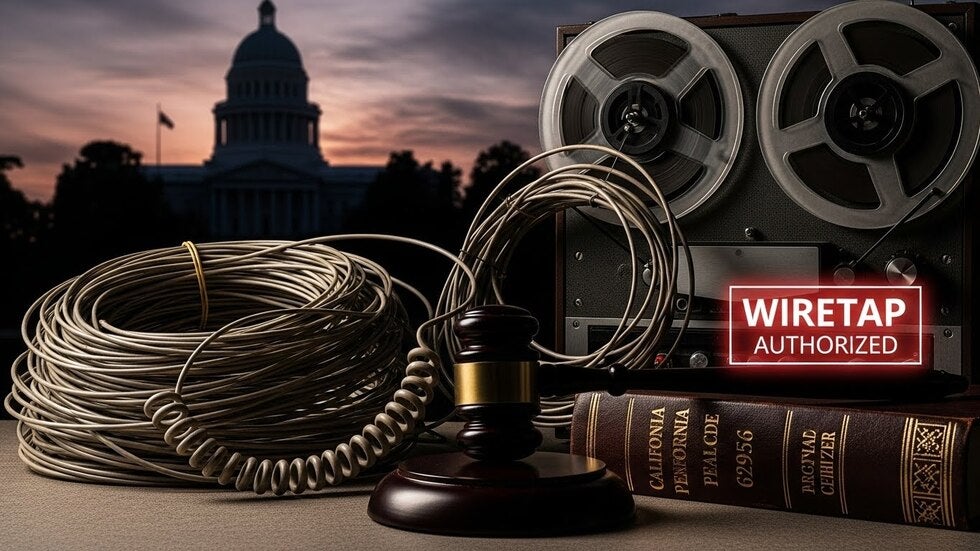
Emergency situations sometimes require law enforcement to act quickly, but California's wiretap laws maintain strict protections even during urgent circumstances. Penal Code Section 629.56 establishes limited exceptions for oral wiretap approval while preserving crucial safeguards that defense attorneys can use to protect client rights and challenge improperly obtained evidence.
Who Can Request Emergency Wiretap Authorization
California law restricts emergency wiretap requests to high ranking prosecutorial officials, ensuring that only experienced legal professionals can invoke these extraordinary powers. The Attorney General, Chief Deputy Attorney General, Chief Assistant Attorney General in the Criminal Law Division, or district attorneys possess the authority to make these urgent surveillance requests.
This limited authorization structure prevents lower level law enforcement officers from bypassing normal judicial review processes during claimed emergencies. The requirement for prosecutorial involvement ensures that experienced legal professionals evaluate the necessity and appropriateness of emergency surveillance before seeking judicial approval.
Designated Authority During Absences
When district attorneys are unavailable, only specifically designated individuals can request emergency wiretap authorization. This designation requirement maintains accountability and prevents unauthorized personnel from invoking emergency surveillance powers during routine absences or administrative transitions.
Defense attorneys should examine whether the person requesting emergency authorization possessed proper authority at the time of the request. Understanding prosecutorial authority in surveillance cases becomes crucial when challenging the validity of emergency wiretap approvals.
Judicial Authority for Emergency Approval
Emergency wiretap requests must receive approval from either the presiding judge of the superior court or designated judges identified under Section 629.50. This judicial oversight requirement ensures that independent judicial officers evaluate emergency surveillance requests even during urgent situations.
The "first available judge" provision recognizes that true emergencies may occur outside normal court hours when presiding judges are unavailable. However, this flexibility does not eliminate the requirement for judicial review of emergency surveillance requests.
Standards for Emergency Judicial Review
Judges must apply the same fundamental standards used for regular wiretap orders, even during emergency situations. The emergency nature of a request does not lower the probable cause requirements or eliminate constitutional protections against unreasonable searches and seizures.
Courts retain discretion to deny emergency wiretap requests that fail to meet legal standards, regardless of claimed urgency. This judicial independence serves as a crucial check against abuse of emergency surveillance powers.
Three Essential Requirements for Emergency Authorization
California law establishes three mandatory conditions that must exist before judges can grant emergency wiretap approval. Each requirement serves specific purposes in protecting privacy rights while allowing legitimate emergency surveillance when absolutely necessary.
The first requirement ensures that emergency requests meet the same substantive standards as regular wiretap applications. This prevents law enforcement from using emergency procedures to circumvent normal legal requirements for electronic surveillance authorization.
Grounds for Regular Wiretap Orders
Emergency requests must demonstrate that circumstances would support a regular wiretap order under normal procedures. This requirement includes establishing probable cause that communications will provide evidence of specific enumerated offenses and demonstrating that other investigative methods would be inadequate.
Defense counsel should examine whether emergency wiretap requests satisfied all elements required for standard authorization orders. The emergency nature of a request does not excuse failure to meet basic legal requirements for electronic surveillance.
Probable Cause for Emergency Situations
The second requirement demands probable cause to believe that an emergency situation exists regarding investigation of enumerated offenses. This standard prevents routine use of emergency procedures and ensures that urgent authorization applies only to genuinely exceptional circumstances.
Courts must evaluate whether the claimed emergency situation actually exists and whether it relates to crimes covered by California's wiretap statutes. Fabricated or exaggerated emergency claims can invalidate surveillance authorization and provide grounds for suppressing intercepted communications.
Defining Emergency Investigation Circumstances
Emergency situations typically involve ongoing crimes, imminent criminal activity, or rapidly evolving circumstances that would make normal authorization procedures inadequate. The emergency must relate specifically to the investigation rather than general law enforcement convenience or administrative efficiency.
Defense attorneys should scrutinize claimed emergency circumstances to determine whether they meet legal standards for bypassing normal judicial review procedures. Challenging emergency surveillance authorizations requires understanding the specific factual circumstances that justify extraordinary surveillance powers.
Substantial Danger to Life or Limb Requirement
The most stringent requirement for emergency wiretap authorization involves demonstrating probable cause that substantial danger to life or limb exists. This high standard ensures that emergency surveillance powers are reserved for situations involving serious threats to human safety.
The danger must be substantial rather than speculative or minor, and it must justify immediate interception before normal application procedures could be completed. This requirement prevents routine use of emergency authorization for non urgent investigations or administrative convenience.
Immediacy and Due Diligence Standards
Law enforcement must demonstrate that normal application procedures cannot be completed with due diligence given the urgent circumstances. This requirement prevents abuse of emergency powers when adequate time exists for regular judicial review processes.
Courts evaluate whether law enforcement acted with appropriate urgency in seeking authorization and whether claimed time constraints actually prevented normal application procedures. Artificial creation of emergency situations or failure to pursue timely regular authorization can invalidate emergency surveillance approvals.
Written Application Filing Requirements
Emergency oral approval creates only temporary authorization that must be validated through subsequent written application procedures. Law enforcement must file comprehensive written applications by midnight of the second full court day after receiving oral approval.
This filing requirement ensures that emergency surveillance receives full judicial review and creates permanent records of authorization circumstances. The written application must include all information required for regular wiretap orders while specifically acknowledging the prior oral approval.
Retroactive Authorization and Validation
Written applications that satisfy legal requirements can provide retroactive validation for emergency surveillance conducted under oral approval. However, failure to file timely written applications or inadequate written submissions can invalidate all intercepted communications.
Defense counsel should examine both the timing and adequacy of written applications following emergency oral approval. Technical violations of filing requirements or substantive deficiencies in written applications can provide grounds for suppressing electronic surveillance evidence.
Constitutional Safeguards and Defense Strategies
Emergency wiretap procedures must comply with constitutional requirements for reasonable searches and seizures. The urgent nature of emergency situations does not eliminate Fourth Amendment protections or reduce probable cause standards for electronic surveillance.
Defense attorneys can challenge emergency wiretap authorizations on multiple grounds, including inadequate justification for emergency circumstances, failure to meet substantive legal requirements, or violations of procedural safeguards designed to protect privacy rights.
Developing Effective Challenge Strategies
Successful challenges to emergency wiretap evidence often involve demonstrating that claimed emergency circumstances did not actually exist or that law enforcement failed to satisfy mandatory procedural requirements. Technical violations of emergency authorization procedures can provide grounds for excluding intercepted communications.
Collaboration with technical experts may be necessary to evaluate the timing and necessity of emergency surveillance requests. Electronic surveillance defense techniques require comprehensive understanding of both legal requirements and practical law enforcement procedures.
Protecting Privacy Rights During Emergencies
California's emergency wiretap provisions balance legitimate law enforcement needs with constitutional privacy protections. Understanding these procedures helps defense attorneys identify potential violations and protect client rights even during urgent investigations.