
By the The Bulldog Law Criminal Defense Team • Reviewed by a licensed California criminal defense attorney
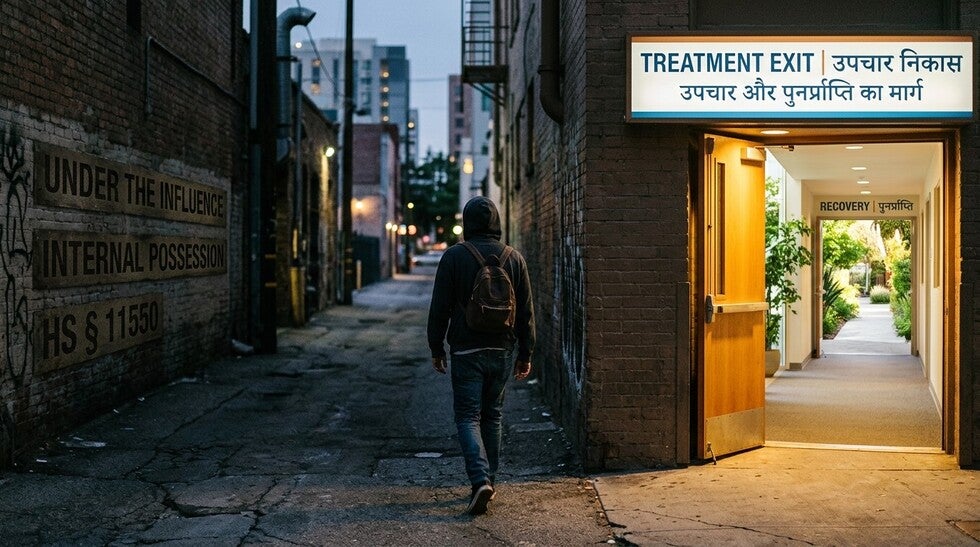
Health and Safety Code § 11550 makes it a MISDEMEANOR - up to a year in county jail - to willfully be UNDER THE INFLUENCE of specified controlled substances (heroin and other opiates, cocaine, methamphetamine, PCP, and more): no drugs found on you, no driving, no impaired conduct beyond the influence itself, and no “usable amount” required,because the possession this statute punishes is INTERNAL. That makes it unlike its neighbors § 11350 possession needs drugs in your pocket; DUI needs a vehicle and it makes 11550 cases unusual in a second way: the evidence is mostly OPINION. Officers build these arrests from observed symptoms (pupil size, pulse, speech, coordination), field evaluations, admissions, and a urine or blood test a stack with genuine weaknesses, since fatigue, medical conditions, lawful medications, and nerves mimic half the checklist. And the statute lives beside its own exit: 11550 is squarely within PC 1000 pretrial diversion complete treatment and the charge is DISMISSED with no conviction ever entered which is how the overwhelming majority of defensible-but-provable cases should end, and a lifeline that matters doubly for non-citizens, for whom any drug conviction is an immigration catastrophe. This guide from The Bulldog Law's drug crimes defense practice covers the elements, the evidence war, the prescription defense, and the diversion path.
The Elements and the Opinion Problem
The prosecution must prove you were (1) WILLFULLY (2) under the influence of (3) a specified controlled substance with “under the influence” meaning the drug affected your nervous system, brain, or body IN ANY DETECTABLE MANNER: a low bar on paper, but one that must still be proven, substance-specifically, beyond a reasonable doubt.The proof stack and its cracks: OFFICER OPINION (drug-symptom checklists and “drug recognition” evaluations are subjective, trained-to-find-what-they-expect, and cross-examinable pupil dilation, elevated pulse, sweating, and restlessness are also anxiety, stimulant medication, caffeine, medical events, and 2 a.m.); ADMISSIONS (“I smoked earlier” does the state's work the reason saying nothing is worth more here than almost anywhere, since without your statement many files are symptoms alone); and the TEST (urine screens detect METABOLITES that persist days after any influence has ended presence in urine is not “under the influence NOW,” a gap toxicology experts drive trucks through, and refusing or contesting collection has its own litigation). Add the stop itself - many 11550 arrests begin as loitering, welfare-check, and “high-crime-area” detentions with suppression problems and the WILLFULNESS element (involuntary ingestion, spiked drinks, unknowing exposure), and the statute's built-in defense: current, valid PRESCRIPTION use as directed (opioids, amphetamines, benzodiazepines all appear on both the controlled list and pharmacy shelves) is not a crime, making the medication history the first document a defense collects.
How 11550 Cases Should End: The Diversion Path
Because § 11550 is a personal-use offense with no victim, it sits at the center of California's treatment-first architecture: PC 1000 PRETRIAL DIVERSION no guilty plea entered, a 12-to-18-month education/treatment program, and on completion the charge is DISMISSED and the arrest deemed not to have occurred for nearly all purposes.Collateral tracks exist for those who fit them drug court for heavier treatment needs, mental-health diversion (§ 1001.36) where a qualifying condition drove the conduct, veterans' diversion (§ 1001.80) for service-connected issues and the strategic sequencing is counsel's craft: challenge the stop and the opinion evidence FIRST where the case is weak (dismissals beat diversions), and secure diversion where the proof is real (dismissals-by-completion beat convictions always). What a conviction costs if neither happens: a misdemeanor record with professional-license friction, and for non-citizens the controlled-substance grounds that make even misdemeanors removal events - which is why the no-plea structure of modern PC 1000 (our full diversion guide covers the mechanics) is itself an immigration shield, and why no one with status questions should resolve ANY drug charge without dual-track advice. One practical warning shared with every client: while a case is pending, new arrests and missed appearances destroy diversion eligibility the quiet discipline of the pending months is part of the defense.
Frequently Asked Questions
Can you really be arrested just for being high in California?
Yes HS 11550 criminalizes the state of being under the influence of specified controlled substances, with no drugs found, no driving, and no other offense required; the ‘possession' is internal. Arrests are built from officer-observed symptoms, statements, and urine or blood tests a subjective stack with real defenses (symptoms mimicked by fatigue, anxiety, and medications; metabolite tests that prove past use, not present influence; stops with suppression problems). It's a misdemeanor, not a felony, and it's among the most diversion-eligible charges in the code most cases can and should end in treatment-based dismissal with no conviction ever entered.
Do I have to take the urine test in an 11550 arrest?
There's no DUI-style automatic license penalty attached, but refusal has its own consequences the officer may pursue and prosecutors may argue and the more useful frame is what tests actually prove: urine screens detect metabolites that linger for DAYS after any influence has passed, so a positive result is evidence of past use, not necessarily of being under the influence at arrest a gap the defense litigates with toxicology. The stronger protections are earlier: you are not required to answer questions about what or when you used (statements convict more 11550 defendants than tests do), and you may politely decline to perform field evaluations. Identify yourself, say nothing about consumption, and let counsel handle the chemistry.
Is 11550 eligible for diversion?
Squarely - it's one of the core PC 1000 offenses: personal-use conduct, no violence, and (for most participants) no recent disqualifying history. Modern PC 1000 is PRETRIAL diversion no guilty plea is entered - you complete a 12-to-18-month program, and the charge is dismissed with the arrest treated as never having occurred for nearly all purposes; failure simply returns the case to court with your trial rights intact. Mental-health, veterans', and drug-court tracks exist for those who fit them better. The strategy question isn't ‘can I divert' but ‘should I divert or fight first' weak stops and thin opinion evidence sometimes make outright dismissal the better opening move, with diversion preserved as the floor.
What does an 11550 mean for immigration status?
A conviction is severe controlled-substance offenses trigger inadmissibility and deportability grounds that reach even misdemeanors, with only the narrowest exceptions which is why the structure of the resolution matters more than the sentence. Modern PC 1000's no-plea design is the shield: because no guilty plea is entered and completion produces dismissal, a properly handled diversion avoids the ‘conviction' immigration law punishes a decisive difference from the old deferred-entry system, which required a plea and became a removal trap. Non-citizens facing ANY drug charge need criminal and immigration analysis together, before the first decision: the difference between the right resolution and the convenient one is the difference between a program and a proceeding.
Section 11550 prosecutes a bodily state on the strength of opinions and metabolites evidence built to be questioned and it sits beside the code's most forgiving exit. The defense job is choosing the right door in the right order: suppression, dismissal, diversion. The Bulldog Law's drug crimes defense team handles § 11550 and every personal-use charge across California. Contact the firm online or call (888) 928-1609.