
By the The Bulldog Law Criminal Defense Team • Reviewed by a licensed California criminal defense attorney
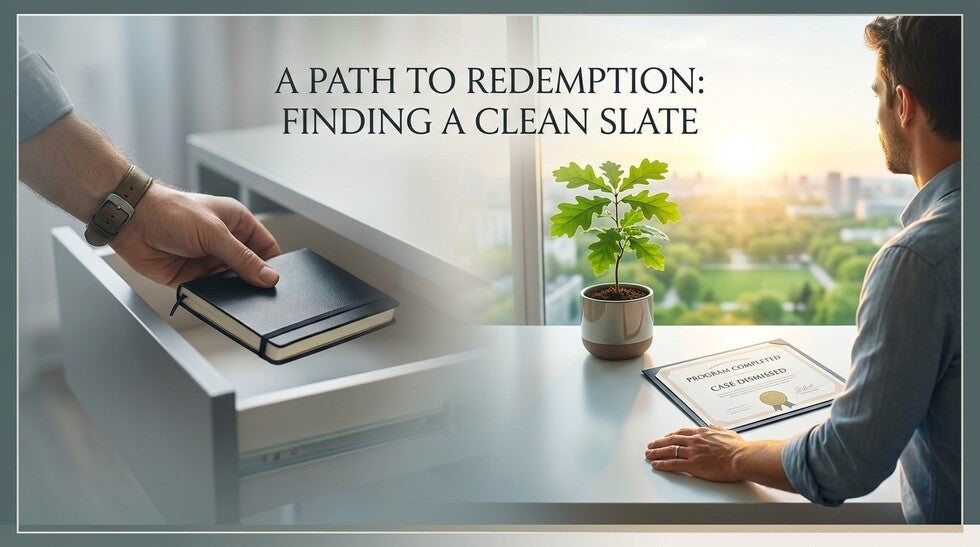
Penal Code § 1000 is PRETRIAL DIVERSION for qualifying drug charges: instead of prosecution, an eligible defendant enters a 12-to-18-month drug education and treatment program WITHOUT pleading guilty and on successful completion the charge is DISMISSED and the arrest is deemed never to have occurred for nearly all purposes: most job, housing, and license applications may lawfully be answered as if it didn't happen.
Two structural facts give the statute its power. First, the NO-PLEA design: since 2018's reform, participants do not admit guilt on the way in so a failed program simply returns the case to court with every trial right intact, and a completed one leaves no conviction for ANY system to punish, which makes modern § 1000 an immigration shield the old plead-first version never was. Second, the PERSONAL-USE boundary: eligibility covers simple possession and use - § 11350, § 11550 under-the-influence, paraphernalia, personal cultivation and their siblings and NEVER sales or possession-for-sale, which is why the possession-versus-sales fight in a case's first weeks is really a fight about whether this exit exists at all.
The Bulldog Law's drug crimes defense practice covers eligibility, the process start to dismissal, failure and its consequences, and the neighboring diversion tracks.
Who Qualifies and Who Doesn't
- Qualifying CHARGES: the personal-use family simple possession (11350, 11377), under-the-influence (11550), paraphernalia (11364), personal cultivation, prescription-fraud-for-personal-use variants, and related counts listed in the statute. The charge on the complaint controls which is why counsel fights sales-theory overcharging immediately: quantity alone, baggies alone, and cash alone don't make a dealer, and every fact pushed back toward personal use pushes the case toward this program.
- Disqualifying HISTORY: the standard bars a prior diversion or drug-program termination within the look-back window, felony convictions within the past five years, and violence or threatened violence connected to the current facts. Borderline histories are argued, not assumed: eligibility determinations are advocacy moments.
- Disqualifying FACTS: evidence of sales or possession for sale, and offenses involving violence the reason the same gram of methamphetamine produces radically different futures depending on the packaging narrative the prosecution attaches and the defense dismantles.
- The neighbors, for those who fit them better: MENTAL-HEALTH diversion (§ 1001.36 up to two years, available for a broad range of charges when a qualifying diagnosis substantially contributed to the offense, with the same dismissal-and-sealing endpoint); VETERANS' diversion (§ 1001.80) for service-connected conditions; drug court for heavier clinical needs; and judicial misdemeanor diversion (§ 1001.95 a judge's power to divert most misdemeanors even over prosecutorial objection). Choosing the right track is strategy, not paperwork - each has different lengths, obligations, and record endpoints.
The Process, Start to Dismissal and What Failure Actually Costs
- Eligibility determination the prosecutor screens the charge and history; disputes go to the judge; counsel's eligibility brief (and the possession-versus-sales evidence war) happens here, at the case's very front.
- Entry without a plea you waive speedy-trial timing, the case pauses, and the program begins: education classes or treatment matched to assessment, testing, and periodic progress reviews over 12 to 18 months.
- Living the pending period attendance, clean tests, no new arrests: the quiet discipline that IS the case during diversion because new charges and program terminations reactivate the prosecution.
- Completion dismissal the charge is dismissed; the arrest is deemed never to have occurred for nearly all purposes, and most applications may be answered accordingly. The narrow statutory exception: peace-officer application contexts, where disclosure is still required - and certain licensing deep-checks can see sealed history, a nuance counsel maps for anyone in sensitive fields. Note what completion beats: even expungement leaves a dismissed CONVICTION on the record diversion leaves no conviction at all, which is why it outranks every post-conviction remedy and why eligible defendants should almost never plead first and clean later.
- If the program fails termination for absences, positive tests, or new offenses returns the case to the courtroom but because no plea was entered, you return with FULL trial rights: suppression motions, the weak-case audit, and negotiation all remain live. Failure costs the shortcut, not the defense - a crucial difference from the old deferred-entry structure, where a waiting guilty plea made failure a conviction. It also means the smart sequence in shaky cases is: litigate the stop and the evidence FIRST if dismissal is realistic, and hold diversion as the guaranteed floor - the order of operations that gets both chances instead of one.
Frequently Asked Questions
What happens when you complete PC 1000 diversion?
The charge is dismissed, and the arrest is deemed never to have occurred for nearly all purposes most employment, housing, and licensing applications may lawfully be answered as though it didn't happen, and no conviction ever existed for any background system to report. The statutory exception is narrow: applications to become a peace officer still require disclosure, and certain deep-level licensing checks can access the history. Because no guilty plea was ever entered, completion also avoids the ‘conviction' that immigration law punishes the feature that makes modern PC 1000 categorically safer than the old deferred-entry system. Keep your completion paperwork permanently; it answers every future question.
What if I fail the diversion program?
The case returns to court and that's all: because modern PC 1000 takes no guilty plea on entry, termination (for missed sessions, positive tests, or new arrests) reactivates the prosecution with your trial rights fully intact suppression motions, evidentiary challenges, and negotiation all still available. That's the decisive improvement over the pre-2018 deferred-entry-of-judgment structure, where a stored guilty plea converted failure directly into conviction. Practical counsel: treat the program's calendar as court orders (they function as exactly that), tell your lawyer IMMEDIATELY if relapse or life events threaten compliance - reinstatement and track-transfers are argued successfully all the time - and never let a solvable attendance problem become a termination.
Can you get diversion for selling drugs or possession for sale?
No sales, possession for sale, and trafficking offenses are categorically excluded from PC 1000, which is precisely why the personal-use-versus-sales characterization war in a case's first weeks matters so much: the same drugs produce a treatment program or a felony prosecution depending on which theory survives. Prosecutors infer sales from quantity, packaging, cash, and phones each inference contestable with the innocent explanations real life supplies and collapsing a sales theory back to simple possession doesn't just reduce exposure, it unlocks this entire exit. If a sales count has been filed over what was personal-use conduct, that reduction fight IS the diversion fight, and it starts immediately.
How many times can you get PC 1000?
The statute bars repeat access within its look-back structure a prior diversion or drug-program termination within five years is disqualifying, as are recent felony convictions and violence-connected facts - so as a practical matter, treat PC 1000 as a once-per-window opportunity and complete it the first time. If you're outside the window, or the current charge doesn't qualify, the neighboring tracks pick up real cases: mental-health diversion (1001.36) reaches a broad charge list with up to two years and the same dismissal endpoint; veterans' diversion serves service-connected conditions; judicial misdemeanor diversion (1001.95) gives judges power to divert most misdemeanors even over DA objection. Eligibility across all four tracks is an analysis worth doing in every drug case counsel maps which doors your history actually opens.
PC 1000 is the code's cleanest sentence: no plea, treatment, dismissal, and a record that answers ‘no.' The work is getting through the door charge characterization, eligibility advocacy, and the discipline of the pending months and choosing the right order of fights before it. The Bulldog Law's drug crimes defense team handles diversion strategy across every track, statewide. Contact the firm online or call (888) 928-1609.