
Updated September 2026 | The Bulldog Law | California Criminal Defense
No California law makes sex in a car a crime. What the law prohibits is doing it where the public can see: Penal Code 647(a) makes it a misdemeanor to engage in lewd or dissolute conduct in any public place or any place open to the public or exposed to public view, when you know or should know that someone present could be offended. A car parked on a residential street at 9 p.m. with a neighbor walking a dog is a place exposed to public view; the same car on a private lot at 2 a.m. with no one around is not. The related charge, indecent exposure under Penal Code 314, is the one that matters: it carries a minimum of ten years on the sex offender registry, while 647(a) carries none, and the difference between the two is often the entire case.
The Bulldog Law's attorneys get this question two ways: hypothetically, from people who want to know, and urgently, from people who were just approached by an officer in a beach parking lot or a park after dark. The legal answer is the same for both, and it depends less on what happened inside the car than on where the car was and who could see into it. What follows is how the statutes work, how these cases actually get charged, and why the resolution nearly always turns on keeping Penal Code 314 out of the file. If you were cited or arrested, call (888) 928-1609 or message our team before your court date.
The statute that applies: Penal Code 647(a)
Penal Code 647 is California's disorderly conduct statute, and subdivision (a) is the one that covers sexual activity in public. It prohibits soliciting or engaging in lewd or dissolute conduct in any public place or in any place open to the public or exposed to public view. The California Supreme Court narrowed it in 1979 in Pryor v. Municipal Court, and the elements the prosecution must prove today come from that decision: the defendant willfully touched their own or another person's genitals, buttocks, or female breast; with intent to sexually arouse or gratify, or to annoy or offend; in a public place, a place open to the public, or a place exposed to public view; while someone else who might be offended was present; and the defendant knew or reasonably should have known that person was present and might be offended.
Three of those elements decide car cases. Location: was the car in a place open to the public or exposed to public view. Presence: was anyone actually there who could be offended. Knowledge: did the occupants know or have reason to know. A couple in a car on a dark private road with no one around fails the presence element, and the conduct is not a crime. A couple in a car in a supermarket lot at noon does not. Our attorneys' page on lewd and lascivious conduct covers the statute's definition in detail; our page on Penal Code 647 disorderly conduct covers the other subdivisions.
When is a car a public place?
The inside of a car is private property, but the statute reaches places exposed to public view, and a vehicle's windows are the problem. Courts look at the whole setting: whether the car was on a public street, in a lot open to the public, or on private land; whether it was daylight or dark; whether the windows were tinted, fogged, or covered; whether the car was parked where pedestrians or other drivers would pass; and whether anyone actually saw or complained. A car on a public street is nearly always a place exposed to public view. A car in a closed garage is not. Everything in between, beach lots after hours, remote turnouts, the far corner of an empty parking structure, is argued case by case, and the argument is usually made with a photograph of the location at the relevant time.
The presence element cuts both ways. A neighbor who saw through the window and called the police satisfies it. An officer who walked up to a fogged car and knocked satisfies it only if the occupants should have known someone was present before the knock, which is why the officer's report of what he could see from where, and when, is the document our attorneys read first.
The charge to avoid: Penal Code 314 indecent exposure
Penal Code 314 makes it a misdemeanor to willfully expose your genitals in a public place, or in any place where there are other people who would be offended or annoyed, with the intent to direct public attention to your genitals for sexual gratification or to offend. It was written for a different problem than sex in a car, and its elements, particularly the intent to draw attention, usually do not fit consensual activity between two people who were trying not to be seen. But an officer who saw genitals through a car window can cite 314 instead of, or in addition to, 647(a), and prosecutors sometimes file it.
The reason it matters is registration. A conviction under Penal Code 314 requires sex offender registration, Tier 1 under California's tiered system, a minimum of ten years, with everything that follows: address reporting, a public record, employment and housing consequences, and, for a second offense, a felony. Penal Code 647(a), by contrast, carries no registration at all; a judge may order it only after a specific finding of sexual compulsion, which does not happen in a car case. The penalties for the two offenses are otherwise similar, up to six months in county jail and a $1,000 fine, so the whole difference is the registry. Our attorneys treat any 314 count in a consensual-conduct case as the first thing to remove, and the intent element, which requires proof the exposure was meant to be seen, is how it is removed.
How these cases actually happen
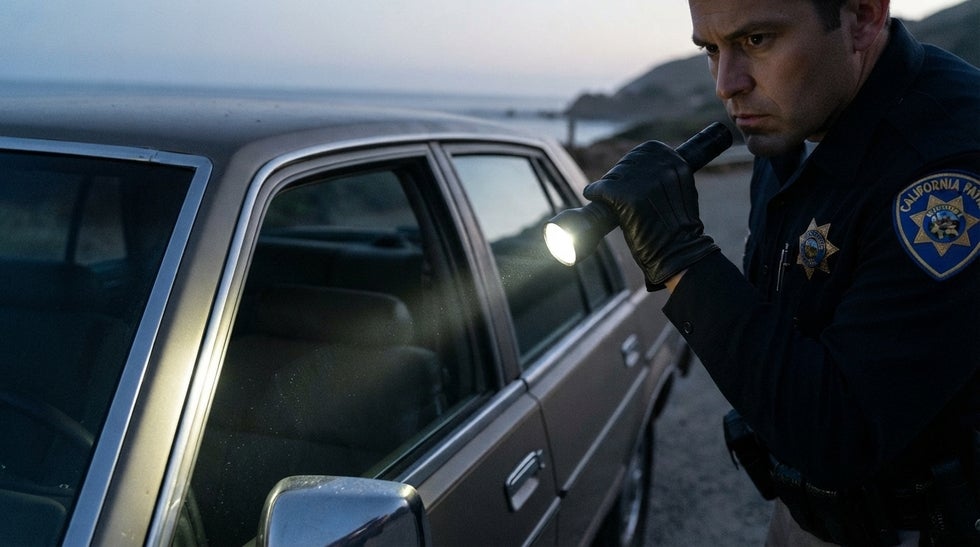
Most encounters end with a flashlight and an instruction to leave. Officers have discretion, and a couple in a car who are cooperative, of age, and not in a place with a history of complaints are usually told to move along. Cases that become citations or arrests tend to share features: a neighbor or passerby called, so there is a complaining witness; the location has been the subject of prior complaints, a park, a beach lot, a street near a school; the occupants argued, lied about their identities, or were intoxicated; or one of the occupants was a minor, which changes everything, as our page on California's lack of a Romeo and Juliet exception explains.
A distinct category is the sting. Police in some cities run undercover operations in parks, restrooms, and cruising areas, in which a plainclothes officer signals interest and arrests the person who responds. Those cases test the presence and knowledge elements in ways ordinary car cases do not, because the only person present who claims to have been offended is the officer who invited the conduct, and California courts have required that the defendant reasonably believed someone who might be offended was present. Our attorneys have had sting cases dismissed on exactly that point, and the initial contact in any of these cases is reviewed for the reasonable suspicion an officer needed to approach the vehicle in the first place.
At the scene, the same rules apply as in any police contact. Provide identification if asked, do not consent to a search of the car, do not explain, and do not argue. The right to remain silent exists for the moment an officer asks what you were doing, and the answer people give in embarrassment is the admission that makes the case.
Penalties and how cases resolve
A first-offense Penal Code 647(a) charge is a misdemeanor: up to six months in county jail, a fine of up to $1,000, and usually informal probation. Jail is uncommon. The realistic outcomes for a consensual car case with adult participants are, in rough order of frequency: dismissal or a decline to file; diversion, with dismissal on completion; a plea to a non-sex offense, most often disturbing the peace under Penal Code 415 or trespass under Penal Code 602, which leaves no sex-offense record; or a plea to 647(a) with probation and an eventual expungement. What our attorneys work to prevent is a plea to 314, which some prosecutors offer as though it were equivalent and which is not.
Collateral consequences track the code section. A 647(a) misdemeanor is not a crime involving moral turpitude in most applications and is rarely an immigration problem; a 314 conviction is treated as a crime involving moral turpitude and, with registration, as a serious bar to relief. Professional licenses, teaching credentials, and security clearances treat the two very differently for the same reason. And a second 647(a) offense, or a first one in a school zone, or one involving a minor, moves the case into territory where the sex crimes statutes, not the disorderly conduct statute, control.
Related questions people ask
Sleeping in your car. Not a crime under state law, but many California cities prohibit vehicle habitation by ordinance, and some prohibit overnight parking in specific areas. The charge, where one exists, is an infraction under the municipal code, not a Penal Code offense, and it has nothing to do with the statutes above.
Sex in a parked car with the engine running, after drinking. The lewd conduct question is separate from the DUI question, and a person found in the driver's seat of a running car after drinking can face the second even if the first goes nowhere.
Nudity in the car without sexual activity. Changing clothes in a car is not lewd conduct, because there is no sexual touching and no intent to arouse or offend; it can become a 314 problem only if the exposure was directed at someone. Sunbathing and skinny-dipping raise the same 314 intent question and are handled the same way.
Recording. A person who records a couple in a car without their consent, or who posts it, has committed a crime of their own, and the recording is not admissible for every purpose the prosecution might want. Video from a neighbor's doorbell camera, however, is routinely the evidence in these cases.
Frequently asked questions
Is it illegal to have sex in a car in California?
Not by itself. There is no California statute that says sex in a vehicle is a crime. What the law prohibits is lewd conduct in a public place or a place open to public view, under Penal Code 647(a), and exposing yourself where others are present and likely to be offended, under Penal Code 314. A car parked on a public street with people walking by can be a place open to public view; the same car on private land, at night, with nobody around, usually isn't. Where the car is, who can see in, and whether anyone actually did are the whole case.
Can you get arrested for having sex in a car?
Yes, if an officer sees it or someone reports it, and the location was public enough to satisfy the statute. Most encounters end with an order to move along. Arrests and citations happen in parks, beach lots, and residential streets where a neighbor called, and the charge is usually Penal Code 647(a), a misdemeanor with up to six months in county jail, which does not require sex offender registration. Indecent exposure under Penal Code 314 does, and prosecutors sometimes reach for it.
What is the difference between PC 647(a) and PC 314?
Section 647(a) is lewd or dissolute conduct in a public place: sexual touching of yourself or another, in public or in view of the public, when you knew or should have known someone present would be offended. Section 314 is indecent exposure: willfully exposing your genitals in the presence of others who would be offended, with intent to draw attention to them for sexual gratification or to offend. The penalties are similar, but a 314 conviction carries a minimum ten years on the sex offender registry and 647(a) carries none.
Is it illegal to have sex in public in California?
Yes, where the public can see. Sex in a park, on a beach, in a parking structure, or in a car in a place open to public view is lewd conduct under Penal Code 647(a). The statute requires that a person who could be offended was present or likely present; secluded conduct that no one could see is not a crime, which is why undercover sting cases in parks and restrooms turn on whether the officer's presence and reaction satisfied the statute.
Will a lewd conduct charge show up on a background check?
A conviction will, until it is expunged. Penal Code 647(a) is a misdemeanor eligible for dismissal under Penal Code 1203.4 after probation, and many first-offense cases are resolved through diversion or a plea to disturbing the peace or trespass, which look very different on a record. A Penal Code 314 conviction is worse in every respect because of registration, and avoiding a 314 plea in favor of 647(a) or a non-sex offense is often the entire goal of the defense.
Related reading from our attorneys
- What is lewd and lascivious conduct?
- Penal Code 647: disorderly conduct charges
- Sex offender registration tiers under Penal Code 290
Cited in a car? The code section on the ticket is what we fix first
The Bulldog Law's defense attorneys resolve lewd conduct and indecent exposure citations across California, usually without a conviction and always without a registrable one where the facts allow, and handle the immigration and licensing consequences in-house. Visit our criminal defense page, call (888) 928-1609, or reach us online. The consultation is confidential.