
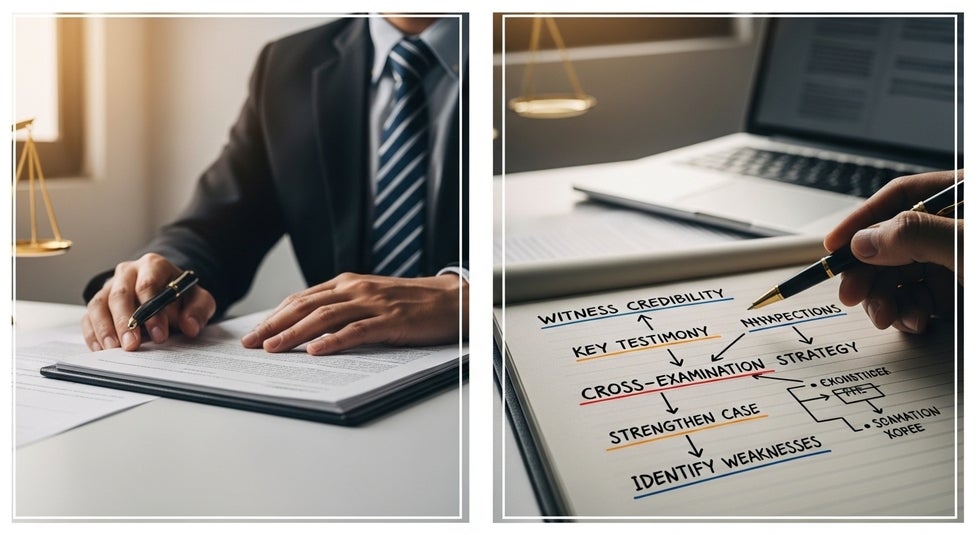
Defining the Oral Examination Under New York Law
Under New York Civil Practice Law and Rules (CPLR) Section 2005, an oral examination is defined as an examination that takes place in the presence of the jury or tribunal responsible for deciding the facts of the case or acting upon them. The testimony is heard directly from the lips of the witness, delivered live to the people who will ultimately weigh it.
That definition might seem straightforward, but it carries a great deal of meaning. The law is drawing a deliberate distinction between testimony delivered in person and testimony captured in other forms, such as written depositions, affidavits, or recorded statements. An oral examination puts the witness directly in front of the decision maker, in real time, with no intermediary. That directness is precisely what gives it such weight in a legal proceeding.
Why Live Testimony Carries More Weight Than Written Statements
There is a reason courts have long placed a premium on oral testimony over written substitutes. When a witness testifies in person, the jury or judge can observe far more than just the words being spoken. They can watch how the witness responds under pressure, whether their account remains consistent when challenged, how they handle difficult questions, and whether their demeanor matches what they are claiming. None of that is available when a court simply reads a written statement.
From a defense perspective, this dynamic is both an opportunity and a challenge. When a witness testifying against your client takes the stand, your attorney has the chance to cross examine that witness in real time, probing the details of their account, exposing inconsistencies, and testing the credibility of what they are saying. A written affidavit sitting in a court file cannot be questioned. A live witness can be.
At the same time, when the defense presents its own witnesses, the oral examination format gives those individuals the chance to speak directly to the people who will decide the outcome. A compelling, credible witness speaking plainly and consistently in open court can shift the way a jury understands the entire case. How defense witnesses are prepared and presented during oral examination is one of the most consequential parts of trial strategy. You can explore more about how witness strategy factors into defense preparation on the Bulldog Law blog.
The Role of the Jury and Tribunal During Oral Examination
CPLR 2005 specifically identifies the jury or tribunal as the audience for oral testimony. This is not incidental. The law places the decision maker at the center of the examination process for a reason. Everything that happens during an oral examination is ultimately directed at the people or body tasked with resolving the dispute.
In a jury trial, this means twelve individuals are listening, watching, and forming impressions of every witness who takes the stand. In a bench trial, where a judge decides both the facts and the law, the judge is performing that same evaluative function. In a special tribunal or administrative proceeding, the relevant body fills that role.
Understanding who is in that seat of judgment matters enormously for how the defense approaches oral examination. The language used, the pace of questioning, the framing of key facts, and even the sequence in which witnesses are called should all be shaped by a clear sense of what the decision maker needs to hear and how they are likely to receive it.
Cross Examination as a Defense Tool
One of the most powerful instruments available to the defense during oral examination is cross examination. When the opposing party calls a witness, the defense has the right to question that witness after direct examination concludes. This is where the live nature of oral testimony becomes most valuable to the defense.
A skilled cross examination can accomplish several things. It can reveal gaps or contradictions in a witness's account. It can highlight motivations that might cause a witness to shade the truth. It can introduce context that the opposing party chose not to bring out during direct examination. And it can, in some cases, lead a witness to actually corroborate parts of the defense's position.
None of this is possible with a written statement. The written record says what it says, and the defense can only point to what is missing or argue against it from the outside. During oral examination, the defense gets to engage directly and dynamically with every witness the other side puts forward. That interactivity is one of the defining advantages of the live testimony format, and it is one reason why preparation for cross examination deserves serious attention. Related insights on cross examination and trial preparation are available on the Bulldog Law blog.
Preparing Defense Witnesses for Oral Examination
Presenting defense witnesses effectively during oral examination requires preparation that goes well beyond simply reviewing the facts of the case. A witness who knows what happened but struggles to communicate it clearly under pressure can inadvertently undermine a defense that is otherwise well supported by the evidence.
Preparation should cover how to answer questions directly and concisely, how to handle aggressive or confusing cross examination from opposing counsel, and how to remain composed when the questioning becomes adversarial. Witnesses who appear nervous, evasive, or inconsistent can damage credibility even when they are telling the truth. The jury or tribunal is watching all of it, and impressions formed during oral examination tend to be lasting ones.
Defense attorneys who invest time in witness preparation are not coaching witnesses to say something untrue. They are ensuring that truthful testimony is delivered in a way that is clear, consistent, and credible to the people who will rely on it to make their decision.
Oral Examination Versus Deposition Testimony: Understanding the Difference
It is worth noting that oral examinations conducted before trial, such as depositions, are a different mechanism than the oral examination described in CPLR 2005. A deposition is also conducted verbally, but it takes place outside the courtroom and without the jury or tribunal present. Its primary purpose is discovery, not decision making.
The oral examination at trial, as defined by the statute, is specifically the testimony heard directly by the decision maker during the proceeding itself. This is the testimony that most directly influences the outcome. Deposition testimony may be used to impeach a witness who contradicts themselves at trial, or in limited circumstances to present testimony when a witness is unavailable, but it does not carry the same real time weight as testimony delivered live in front of the jury or judge.
Understanding this distinction helps defendants and their families appreciate why what happens in the courtroom during oral examination is so different from everything that came before it, and why having a defense team that excels in that environment matters so much. Explore more about building a trial ready defense strategy expert lawyers.