
By the The Bulldog Law Criminal Defense Team • Reviewed by a licensed California criminal defense attorney
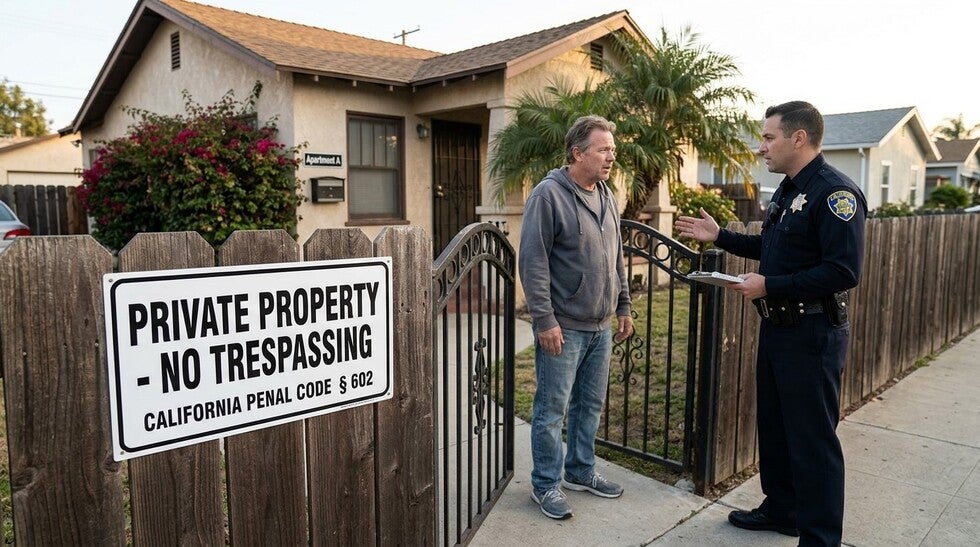
Penal Code § 602 is California's catch-all trespass law more than thirty lettered subdivisions criminalizing specific ways of entering or REMAINING on property without permission: occupying property without consent, entering posted or fenced land, refusing to leave after a lawful request by the owner or their agent, entering to interfere with a business, and dozens of narrower scenarios.Most forms are MISDEMEANORS up to 6 months and $1,000 - some first-offense entries are filed as INFRACTIONS, and the felony lives next door in § 601: AGGRAVATED trespass, a wobbler for entering someone's home or workplace within 30 days of making a credible threat against them.
Three lines decide almost every real case: the BURGLARY line (entry plus intent to steal or commit a felony is § 459, not trespass and trespass is what burglary counts get REDUCED to when intent fails); the TENANT line (a landlord cannot use trespass law against a lawful occupant eviction is civil, and police who say otherwise are wrong); and the REQUEST line (much of § 602 requires that you were asked to leave and refused making the request's existence, authority, and your response the whole case). This guide from The Bulldog Law's criminal defense team covers the forms that actually get charged, the aggravated-trespass escalator, and the defenses.
The Forms That Actually Get Charged
- Refusing to leave the store, bar, or business asks you out (through an owner, manager, or security agent) and you stay: the most common modern trespass, built entirely on the request and the refusal which means WHO asked, their authority, how clearly, and what you did next are the elements in miniature.
- Occupying without consent moving into, staying on, or taking over property: encampment cases, vacant-building cases, and the squatter disputes where the civil-versus-criminal line gets litigated hardest.
- Posted and fenced land entry past signage or enclosure: hunting, hiking, and urban-exploration cases, where posting adequacy and boundary knowledge are the fight - and where first offenses are often infraction material (§ 602.8).
- Interfering with a business entering to obstruct or damage: the protest-adjacent and dispute-adjacent subdivision, where First Amendment limits do real work in public-forum and expressive-conduct cases.
- The DV-adjacent pattern the ex who “still has stuff there” returning to a former shared home: trespass counts ride alongside restraining-order violations and domestic-violence filings constantly, and the consent history (keys kept, invitations after separation, property retrieval arrangements) is the defense's terrain.
- 601 aggravated trespass the felony escalator: a CREDIBLE THREAT to another's safety, followed within 30 days by entry into that person's residence or workplace intending to carry it out or contact them a wobbler (16 months / 2 / 3) charged in stalking-flavored and post-threat cases, and the count that transforms “he showed up” into felony exposure when threats preceded it.
The Three Lines: Burglary, Tenancy, and the Request
THE BURGLARY LINE intent at entry decides everything: walk in without permission and you have trespass; walk in intending to steal or commit a felony and you have burglary, with its strike-adjacent first-degree residential form.The line runs both directions in practice: prosecutors infer intent from flimsy circumstances to charge § 459, and defense lawyers collapse it back no tools, nothing taken, explainable presence, intoxicated wandering making TRESPASS the workhorse reduction in burglary files, exactly as false imprisonment is in kidnapping files: misdemeanor, no strike, probation-friendly, expungeable.
THE TENANT LINE § 602 does not apply to lawful occupants: a tenant behind on rent, a holdover after lease expiry, a roommate on the lease, even many long-stay guests have POSSESSION, and possession is protected removal runs through civil unlawful-detainer court, not a trespass arrest.
Police called to landlord disputes often declare it “a civil matter” and leave (correctly), or occasionally arrest the wrong party (incorrectly) and if you're the person arrested for “trespassing” in a place you lawfully occupied, the tenancy is the defense, provable through rent history, mail, keys, and belongings.
THE REQUEST LINE where the charged subdivision requires a request to leave, everything about that request is an element: made by someone with authority, communicated to YOU, understood, and refused and chaotic scenes (crowded venues, group ejections, language barriers, intoxication) fail those elements routinely. The common thread across all three lines: § 602 cases are context cases, and the standard weak-case audit what the video shows, who actually said what, what the accuser's history is decides them.
Defenses That Win Trespass Cases
- Consent - express or implied: open businesses imply invitation during hours; prior relationships imply access until clearly revoked; the revocation's timing and clarity are contestable.
- Right of possession tenants, lawful occupants, co-owners, and those with a good-faith CLAIM of right defeat the ‘without permission' core; landlord-tenant and family-property disputes belong in civil court, not criminal.
- No adequate request / no willful refusal authority, communication, comprehension, and a real opportunity to comply are each attackable in ejection cases.
- Posting, boundaries, and mistake unposted or ambiguously marked land, honest boundary mistakes, and necessity (emergencies, safety) defeat the knowledge and willfulness elements in open-land cases.
- First Amendment and selective enforcement expressive activity in genuinely public forums, and ejections targeting viewpoint rather than conduct, raise constitutional defenses courts take seriously. Resolution reality: simple trespass resolves as infractions, civil-compromise-style outcomes, and diversion-adjacent dispositions with counsel and the aggravated § 601 form gets defended like the stalking-family felony it resembles, threat element first.
Frequently Asked Questions
Is trespassing a misdemeanor or felony in California?
Usually a misdemeanor up to 6 months and $1,000 with many first-offense and open-land scenarios filed as infractions (fine-only tickets). The felony version is aggravated trespass under PC 601: a credible threat against someone followed within 30 days by entry into their home or workplace - a wobbler carrying up to 3 years. Simple trespass is also the classic REDUCTION from burglary when entry-intent can't be proven, which is why it appears at the end of cases that started far more seriously. Even the misdemeanor is worth defending properly: it's expungeable, infraction-able, and frequently dismissible on the request and consent elements.
Can I be charged for refusing to leave a store or business?
Yes that's the most commonly charged modern trespass: a person with authority (owner, manager, security agent) asks you to leave, and you willfully refuse. The elements are the defense checklist: did the requester have authority, was the request actually communicated to you and understood, and did you get a real chance to comply before the arrest? Crowded, loud, group-ejection, and intoxication scenes fail those elements constantly. Businesses can also issue forward-looking bans; returning after a documented ban supports a charge. If it happened to you, note who said what and when, and identify the cameras ejection cases are video cases.
What's the difference between trespassing and burglary?
Intent at the moment of entry. Trespass is entering or remaining without permission a misdemeanor. Burglary (PC 459) is entering with intent to commit theft or any felony inside a serious felony, and a strike in its first-degree residential form.
The same doorway produces either charge depending on what the prosecution can prove about your purpose, which is why burglary filings built on thin intent evidence (nothing taken, no tools, explainable presence) collapse to trespass regularly the most valuable reduction in that family. Our full PC 459 guide covers the burglary side, including how intent gets inferred and attacked.
Can a landlord have a tenant arrested for trespassing?
No lawful occupants can't be criminally ‘trespassed' from their own residence. Tenants (including behind-on-rent tenants, holdovers, and lease roommates, and often long-term guests) hold possession, and California removes possession only through civil unlawful-detainer (eviction) court not through PC 602, and not through lockouts or police ejections, which create LANDLORD liability. Police responding to these disputes usually (correctly) call it civil; if an arrest happened anyway, tenancy is the defense: leases, rent records, mail, keys, and belongings prove occupancy. On the flip side, genuine squatters without any claim of possession can face trespass and related counts the possession question is the whole case.
Trespass law is thirty scenarios wrapped around three questions permission, possession, and purpose and the answers live in context: histories, requests, videos, leases. Get the context in front of the right people early, and § 602 cases shrink to the tickets they usually should have been. The Bulldog Law's criminal defense team defends trespass, aggravated trespass, and the burglary counts built over them across California. Contact the firm online or call (888) 928-1609.a