
Decoding Criminal Offender Record Information Under California Law
When most people think about their criminal record, they imagine a simple list of convictions. The reality is far more complex and potentially more damaging. California Penal Code Section 13102 defines exactly what constitutes "criminal offender record information" in the state's databases, and the scope of this information extends well beyond what most people realize.
Understanding what's included in your criminal record is essential for anyone who has had contact with law enforcement in California. This information follows you through employment applications, housing searches, professional licensing processes, and countless other situations where background checks occur. More importantly, knowing what should and should not be in your record gives you the power to identify and challenge inaccuracies.
The Legal Definition of Criminal Offender Record Information
California law defines criminal offender record information as records and data compiled by criminal justice agencies to identify criminal offenders and maintain summaries of their interactions with the justice system. This includes arrests, pretrial proceedings, charges, dispositions, sentencing, incarceration, rehabilitation efforts, and release information.
The key limitation in the statute is that this information must be "recorded as the result of an arrest, detention, or other initiation of criminal proceedings or of any consequent proceedings related thereto." This means your criminal record should only contain information that stems from actual criminal justice system contact, not mere suspicion, investigation, or intelligence gathering.
What Triggers Record Creation?
From a defense perspective, it's crucial to understand that your criminal record begins the moment you're arrested or detained, not when you're convicted. Even if charges are never filed, reduced, or dismissed entirely, the fact of your arrest becomes part of your permanent record under this statutory framework.
This creates a significant problem for people who are arrested but never convicted. While the law requires that disposition information be included in your record, showing that charges were dismissed or you were acquitted, many background check systems focus primarily on arrest data and fail to accurately reflect outcomes.
Personal Identification Information in Criminal Records
Section 13102 specifies that criminal records include personal identification information. This encompasses your name, date of birth, physical description, fingerprints, photographs, and other identifying details collected during the booking process.
For defendants, this personal information creates unique challenges. Mistaken identity arrests, similar names, and data entry errors can result in someone else's criminal history appearing on your record. Even after these mistakes are identified, correcting them across multiple interconnected databases can be a lengthy and frustrating process.
The Problem of Permanent Identifiers
Unlike information you can change, such as your address or phone number, identifiers like fingerprints and DNA profiles remain permanently associated with your criminal record. While this helps ensure accuracy in matching records to the correct person, it also means that once you're in the system, you're in the system for life, even if all charges against you are eventually dismissed or expunged.
Arrest Information and Release Details
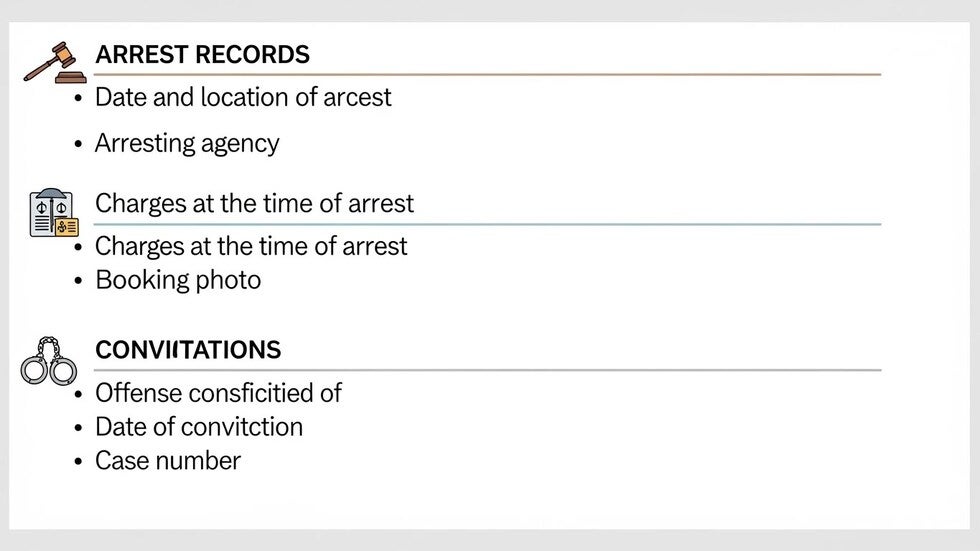
Your criminal record includes detailed information about each arrest: the date it occurred, the charges that led to the arrest, and whether you were subsequently released. If you were released, the record should show by what authority this happened and under what terms.
This provision is particularly important for defense purposes. If you were released on your own recognizance, posted bail, or had charges dropped immediately, this information should appear in your record. Unfortunately, arrest information often gets recorded promptly and accurately, while release information and charge dismissals frequently lag behind or never get properly updated.
Bail and Release Conditions
The requirement that records show "upon what terms" you were released means that bail amounts, conditions of release, and any restrictions imposed should be part of your official criminal record. This information can be relevant in future legal proceedings, as it demonstrates how different jurisdictions and judges have assessed your flight risk and danger to the community in the past.
Pretrial Proceedings and Their Outcomes
Section 13102 mandates that criminal records include information about pretrial proceedings and their results. This encompasses preliminary hearings, arraignments, pretrial motions, and any other court appearances or legal proceedings that occur before trial.
For defendants, the inclusion of pretrial proceeding outcomes is significant because it should capture instances where charges are reduced or dismissed before trial. A preliminary hearing that results in charges being dropped should be reflected in your record just as prominently as the initial arrest.
The Gap Between Law and Practice
While the statute requires that pretrial proceeding results be included in criminal records, the reality is that many databases fail to update this information reliably. Defense attorneys regularly encounter situations where clients have arrest records showing serious felony charges, but the records fail to note that those charges were reduced to misdemeanors or dismissed entirely during pretrial proceedings.
This gap between what the law requires and what actually appears in criminal databases creates ongoing problems for people trying to explain their records to employers, landlords, or licensing boards.
Trial Results, Sentences, and Penalties
Your criminal record must include information about any trial or proceeding, along with the results, sentences, and penalties imposed. This means verdicts, plea agreements, sentencing terms, fines, restitution orders, and conditions of probation all become part of your permanent record.
From a defense standpoint, the comprehensiveness of this requirement cuts both ways. On one hand, it ensures that favorable outcomes like acquittals and charge dismissals should appear in your record. On the other hand, it means that even minor sentences or penalties remain documented indefinitely.
Understanding Conviction Records
When you're convicted of a crime, whether by plea or after trial, the conviction becomes a central part of your criminal record. The statute requires that records show not just the fact of conviction, but also the specific charges, the degree of the offense, and the complete sentencing details.
This level of detail matters because different convictions carry different consequences. A first time misdemeanor conviction may be eligible for expungement relatively quickly, while certain felony convictions create permanent consequences for gun ownership, professional licensing, and immigration status.
Appeals and Post Conviction Proceedings
Section 13102 requires that criminal records include information about any direct or collateral review of trials or proceedings. This means appeals, habeas corpus petitions, and other post conviction proceedings should all be documented in your record, along with their outcomes.
For defendants who successfully appeal convictions or win post conviction relief, this requirement is critically important. Your record should reflect not just the original conviction, but also the fact that it was overturned on appeal or set aside through other legal proceedings.
The Importance of Updated Appeal Information
Unfortunately, appellate outcomes don't always get properly recorded in criminal databases. Defense attorneys sometimes discover that clients have conviction records that fail to show successful appeals or that convictions were vacated years ago. This creates situations where people continue to suffer consequences from convictions that technically no longer exist.
Incarceration Details and Release Information
Criminal records include comprehensive information about any period of confinement, including admission dates, release dates, and where appropriate, readmission and rerelease information. This creates a detailed timeline of any custody period, including transfers between facilities and temporary releases.
For people who have served time, this information becomes relevant in various contexts. Sentencing courts in new cases often consider prior incarceration when determining appropriate punishment. Parole boards review incarceration histories when making release decisions. Even employers and landlords sometimes request detailed custody information.
Probation and Parole Records
The statute specifically requires that criminal records include information about proceedings that revoke probation or parole, along with the dates and results of such proceedings. This means violations of community supervision terms become permanent parts of your criminal record, even if they don't result in new criminal charges.
Pardons, Clemency, and Case Terminations
Section 13102 mandates that criminal records show any acts of pardon or clemency, including the date and authority granting such relief. Similarly, records must include information about any formal termination of criminal justice proceedings related to specific charges or convictions.
This provision is particularly important for people seeking to clear their records. When a governor grants a pardon or when you successfully complete probation and have your case dismissed under California Penal Code Section 1203.4, this information should be prominently reflected in your criminal record.
The Problem of Incomplete Relief Information
Despite the legal requirement that pardons, expungements, and other forms of relief be included in criminal records, many background check services fail to properly reflect this information. Private background check companies often purchase or access criminal record data at specific points in time and may not receive updates when records are later cleared or modified.
This creates a frustrating situation where you've gone through the legal process to clear your record, but employers and others conducting background checks continue to see outdated information showing convictions that have been legally set aside.
What Is Not Included in Criminal Records
Importantly, Section 13102 specifies what should not be included in criminal offender record information. Intelligence reports, analytical files, investigative records, and statistical reports where individuals are not identified all fall outside the definition of criminal offender record information.
This limitation is significant from a privacy and civil liberties perspective. It means that suspicions, theories, unproven allegations, and investigative hunches should not appear in your official criminal record. Only information resulting from actual arrests, detentions, or formal criminal proceedings should be included.
The Intelligence File Exception
While intelligence and investigative files are excluded from criminal offender record information, they still exist in law enforcement databases. These files may contain information about you that never resulted in formal charges but could still influence how law enforcement treats you in future encounters.
Defense attorneys need to be aware that criminal record databases represent only part of the information law enforcement maintains about individuals. In some cases, obtaining and challenging information in investigative files becomes necessary to protect clients' rights.
Why Accurate Criminal Records Matter
The comprehensive nature of criminal offender record information under California law means that errors, omissions, or outdated information can have severe consequences. When arrest information is current but disposition information is missing, you appear to have unresolved criminal charges. When successful appeals aren't recorded, you continue to suffer consequences from overturned convictions.
Understanding exactly what should be in your criminal record gives you the ability to identify problems and take action to correct them. Whether through formal legal processes for correcting records or through direct challenges to inaccurate background check reports, knowing your rights under Section 13102 is the first step toward ensuring your criminal record accurately reflects your actual history.
For anyone with a criminal record in California, regularly reviewing the information contained in law enforcement and background check databases is essential to protecting your rights and opportunities. While the law sets clear standards for what may lawfully appear in your record, enforcing those standards often requires vigilance and informed advocacy by both individuals and experienced defense counsel.
For guidance on criminal record accuracy, record correction, expungement-related issues, and protecting your rights under California law, visit thebulldog.law or call (888) 928-1609 for a confidential consultation.