
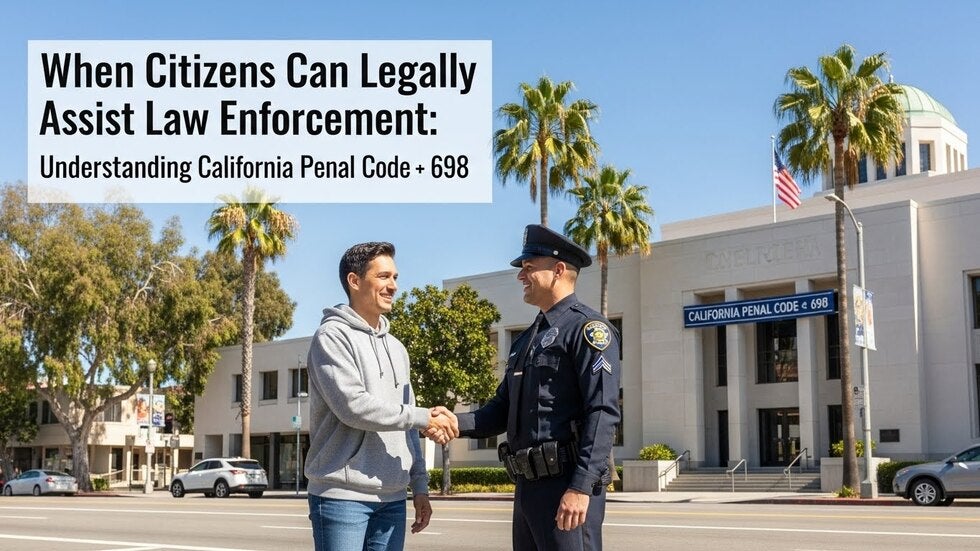
Most people understand they should stay out of police business, but California law actually recognizes specific circumstances where citizens can legally assist law enforcement officers. California Penal Code § 698 provides crucial legal protection for individuals who act under the command of officers of justice to help prevent public offenses.
This statute creates a legal shield for good Samaritans who step forward to help law enforcement when specifically asked to do so. Understanding this law can mean the difference between facing criminal charges and having complete legal justification for your actions.
The Legal Foundation of Citizen Assistance
California Penal Code § 698 establishes that when officers of justice are authorized to act in the prevention of public offenses, other individuals who act under their command to assist them are justified in doing so. This creates a legal framework that protects citizens who respond to law enforcement requests for help.
The statute recognizes that police officers sometimes need immediate assistance from civilians to effectively handle dangerous situations. Whether it's helping to restrain a violent suspect, providing emergency medical aid, or assisting with crowd control, there are times when citizen involvement becomes necessary for public safety.
This legal protection extends beyond just physical assistance. Citizens who help officers by providing information, securing evidence, or even directing traffic at the scene of an emergency can claim justification under this statute when acting under official direction.
What Constitutes "Officers of Justice"
The term "officers of justice" in California Penal Code § 698 encompasses more than just police officers. This broad definition includes sheriff's deputies, highway patrol officers, federal agents operating within California, and other sworn law enforcement personnel who have the authority to prevent public offenses.
The key requirement is that these officers must be acting within their official capacity and have the legal authority to address the situation at hand. An off-duty officer who lacks jurisdiction or authority cannot invoke this statute to justify directing civilian assistance.
Understanding who qualifies as an "officer of justice" is crucial because acting under the command of someone without proper authority won't provide the legal protection that Penal Code § 698 offers. This distinction becomes particularly important in situations involving security guards, private investigators, or other individuals who may appear to have authority but lack official law enforcement powers.
The Command Requirement: More Than Just a Request
California Penal Code § 698 specifically requires that citizens act "under their command" to receive legal protection. This means more than just a casual request for help—it requires a clear directive from a law enforcement officer who has the authority to issue such commands.
The command must be specific and related to preventing a public offense. Vague requests or suggestions don't qualify for protection under this statute. For example, an officer saying "I could use some help here" differs significantly from "I need you to hold this suspect's legs while I apply handcuffs."
This command requirement serves as a safeguard against citizens taking unauthorized action and then claiming they were helping law enforcement. The law requires clear direction from qualified officers to ensure that civilian assistance is appropriate and necessary.
Scope of Justified Actions Under § 698
The actions justified under California Penal Code § 698 are limited to those necessary to prevent public offenses. This includes helping to apprehend suspects, providing physical assistance to restrain dangerous individuals, or taking other reasonable steps to maintain public safety under officer direction.
Citizens acting under this statute can use reasonable force when specifically directed to do so by law enforcement. This might include helping to subdue a violent suspect or preventing someone from fleeing the scene of a crime. However, the force used must be reasonable and proportional to the threat presented.
The statute also protects citizens who assist with less dramatic but equally important tasks, such as directing traffic around accident scenes, helping to evacuate buildings during emergencies, or providing first aid to injured parties under officer supervision.
When Citizen Assistance Goes Too Far
While California Penal Code § 698 provides broad protection for citizens helping law enforcement, there are important limitations. Citizens cannot exceed the scope of what they're asked to do, nor can they use excessive force even when assisting officers.
Acting beyond the specific commands given by law enforcement can result in criminal liability. For example, if an officer asks you to help direct traffic but you decide to also search vehicles, you've exceeded the scope of justified assistance and could face charges.
Using excessive force while assisting officers is another common way citizens lose legal protection. Even when helping law enforcement, the force used must be reasonable and proportional to the situation. Excessive force can result in assault charges regardless of your initial justification.
Real-World Applications and Scenarios
California Penal Code § 698 comes into play in various real-world situations. During riots or civil unrest, officers might need citizen assistance to maintain order or protect property. Citizens who respond to these official requests receive legal protection for their actions.
Emergency situations often require immediate civilian assistance. When officers are overwhelmed by multiple emergencies, they may need citizens to help with crowd control, traffic direction, or even basic law enforcement tasks until additional resources arrive.
Medical emergencies present another common scenario where citizen assistance becomes valuable. Officers trained in first aid might direct civilians to help treat injured parties, apply pressure to wounds, or assist with emergency transportation.
The Importance of Clear Communication
For California Penal Code § 698 to provide protection, there must be clear communication between law enforcement and the assisting citizen. Officers should provide specific instructions about what they need, and citizens should ask for clarification if the request is unclear.
Documenting the request for assistance can be crucial if legal questions arise later. When possible, having witnesses present who can verify that you were acting under officer direction provides additional protection.
Citizens should also communicate their limitations clearly. If you're asked to help but lack the physical ability or skills necessary, it's better to decline than to attempt assistance that could make the situation worse.
Legal Risks and Considerations
Even with the protection of California Penal Code § 698, citizens who assist law enforcement face potential legal risks. If your actions exceed the scope of what was requested or if you use excessive force, you could face criminal charges.
Civil liability remains a concern even when criminal charges aren't filed. Property damage or injuries caused while assisting officers could result in lawsuits, and the protection offered by § 698 may not extend to civil claims.
Insurance implications should also be considered. Many insurance policies exclude coverage for damages resulting from law enforcement activities, so assisting officers could leave you financially exposed if something goes wrong.
Building a Defense Strategy
When facing charges related to actions taken while assisting law enforcement, California Penal Code § 698 can provide a complete defense. However, successfully invoking this statute requires proving that you were acting under the specific command of authorized officers.
Evidence supporting your defense might include witness testimony, police reports documenting the request for assistance, or audio/video recordings of the incident. Officer testimony confirming that they directed your actions provides the strongest support for a § 698 defense.
The timing of the request for assistance is also crucial. You must have been acting under officer command at the time of your actions, not retroactively seeking justification after the fact.
Practical Advice for Citizens
If law enforcement requests your assistance, ask for clear instructions about what you're expected to do. Understanding the scope of your role helps ensure that your actions remain within the protection offered by California Penal Code § 698.
Consider your own safety and capabilities before agreeing to help. You're not legally required to assist officers, and declining a request that puts you at unreasonable risk is always acceptable.
When possible, ensure that other witnesses are present who can verify that you were acting under officer direction. This documentation can be invaluable if legal questions arise later about your actions.
California Penal Code § 698 represents an important balance between public safety needs and individual rights. While it protects citizens who help law enforcement prevent public offenses, it also establishes clear boundaries to prevent abuse of this protection.
Understanding this statute empowers citizens to make informed decisions about when and how to assist law enforcement while maintaining their legal protection. Whether you're considering helping officers in an emergency or facing charges related to such assistance, knowing your rights under § 698 is essential for navigating these complex situations successfully.
For specific legal advice regarding situations involving citizen assistance to law enforcement, consult with experienced criminal defense attorneys who can evaluate your unique circumstances and provide guidance tailored to your case.
For confidential legal consultation and expert defense guidance, visit thebulldog.law or call (888) 928-1609.