
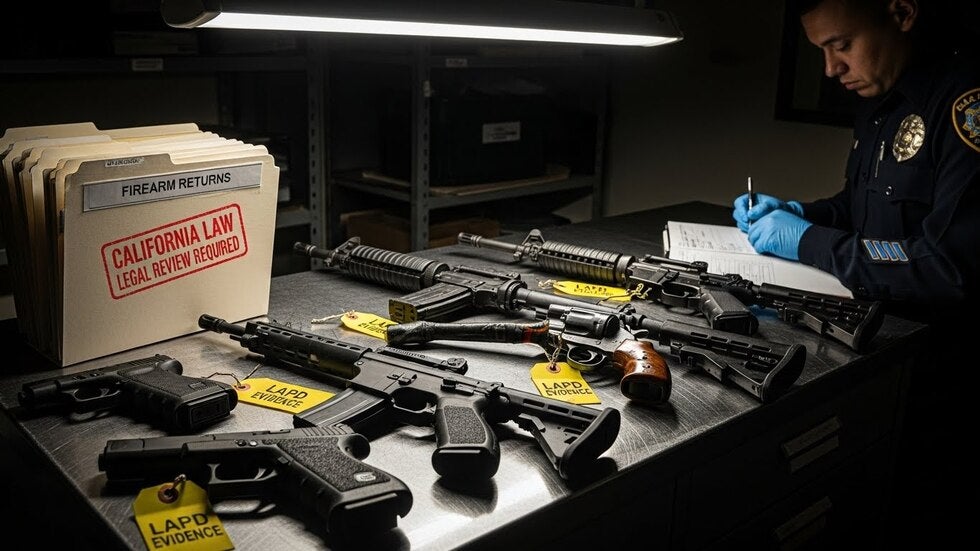
Getting your firearm back from law enforcement in California involves more than just proving ownership. State law establishes strict requirements that agencies must follow before releasing any seized weapon, magazine, or ammunition. Understanding these mandatory steps helps you prepare properly and avoid frustrating delays when reclaiming your property.
The Three Core Requirements for Firearm Release
California Penal Code Section 33855 creates a checkpoint system that protects both public safety and your property rights. Law enforcement agencies and courts cannot simply hand back your firearm because you ask for it. They must verify three critical elements before releasing any weapon into private hands.
This statutory framework reflects California's commitment to keeping firearms away from prohibited persons while respecting the rights of lawful gun owners. As a defense attorney who regularly helps clients navigate this process, I've seen how proper preparation makes the difference between a smooth return and months of bureaucratic headaches.
Department of Justice Eligibility Determination
The first and most important requirement centers on your personal eligibility to possess firearms under California law. Before any agency returns your property, you must present official notification from the California Department of Justice confirming your eligibility status.
This determination doesn't happen automatically. You must apply through the California Firearms Application Reporting System, commonly known as CFARS, and wait for the Department of Justice to complete its review. The department conducts a comprehensive background check examining your criminal history, mental health records, restraining orders, and any other factors that might disqualify you from firearms possession.
The eligibility determination serves as your golden ticket for reclaiming seized property. Without this official approval from the Department of Justice, law enforcement agencies lack the legal authority to return your firearm regardless of your ownership rights or the circumstances of the seizure.
Understanding the Background Check Process
Many gun owners mistakenly believe that their previous firearms purchases or existing concealed carry permits automatically qualify them for return of seized property. California law requires a fresh eligibility determination for each return request through the CFARS system.
The Department of Justice examines your current status at the time of your application. Events occurring after your last firearm purchase might affect your eligibility, including recent criminal convictions, protective orders, mental health holds, or changes in immigration status. The department looks at your complete record as it exists today, not as it existed when you originally acquired the firearm.
Processing times vary depending on the complexity of your background and the department's current workload. Simple cases with clean records often resolve within a few weeks, while applications involving criminal history or other complications might take several months. Patience becomes essential during this waiting period, though working with an experienced attorney can sometimes help identify and resolve issues that slow the process.
Automated Firearms System Verification Requirements
California maintains a massive database called the Automated Firearms System that tracks firearm ownership and stolen weapon reports throughout the state. When law enforcement agencies have direct access to this system, they must perform two critical verifications before releasing any seized firearm.
First, the agency must confirm that your firearm isn't listed as stolen in the system. This check protects against the inadvertent return of weapons taken in burglaries or other thefts. Even if you claim ownership, a stolen property flag prevents release until the situation gets resolved.
Second, the agency must verify that the Automated Firearms System shows the specific firearm registered in your name. California's firearm registration requirements mean that legal transfers should appear in this database. If the system shows someone else as the registered owner, or if no registration exists at all, the agency cannot return the weapon to you even with a Department of Justice eligibility approval.
What Happens When Your Firearm Was Reported Stolen
Discovering that your firearm was reported stolen creates a special situation with unique procedures. Perhaps someone stole your gun and later got arrested while possessing it. Maybe police recovered your weapon at a crime scene. Regardless of how law enforcement obtained the firearm, the fact that it appears in stolen property databases triggers additional requirements.
California law requires the agency holding a stolen firearm to notify the registered owner or person entitled to possession when the weapon gets recovered. This notification gives you the opportunity to reclaim your property, but you still must prove your eligibility through the CFARS process and Department of Justice determination.
The stolen property designation doesn't exempt you from the standard return requirements. You must complete the same application process, pass the same background check, and meet the same eligibility standards as any other person seeking return of a seized firearm. Your status as a crime victim rather than a suspect doesn't change these fundamental requirements.
Fee Exemptions for Stolen Firearms
California normally charges various fees for processing firearm return applications and conducting eligibility determinations. However, the law provides an important exemption for people reclaiming firearms that were stolen and properly reported to police.
You qualify for fee exemption when the court or agency determines that you reported the firearm stolen to law enforcement before it came into their custody, or within five business days after the theft occurred. This exemption recognizes that crime victims shouldn't pay penalties for recovering their own stolen property.
The five business day reporting window matters tremendously. Many gun owners delay reporting thefts hoping to recover the weapon themselves or avoid paperwork. This delay can cost you hundreds of dollars in fees when you eventually reclaim the firearm from law enforcement. Reporting stolen firearms promptly protects both your financial interests and helps police track weapons used in crimes.
To claim this exemption, the court or agency must notify the Department of Justice in the manner prescribed by the department. Make sure to provide documentation proving when you reported the theft to establish your eligibility for waived fees.
Storage Fees and Administrative Costs
Even when you qualify for exemption from eligibility determination fees, law enforcement agencies retain the right to charge storage fees and administrative costs under Section 33880. These fees compensate agencies for the expense of safely storing firearms and processing return requests.
Storage fees typically accrue on a daily basis from the date of seizure until release. The longer your firearm remains in custody, the higher these costs climb. This reality creates urgency for completing the CFARS application process quickly once you learn about a seizure.
Administrative fees cover the personnel time and resources required to verify your eligibility, check databases, process paperwork, and coordinate the physical transfer of your firearm. These costs remain separate from the Department of Justice fees for background checks and eligibility determinations.
Understanding the full financial picture helps you make informed decisions about whether to reclaim your firearm or pursue alternative options like selling or transferring it to someone else. Sometimes the accumulated fees exceed the weapon's value, making recovery economically impractical.
Timeline Expectations for Firearm Returns
The entire process from seizure to return typically spans several weeks at minimum, and can extend to several months in complex cases. Breaking down the timeline helps you understand what to expect and plan accordingly.
First, you must learn that law enforcement has seized your firearm. Depending on the circumstances, this notification might be immediate or delayed. Once you know about the seizure, you can begin the CFARS application process.
The Department of Justice eligibility determination usually takes between two and eight weeks, though complicated cases require more time. After receiving your approval, you must present it to the holding agency along with any required documentation.
The agency then conducts its Automated Firearms System checks and processes your request. This step might take another one to three weeks depending on the agency's workload and internal procedures. Finally, you must arrange to physically retrieve your firearm, which requires coordinating schedules with the property room or evidence custodian.
Common Obstacles and How to Overcome Them
Several issues frequently complicate firearm returns and cause delays. Being aware of these potential problems allows you to address them proactively.
Registration discrepancies create significant headaches. If you acquired your firearm through a private party transfer that wasn't properly processed through a licensed dealer, the Automated Firearms System might not show you as the registered owner. Resolving these issues often requires providing bills of sale, transfer documentation, or sworn statements about how you obtained the weapon.
Eligibility questions arise when your criminal history includes arrests without convictions, dismissed charges, or expunged records. The Department of Justice might request additional documentation or clarification about these incidents before approving your application. Having court records and case disposition documents ready accelerates this process.
Interstate complications emerge when you've moved to or from California since acquiring the firearm. Different states have different registration requirements and transfer procedures. Understanding how California treats out of state firearms transactions becomes essential when your weapon has a connection to another jurisdiction.
When Legal Representation Makes Sense
Most straightforward firearm returns don't require attorney assistance. If you have a clean record, proper registration, and clear ownership documentation, navigating the process yourself works fine.
However, certain situations benefit significantly from legal guidance. If criminal charges accompanied the seizure, an attorney can ensure the return process doesn't create additional legal exposure. When eligibility questions exist due to your criminal history, mental health records, or immigration status, legal analysis helps determine your actual rights and options.
Complex ownership disputes, registration problems, or cases involving valuable firearms often justify the investment in professional help. An experienced criminal defense attorney familiar with California firearms law can identify potential issues before they become problems and advocate for your interests with law enforcement agencies.
Protecting Your Rights During the Return Process
California's firearm return requirements exist to balance public safety with property rights. Understanding what law enforcement must do before releasing your weapon helps you ensure the process follows proper legal procedures.
Stay organized throughout the process by keeping copies of all correspondence, application materials, and approval documents. Document every interaction with law enforcement agencies and note the names and badge numbers of personnel you speak with. This record proves invaluable if disputes arise about fees, timelines, or procedural requirements.
Meeting the three core requirements establishes the legal minimum for firearm release, but it does not always guarantee immediate return. Local agencies may impose additional procedures, and bureaucratic delays can occur even after full compliance with state law. In most cases, persistence and patience resolve these issues—but when agencies exceed their authority or unreasonably delay lawful returns, timely legal intervention may be necessary. For experienced guidance on firearm release procedures, agency compliance issues, and enforcing your rights under California law, Contact Us or call (888) 928-1609 for a confidential consultation.