
By the The Bulldog Law Criminal Defense Team • Reviewed by a licensed California criminal defense attorney
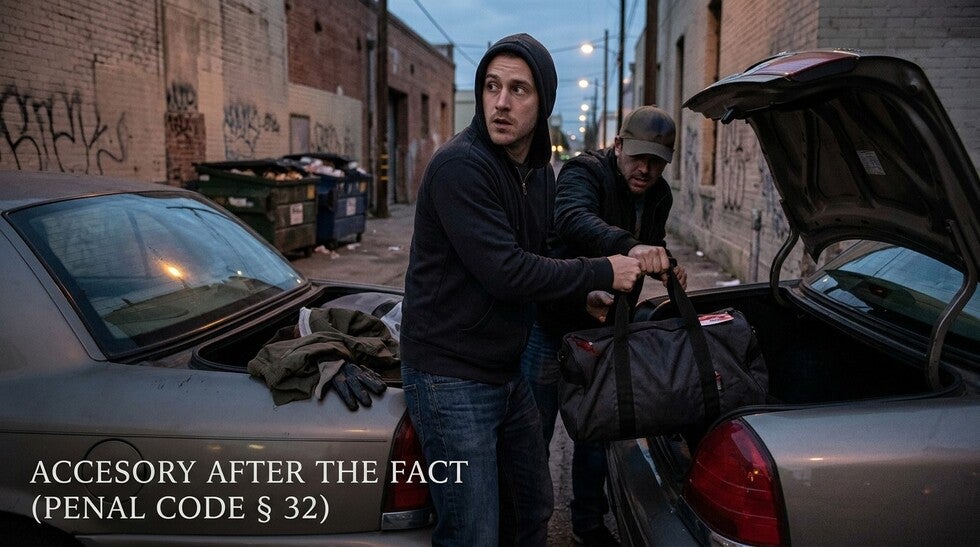
Penal Code § 32 makes it a crime to HARBOR, CONCEAL, or AID a person you KNOW committed a FELONY, with the INTENT that they avoid or escape arrest, trial, conviction, or punishment a WOBBLER punishable as a misdemeanor (up to a year) or felony (16 months, 2, or 3 years), dramatically lighter than the underlying crime, because the law treats after-the-fact help as its own offense rather than participation in the original.
That structural mercy is the statute's first lesson and its second is who fills these files: FAMILY. Mothers, partners, siblings, and best friends of people who did something terrible, charged not for the crime but for the week after it the spare room, the ride, the “he was with me all night.” The elements draw real lines that protect more than people fear: you must have KNOWN the person committed a felony (suspicion isn't knowledge; misdemeanors don't qualify); you must have performed an AFFIRMATIVE act of help (silence is not a crime California imposes no general duty to report and love, lodging in ignorance, and refusing to answer police questions are not offenses); and you must have SPECIFICALLY INTENDED to help them escape justice (comfort isn't obstruction; a ride to a lawyer's office isn't a ride from justice).
This guide from The Bulldog Law's criminal defense team companion to our aiding-and-abetting guide covers the elements, the classic traps (the false alibi above all), the family playbook, and the defenses.
The Elements and the Lines They Draw
- A completed FELONY by someone else the underlying offense must be a felony (helping after a misdemeanor isn't § 32), and it must be COMPLETE: help during commission is principal liability under § 31 which makes the before/after timeline itself a charging battleground the defense polices.
- KNOWLEDGE the person committed it actual knowledge, not suspicion, not ‘should have known,' not neighborhood rumor: the girlfriend who housed him believing his denial, the parent who suspected but wasn't told, fails this element and knowledge is the state's hardest proof in most § 32 files, built (or not) from confessions witnessed, messages, and conduct.
- An AFFIRMATIVE act of harboring, concealing, or aiding hiding them, driving them away, providing the disguise, destroying evidence, LYING TO POLICE for them (the classic see the traps below). NOT crimes: silence, refusing to answer questions, not calling the police, continuing to love them, or letting them live at home in ignorance of the crime.
- SPECIFIC INTENT to help them escape justice the purpose element: aid given for other reasons (medical help, getting them to a lawyer, de-escalating a crisis) isn't § 32 intent, and DURESS help compelled by fear of the very person, common in DV-adjacent files negates it entirely.
The Traps, the Family Playbook, and How These Cases Resolve
THE TRAPS, in the order families fall into them: the FALSE ALIBI (“he was with me” to detectives is an affirmative act of concealment the single most common § 32 charge, and it's manufactured in living rooms by good people in bad moments); EVIDENCE CLEANUP (washing clothes, deleting messages, moving items each an act, each often on camera or in metadata); the RIDE (transportation away from pursuit or the area, versus the lawful ride TO counsel or to surrender purpose decides); MONEY AND PHONES (funding flight or supplying burner communication); and the JAIL CALL (coordinating stories on recorded linesconverts sympathy into evidence and new charges at once).
THE FAMILY PLAYBOOK what you CAN lawfully do when someone you love is wanted: say nothing to police (silence is your right, for you and about them), decline searches, hire them counsel and drive them TO that lawyer, encourage and arrange SURRENDER through counsel (the act that helps them most and exposes you zero), and keep every conversation off recorded lines. What you cannot do is everything in the traps and the moment officers treat YOU as a witness, the same rule protects you: no statements without your own lawyer, because the interview is where witnesses become defendants.
HOW THESE CASES RESOLVE: § 32's wobbler structure and its sympathetic defendants make it among the most negotiable charges in the code misdemeanor filings and reductions are the norm for minimal-role family cases, the weak-case audit hits the knowledge element hard, duress and lack-of-intent defenses fit the facts these files actually contain, and outcomes from declination through expungeable misdemeanors follow early counsel while the same cases, handled by improvised statements and one more helpful lie, climb toward felony exposure that was never necessary.
One more honest note: § 32 is also a NEGOTIATION DESTINATION - defendants originally charged as principals plead to accessory when the evidence of before-or-during participation is weak, trading strike exposure for a wobbler the ladder's bottom rung, and sometimes the smartest exit in a group case.
Frequently Asked Questions
What's the punishment for accessory after the fact?
It's a wobbler: misdemeanor up to one year, or felony at 16 months, 2, or 3 years regardless of how serious the underlying felony was, which is the statute's structural mercy: helping after a murder and helping after a felony theft carry the same § 32 range, far below the principal's exposure. Level selection tracks the help's extent, the underlying crime's gravity, and your record and minimal-role, family-context cases resolve as misdemeanors (with expungement after) routinely when defended early. The comparison that matters: § 32 is also where over-charged ‘principals' land when before-or-during proof fails the negotiated bottom rung that trades strikes for a wobbler.
Is it a crime to not report a crime in California?
Generally no California imposes no universal duty to report crimes or turn anyone in, including family: silence, declining to answer police questions, and not calling 911 about a past crime are not offenses. The narrow exceptions: mandated reporters (teachers, doctors, therapists) for child and elder abuse within their roles, and a specific statute requiring reporting of certain observed violent crimes against young children. What converts lawful silence into PC 32 is the AFFIRMATIVE act lying to investigators, hiding the person, moving evidence. The practical rule when police come asking about someone you love: you may stay silent, and you should through counsel because ‘helpfully explaining' is where protected silence becomes a chargeable false statement.
Can I be charged for letting a family member stay with me?
Only if the elements meet: you KNEW they had committed a felony, and housing them was done with INTENT to help them evade arrest or punishment. Lodging in ignorance, lodging on their denials, and ordinary family life while unaware are not crimes knowledge is the state's burden and its hardest proof. Where it becomes § 32: they're wanted, you know it, and the spare room plus the ‘he's not here' at the door become harboring and concealment. The protective path if someone wanted comes to you: don't lie to anyone, don't hide anything, get them a lawyer, and push surrender through that lawyer the one form of help that's both lawful and genuinely in their interest. And make no statements about any of it without counsel of your own.
Is lying to the police for someone really a crime?
It's the classic PC 32 charge the false alibi (‘she was with me all night') and the false denial (‘I haven't seen him') are affirmative acts of concealment when you know the felony occurred and intend to shield them, and related statutes (false reports, obstruction) stack alongside. The line the law draws is silence versus statement: you may refuse to answer entirely that's protected but once you speak, falsehood is chargeable. It's also the most manufacturable evidence in these files: your statement is recorded, the truth emerges, and the lie itself convicts. The discipline that protects families: no interviews without counsel, ever, however ‘routine' the questions sound because in accessory investigations, the interview IS the case.
Section 32 sits where loyalty meets law and the law is more merciful than fear suggests: silence is protected, love is not a crime, and the lawful way to help someone wanted (counsel and surrender) is also the way that saves them the most. The traps are the improvised acts the alibi, the cleanup, the ride and every one of them is avoidable with an hour of advice. The Bulldog Law's criminal defense team defends § 32 cases and counsels families in exactly these moments, statewide. Contact the firm online or call (888) 928-1609 - 24/7.