
By the The Bulldog Law Criminal Defense Team • Reviewed by a licensed California criminal defense attorney
Penal Code § 31 erases the line between helper and doer: ALL persons concerned in the commission of a crime whether they directly commit it or AID AND ABET its commission are PRINCIPALS, charged with the same offense and facing the same punishment as the hands-on perpetrator.The getaway driver faces the robbery; the lookout faces the burglary; the person who handed over the weapon can face what was done with it. But the doctrine has strict elements the street version ignores: the prosecution must prove you KNEW the perpetrator's unlawful purpose, INTENDED to encourage or facilitate the crime, and by act or advice actually DID aid, promote, or instigate it which is why the law's two great protections exist: MERE PRESENCE at a crime scene is not aiding and abetting, and MERE KNOWLEDGE that a crime is occurring even approval of it is not either, without intent and assistance.
And the doctrine has been NARROWED by modern reform: the old “natural and probable consequences” theory (liability for whatever foreseeably flowed from the crime you aided) has been abolished for murder SB 1437 and its progeny now require that an accomplice personally harbor intent to kill or act as a major participant with reckless indifference before murder liability attaches, a change that has resentenced hundreds. This guide from The Bulldog Law's criminal defense team covers the elements, the presence line, the withdrawal defense, the driver-and-lookout realities, and how § 31 differs from its neighbors conspiracy and accessory after the fact.
The Elements and the Two Protections
- Knowledge of the perpetrator's unlawful purpose you must have known what was intended: the driver who genuinely believed it was a store run, the friend who lent a car without knowing its mission, fails this element and knowledge is proven (and attacked) through the same circumstantial inferences as everywhere: statements, planning presence, behavior before and after.
- Intent to aid, encourage, or facilitate specific intent that the crime succeed: approval isn't intent, curiosity isn't intent, fearfrozen compliance isn't intent and DURESS (help compelled by threats) negates it entirely.
- Conduct that actually aids or encourages an act, advice, or encouragement that promotes the crime: driving, lookout duty, supplying tools, luring the victim, even calculated encouragement but NOT presence, NOT silence, NOT failing to stop it (bystanders have no legal duty to intervene), and NOT flight alone.
- The two protections, stated plainly MERE PRESENCE is not enough (the friend standing there during the fight is a witness, not a principal juries are instructed exactly this) and MERE KNOWLEDGE is not enough (knowing your roommate deals drugs is not dealing drugs). Prosecutors charge groups whole and let § 31 sort them the defense's job is forcing the sorting: person by person, element by element, with the weak-case audit applied to YOUR conduct, not the group's.
Drivers, Lookouts, Withdrawal - and the Murder Reform
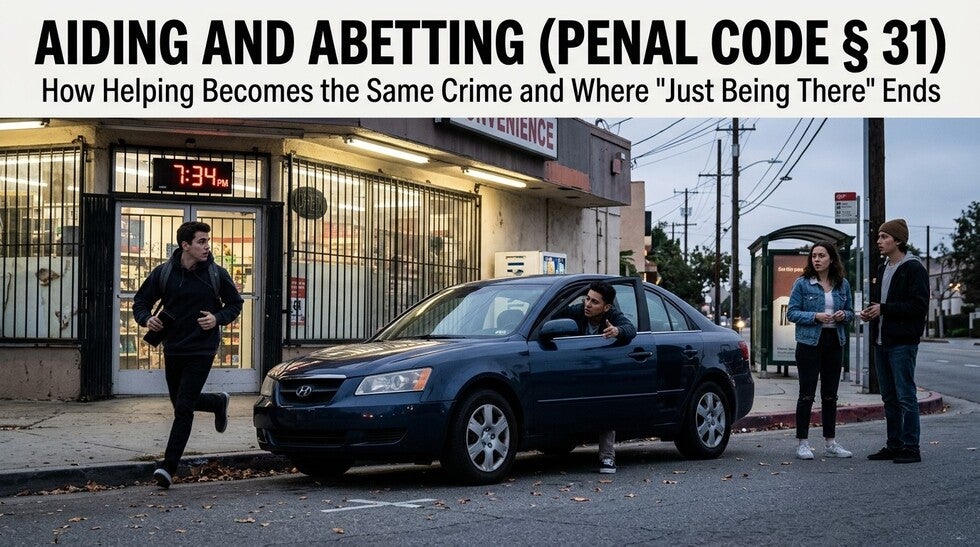
THE RECURRING CAST: the getaway driver (liability turns on what they knew and when the driver recruited for the plan is a principal; the rideshare-style unwitting driver is not; the driver who learned mid-flight fights on intent and timing); the lookout (classic aiding IF the watching was purposeful and agreed, not coincidental loitering the prosecution recasts); the supplier (weapons and tools furnished KNOWING their purpose aid the crime; ordinary transactions without knowledge don't); and the encourager (words that instigate can suffice the goading crowd member is contested terrain where the First Amendment and causation both push back).
WITHDRAWAL is the doctrine's exit: an aider who BEFORE the crime is committed notifies the others of withdrawal and does everything reasonably possible to prevent the crime cuts off liability; quiet regret and simply leaving don't qualify, which is exactly why the doctrine matters mostly as pre-crime advice and occasionally as trial defense.
THE MURDER REFORM deserves its own paragraph: under SB 1437's framework, the accomplice to an underlying felony is no longer automatically liable for a killing someone else committed felony-murder and natural-and-probable-consequences murder now require the accomplice's OWN intent to kill or major-participant-with-reckless-indifference status, and § 1172.6 petitions have vacated old convictions built on the abolished theories.
The same reform logic pressures gang cases (AB 333's limits) and group-violence prosecutions generally. The strategic sum: § 31 cases are INDIVIDUATION fights your knowledge, your intent, your acts, separated from the group's plus timing fights (before, during, or after decides which statute even applies: after-the-fact help is § 32's separate, lesser world), and the represented defendants who force that separation early are the ones who end up witnesses, accessories, or free while the group-charged unrepresented ride the principal's exposure to the end.
Frequently Asked Questions
Can you be charged just for being there when a crime happened?
Not lawfully mere presence at a crime scene, even with knowledge of the crime and even with silent approval, is not aiding and abetting, and California juries are instructed exactly that. Liability requires knowledge of the perpetrator's purpose PLUS intent to help PLUS an actual act of aid or encouragement. That said, prosecutors routinely charge everyone present and let the sorting happen later presence plus friendship plus flight gets recast as ‘lookout' constantly so the practical defense is individuation: your phone records, your position, your conduct, witness by witness, separating what YOU did from what the group did. If you were swept into charges for being present: say nothing, and make that separation counsel's first project.
What's the sentence for aiding and abetting?
The same as the crime itself that's PC 31's entire point: principals and aiders face identical charges and identical punishment ranges, so aiding a robbery is robbery (strike included), aiding a burglary is burglary. The exceptions live in the reforms and the elements: murder liability for accomplices now requires your OWN culpable mental state (SB 1437 intent to kill or major participation with reckless indifference), enhancements apply person-by-person (the gun enhancement follows who used the gun), and after-the-fact help is a different, far lesser crime under PC 32. Sentencing individuation your role, your knowledge, your record argued separately is where accomplice cases are mitigated even when liability sticks.
What's the difference between aiding and abetting, conspiracy, and accessory?
Timing and structure. AIDING AND ABETTING (PC 31): help before or during the crime, with knowledge and intent you're a principal, same sentence. CONSPIRACY (PC 182): the AGREEMENT to commit a crime plus any overt act a separate crime that can be charged even if the target offense never happens, and alongside it when it does.
ACCESSORY AFTER THE FACT (PC 32): help AFTER completion hiding, aiding escape, destroying evidence a separate, lesser offense (wobbler, up to 3 years) rather than principal liability. Real cases blur them, and charge-sorting between the three is core defense work: moving a client from ‘principal' to ‘accessory' changes the exposure by years and strikes. Our conspiracy and accessory guides cover the neighbors in full.
I found out my friend committed a crime am I in trouble for not reporting it?
Not for silence alone California imposes no general duty to report crimes or intervene, and mere knowledge after the fact isn't an offense. The lines you cannot cross: actively HELPING afterward (hiding them, lying to police for them, destroying evidence, driving them from the scene) becomes accessory after the fact under PC 32; helping BEFORE or DURING would have been PC 31; and specific narrow reporting duties exist for certain professionals and certain observed crimes against children. The safe path when someone confides: don't touch evidence, don't make statements to police ‘helping explain,' and if officers contact you, speak through counsel people talk themselves from witness to accessory in a single unprepared interview more often than any other way.
Section 31 makes helpers into principals but only through elements the prosecution must prove one person at a time, and only within limits reform keeps tightening. In group cases, the whole defense is the word YOUR: your knowledge, your intent, your acts. Make the state prove them separately. The Bulldog Law's criminal defense team defends accomplice-liability cases across California. Contact the firm online or call (888) 928-1609.