
Updated November 2026 | The Bulldog Law | California Criminal Defense
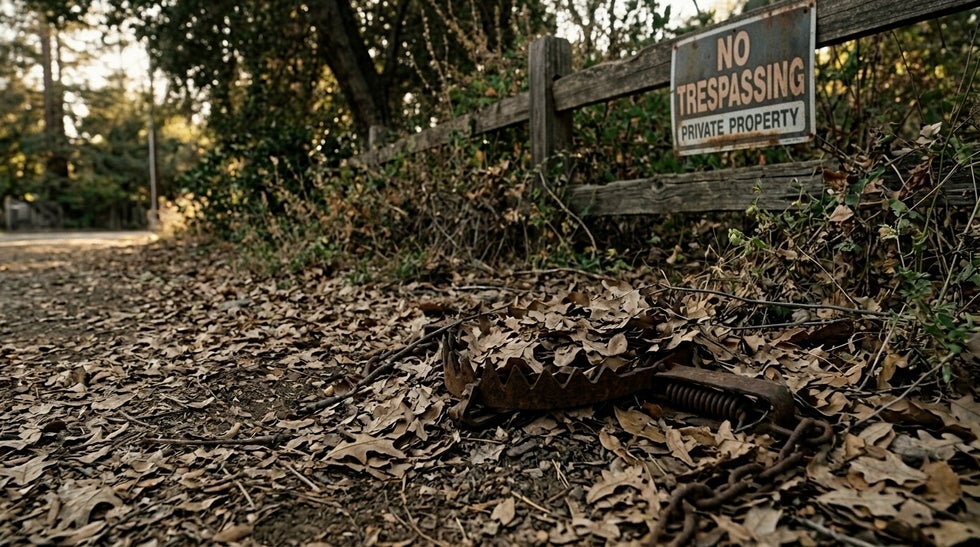
Yes, booby traps are illegal, including on your own property. In California, assembling, placing, or maintaining a boobytrap is a felony under Penal Code 20110, punishable by two, three, or five years in custody. The rule is the same across the United States even where no statute uses the word: an owner may not use a hidden device that can kill or seriously injure to protect property. Alarms, cameras, lights, and locks are legal. A device built to hurt whoever triggers it is not.
Our attorneys hear this question from homeowners after a break-in, from rural landowners dealing with repeated trespass, and from people who have been charged after someone was hurt. The law draws the line in the same place for all of them.
What California law says
Penal Code 20110 creates two offenses.
|
Conduct |
Level |
Punishment |
|
Assembling, maintaining, placing, or causing a boobytrap to be placed |
Felony |
Two, three, or five years |
|
Possessing any device with the intent to use it as a boobytrap |
Felony or misdemeanor |
Up to one year in county jail, or 16 months, two, or three years; fine up to 5,000 dollars |
Nobody has to be injured. Setting the device completes the crime, and having the parts with the intent to set one is enough for the second offense.
What counts as a boobytrap
Penal Code 16310 defines a boobytrap as a concealed or camouflaged device designed to cause great bodily injury when it is triggered by an unsuspecting person who comes across it. The statute gives examples:
- Guns, ammunition, or explosive devices attached to trip wires or other triggers.
- Sharpened stakes.
- Lines or wires with hooks attached.
The list is not complete. Three features matter: the device is hidden, it is designed to cause great bodily injury, and it works without the owner being there to decide whether to use it. A pit covered with branches, a spring-loaded blade, an electrified door handle, and a hidden bear trap all fit.
California separately bans trap guns. Under Fish and Game Code 2007, it is unlawful to set a firearm rigged to fire when a person or animal contacts a string or other trigger.
Why owning the property is not a defense
People are often surprised by this, because California does allow force, including deadly force, against an intruder in some situations. The difference is that self-defense depends on a person judging a real threat at the moment it happens. A trap makes no judgment.
The California Supreme Court addressed this in People v. Ceballos. A man whose garage had been broken into rigged a pistol to fire when the door opened. It shot a teenager in the face while the owner was away. The court upheld his conviction for assault with a deadly weapon. Its reasoning still governs:
- Deadly force is not justified to protect property alone.
- A device cannot tell a burglar from a firefighter, a police officer, a child, a utility worker, or a family member.
- A person who sets a deadly device is responsible for what it does, and cannot claim a justification that would require being present and in danger.
The right to resist an offense against your person or property is real, but it is limited to reasonable force used by a person, in response to what is actually happening.
Other charges a trap can bring
|
If the trap |
Possible charge |
|
Is set, and nobody is hurt |
Boobytrap under Penal Code 20110 |
|
Injures someone |
Assault with a deadly weapon (Penal Code 245), up to four years in state prison, plus enhancements for great bodily injury |
|
Involves a firearm |
Trap gun under the Fish and Game Code; firearm enhancements |
|
Involves explosives |
Destructive device offenses, which carry long prison terms |
|
Kills someone |
Manslaughter or murder |
|
Is placed on a road or driveway used by the public |
Penal Code 588a, placing substances likely to injure on a highway |
Are non-lethal traps legal?
The answer depends on what the device does.
|
Device |
Status |
|
Alarms, sirens, motion lights, cameras, GPS trackers |
Legal. They are not designed to injure anyone. |
|
Glitter, dye, or odor devices in a decoy package |
Generally not a boobytrap. Civil liability is possible if someone is hurt, for example by a spray to the eyes. |
|
Pepper spray, electric shock, or noise devices set off by a trigger |
Risky. May fall outside Penal Code 20110 if not designed to cause great bodily injury, but can support assault or battery charges and a lawsuit. |
|
Blank cartridges, fireworks, or flash devices in a package or on a trip wire |
Likely illegal. These can burn and maim, and prosecutors treat them as boobytraps or explosives. |
|
Bear traps, leghold traps, nail boards, hidden spikes or caltrops |
Illegal when set for people. They are designed to cause great bodily injury. |
|
Visible barbed wire, fences, gates, bollards |
Legal within local building and zoning rules. They are not concealed. |
"Non-lethal" is not the test. The statute asks whether the device is designed to cause great bodily injury, which includes broken bones, deep cuts, burns, and eye injuries.
Civil liability: the trespasser can sue
A criminal charge is only part of the exposure. An owner who injures someone with a trap can be sued for the injuries, even if the injured person was trespassing or stealing. The best known case is Katko v. Briney, where an Iowa farmhouse owner who wired a shotgun in a vacant building had to pay damages to the man who broke in. California has a statute that protects owners from lawsuits by people injured while committing certain felonies on the property, but that protection does not cover willful or wanton conduct, and a trap is deliberate by definition.
What you can do legally
- Locks, reinforced doors, window bars with fire releases, and safes.
- Alarm systems, cameras, and motion lighting.
- Fences, gates, and visible barriers.
- No trespassing signs, which make it easier to prosecute trespass under Penal Code 602.
- A dog, keeping in mind that owners can be liable for bites.
- Reporting repeated break-ins and asking for patrol checks; saving video for the police.
- Reasonable force in person when you or someone else is actually threatened, within the limits of California's self-defense rules.
If you are charged
Boobytrap cases often turn on the wording of the definition. Defenses our attorneys examine include:
- Not concealed or camouflaged. An open and obvious barrier is not a boobytrap.
- Not designed to cause great bodily injury. An alarm, a deterrent, or an animal trap used lawfully for wildlife.
- No intent to use it as a boobytrap, for the possession offense.
- Someone else set it. Common on shared land and at illegal grow sites where several people had access.
- Unlawful search. Many of these devices are found during searches of homes and land, and evidence from an invalid search can be suppressed.
Because the possession offense can be charged as a misdemeanor, and because judges have room at sentencing, early work by a defense lawyer can change the outcome considerably.
Frequently asked questions
Are booby traps illegal?
Yes. In California, assembling, placing, or maintaining a boobytrap is a felony under Penal Code 20110, punishable by two, three, or five years. Elsewhere in the United States the result is the same even where no statute uses the word: a person who injures someone with a hidden trap can be prosecuted for assault or homicide and sued for damages.
Are booby traps illegal on private property?
Yes. Owning the land does not create an exception. The California statute applies wherever the device is placed, and the leading cases all involve owners who set traps inside their own garages, sheds, and vacant buildings. The law does not allow force that could kill or maim to protect property alone.
Are non-lethal booby traps legal?
It depends on the device. The felony statute covers concealed devices designed to cause great bodily injury, so an alarm, a light, a siren, or a camera is not a boobytrap. A device meant to hurt, burn, shock, or spray a person is a different matter: even if it falls outside Penal Code 20110, it can support assault or battery charges and a civil lawsuit if someone is injured.
Can I booby trap my house against burglars?
No. A trap cannot tell a burglar from a firefighter, a police officer, a child, or a relative with a key. The California Supreme Court held in People v. Ceballos that a person who sets a deadly device is responsible for whatever it does and cannot claim self-defense, because nobody was there to be defended when it fired.
Are bear traps legal to use against trespassers?
No. A hidden bear trap or leghold trap set for a person is a concealed device designed to cause great bodily injury, which is the definition of a boobytrap. California also restricts steel-jawed leghold traps for wildlife under the Fish and Game Code.
Are traps like the ones in Home Alone legal?
No. Nearly every device in the film, such as heated doorknobs, swinging paint cans, and nails on the stairs, is designed to cause serious injury to whoever triggers it. In real life those would be prosecuted as boobytraps or assault with a deadly weapon, and the person who set them would be liable for the injuries.
Are porch pirate traps legal?
Devices that record, track, sound an alarm, or release glitter or a bad smell are generally not boobytraps because they are not designed to cause great bodily injury. Packages rigged with explosives, blank cartridges, chemicals, or anything that can burn or injure cross the line, and people have been charged for them.
Are caltrops or spike strips legal on my driveway?
Hidden spikes intended to injure a person meet the boobytrap definition, which names sharpened stakes. Placing anything likely to injure a person, animal, or vehicle on a public road is a separate crime under Penal Code 588a. Visible barriers such as gates, bollards, and posted tire-damage devices at a commercial exit are treated differently because they are not concealed.
Does a warning sign make a trap legal?
No. A sign does not make a dangerous device lawful and does not prevent an assault charge or a lawsuit. Signs are useful for a different reason: they establish that a person entering is trespassing.
Are booby traps legal in any state?
No state allows a trap designed to kill or seriously injure a person. Some states, like California, have a specific boobytrap statute. Others rely on general assault, reckless endangerment, and homicide laws, and on the civil rule from cases such as Katko v. Briney that an owner may not use deadly mechanical devices to protect property.
Related reading from our attorneys
- California self-defense, stand your ground, and the castle doctrine
- Lawful resistance under Penal Code 692
- Trespassing under Penal Code 602
Charged over a device on your property? Get advice before you talk to investigators
The Bulldog Law's criminal defense attorneys defend weapons, assault, and property cases across California. Call (888) 928-1609 or reach us online.