
By the The Bulldog Law Criminal Defense Team • Reviewed by a licensed California criminal defense attorney
Kidnapping under Penal Code § 207(a) is taking a person by force or fear and moving them a SUBSTANTIAL DISTANCE without consent a straight felony carrying 3, 5, or 8 years, ALWAYS a strike and violent felony, rising to 5, 8, or 11 when the victim is a child under 14, and exploding into LIFE terms in the aggravated forms: kidnapping for ransom or extortion (§ 209(a) life, without parole if the victim is harmed), kidnapping to commit robbery or specified sex crimes (§ 209(b) life with parole), and kidnapping during a carjacking (§ 209.5 life with parole).
Yet for all that weight, most contested kidnapping cases turn on a single doctrinal question was the movement legally “substantial”? because trivial or incidental movement reduces the charge to false imprisonment: no strike, a fraction of the exposure, probation on the table. This full guide from The Bulldog Law's criminal defense team covers the asportation doctrine that decides these cases, the aggravated forms and their own battlegrounds, the parental-abduction lane, and the defenses that move § 207 files down the ladder.
The Elements and the Asportation Doctrine in Depth
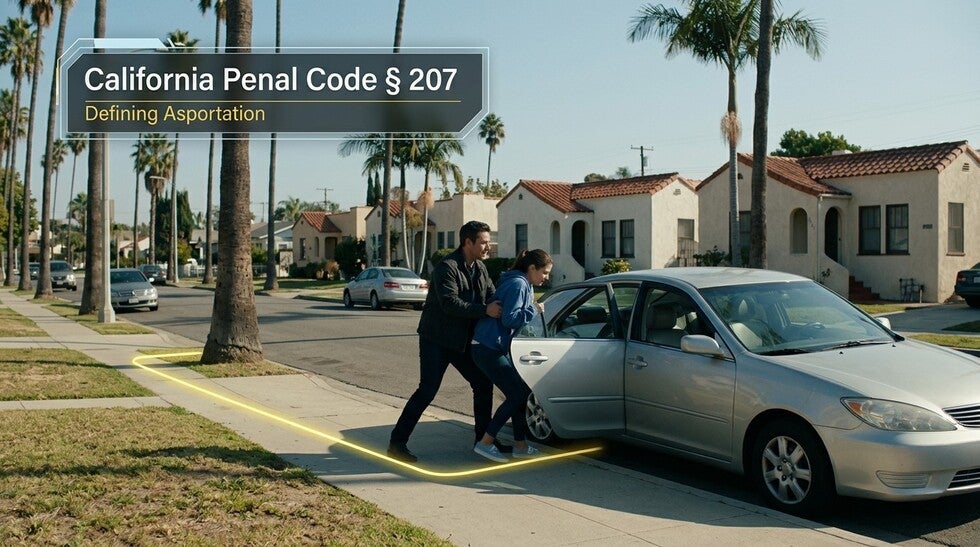
Simple kidnapping requires: (1) taking, holding, or detaining a person by force or by instilling reasonable fear; (2) moving them or making them move a substantial distance; (3) without their consent; and, for the aggravated child provisions, the age element.“Substantial distance” asportation is a totality test, not a tape measure: juries weigh the actual distance PLUS whether the movement changed the environment, decreased the likelihood of detection, increased the danger to the victim, or gave the attacker enhanced opportunity.
The doctrine's practical geometry: dragging someone a few feet within the same room is generally NOT substantial; forcing them from a public sidewalk into a vehicle, or from a store floor to a back office, CAN be short distances qualify when they transform the victim's peril. In the § 209(b) aggravated context there's a further shield: movement merely INCIDENTAL to the underlying robbery or sex offense the herding of store employees ten feet to open a safe does not support the life-term count, and “incidental movement” litigation is where aggravated kidnapping allegations most often die, collapsing back to the underlying robbery alone. Force-or-fear has its own child-case wrinkle: for young children, who cannot meaningfully consent, moving the child with illegal intent can suffice without conventional force the doctrine behind luring cases while adult cases fight over whether the person walked along, rode along, or was compelled.
The Aggravated Forms: Where Kidnapping Becomes a Life Case
- 209(a) ransom, reward, extortion: life WITH parole; life WITHOUT parole if the victim suffers death, bodily harm, or is exposed to substantial likelihood of death the statute of abduction-for-money cases, charged alongside extortion counts.
- 209(b) kidnapping to commit robbery or specified sex offenses: life with parole and the incidental-movement doctrine above is its dedicated battlefield: the difference between a store robbery and a life case is often ten feet of contested movement.
- 209.5 kidnapping during carjacking: life with parole when the victim is moved beyond the taking itself the count that turns a carjacking with a frightened passenger into a life exposure, and the reason ‘just drive them a block and drop them' is catastrophic legal advice.
- The stacking reality: firearm enhancements (10–20–life), per-victim counts, and the violent-felony 85% custody math ride along; conversely, every aggravated form contains its lesser simple kidnapping and simple kidnapping contains false imprisonment, a two-rung ladder the defense climbs down through asportation and intent litigation.
Parents, Custody Wars, and the § 278 Lane
A parent cannot ordinarily “kidnap” their own child under § 207 parental control is lawful authority but California routes parental-taking cases into their own statutes: child ABDUCTION (§ 278, taking a child by a person with NO custody right) and custody-order violations (§ 278.5, keeping or concealing a child in violation of an order's custody or visitation terms), both wobblers, both prosecuted out of family-court meltdowns.The patterns are painfully familiar: the parent who doesn't return the child after visitation, the flight to another state mid-divorce, the grandparent “rescue.” Defenses exist and matter § 278.7 protects takings made with a good-faith, reasonable belief the child faced immediate harm (with prompt-reporting requirements attached), custody-order ambiguity is real, and emergency circumstances get weighed but the strategic truth is blunter: these cases are custody litigation wearing criminal charges, domestic-violence dynamics included, and they demand coordinated family-court and criminal defense from the same week. What stays in § 207's lane: takings of children by strangers or by parents whose rights were terminated with the under-14 provision's 5/8/11 exposure and worse.
Defenses: How § 207 Cases Come Down the Ladder
- Insufficient asportation the workhorse: trivial distance, unchanged environment, no increased danger → the count reduces to false imprisonment, deleting the strike and the life exposure; in § 209(b) cases, incidental-movement doctrine kills the aggravated form outright.
- Consent the person entered the car, came along, stayed voluntarily: relationship and date-context cases live here, and the complete record messages, venue video, conduct after decides them.
- No force or fear persuasion, requests, even pressure without force or threats fail the element in adult cases.
- Lawful authority and § 278-lane routing parental rights, custody realities, and good-faith-protection defenses move family cases out of § 207 entirely.
- Identification, false accusation, and the standard audit stranger-case IDs carry the usual eyewitness weaknesses; breakup and custody accusations carry the usual motives; and for non-citizens the aggravated-felony stakes make immigration-safe structuring a first-order objective. The pattern across outcomes is consistent: kidnapping counts filed at the top of the ladder resolve, with early aggressive work, one or two rungs down and the rungs are made of the doctrines above.
Frequently Asked Questions
How many years is kidnapping in California?
Simple kidnapping: 3, 5, or 8 years 5, 8, or 11 if the victim is under 14 always a strike and violent felony (85% custody). The aggravated forms jump to life: ransom/extortion kidnapping (life; without parole if harm), kidnapping to commit robbery or sex offenses (life with parole), kidnapping during carjacking (life with parole), plus firearm enhancements and per-victim counts. The spread between 3 years and life is governed by doctrines asportation, incidental movement, intent which is why kidnapping defense is doctrine litigation from day one rather than sentencing mitigation at the end.
How far do you have to move someone for it to be kidnapping?
There's no fixed number ‘substantial distance' is a totality test weighing actual distance plus whether the movement changed the environment, reduced detection, increased danger, or enhanced the attacker's opportunity. Courts have found yards enough (sidewalk into a vehicle, storefront into a back room) and have found greater distances insufficient when nothing about the peril changed. Movement merely incidental to another crime repositioning people during a robbery gets extra protection against the life-term aggravated counts. Practically: the movement evidence (video, measurements, layout) is the case, and the false-imprisonment reduction waits on the other side of it.
Can a parent be charged with kidnapping their own child?
Generally not under § 207 parental authority is lawful but the parental lane has its own statutes: § 278 (abduction by someone WITHOUT custody rights) and § 278.5 (violating custody or visitation orders by keeping or concealing a child), both wobblers charged constantly out of divorce and custody wars. Defenses include good-faith protection of the child from immediate harm (§ 278.7, with prompt-reporting duties), order ambiguity, and emergencies and the cases demand synchronized family-court and criminal strategy, because the custody file and the criminal file feed each other. Strangers and rights-terminated parents taking children face § 207's harshest provisions instead.
Can kidnapping charges be reduced?
Routinely the ladder is built into the law. Aggravated (life) counts fall to simple kidnapping when the movement was incidental or the target-offense intent unproven; simple kidnapping falls to false imprisonment when asportation was trivial and that reduction deletes the strike, caps exposure at 3 years, and reopens probation. The levers: movement-doctrine litigation, consent evidence, force/fear challenges, and negotiation backed by all three. Timing matters enormously reductions won at charging or preliminary hearing shape the whole case, while the same arguments at trial are rescue operations. If a § 207 count has been filed, the ladder-down analysis should be on paper within the first two weeks.
Kidnapping law stacks life sentences atop a doctrine measured in feet and context which means these cases are won by the lawyers who litigate the feet. Substantial distance, incidental movement, consent: three doctrines, one ladder, climbed downward early. The Bulldog Law's criminal defense team defends § 207, the § 209 family, and parental-abduction cases across California. Contact the firm online or call (888) 928-1609 24/7.