
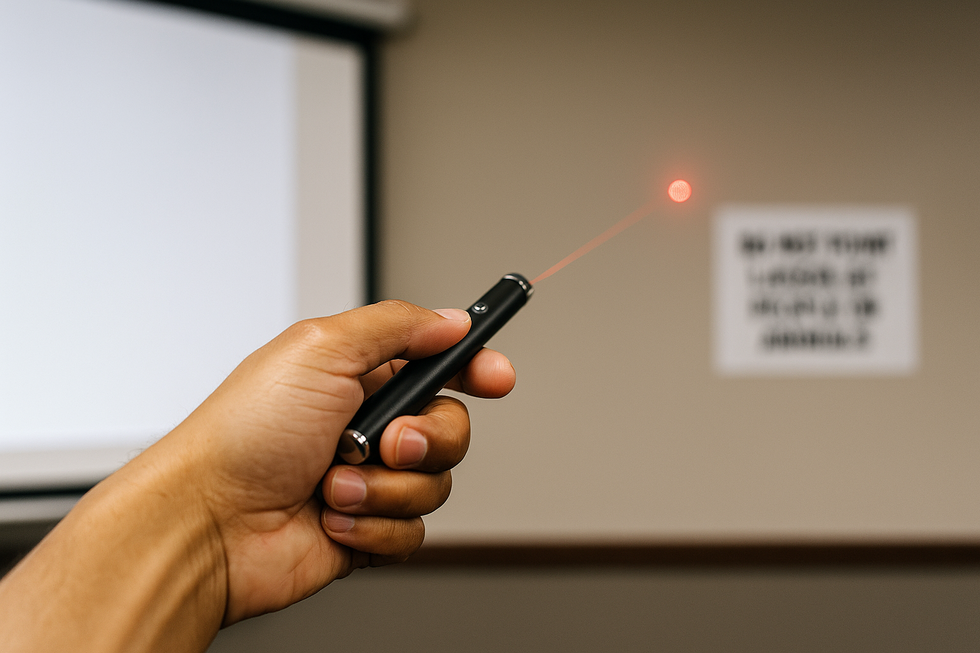
Laser pointers have become ubiquitous tools in educational settings, business presentations, and everyday life. However, California lawmakers have recognized the potential for misuse and established specific regulations governing their sale, possession, and use. Penal Code Section 417.27 creates multiple restrictions designed to prevent harassment and ensure public safety. If you have been cited under this statute, understanding the specific prohibitions and available defenses can help you navigate the legal system effectively.
Overview of California's Laser Pointer Regulations
Penal Code Section 417.27 establishes four distinct categories of prohibited conduct related to laser pointers. These restrictions address sales to minors, possession on school premises, directing beams at people or vehicles, and targeting service animals. Each provision serves different policy goals and requires different elements of proof.
Unlike more serious criminal offenses, violations of Section 417.27 are classified as infractions rather than misdemeanors. This means they carry lighter penalties and do not result in criminal records in the traditional sense. However, citations still require court appearances, involve fines or community service, and can escalate with repeated violations.
The statute defines laser pointers using the same language as Penal Code Section 417.25, meaning any handheld laser beam device or demonstration laser product that emits a single visible point of light created through stimulated emission of radiation. This broad definition encompasses the laser pointers commonly available in office supply stores, online retailers, and electronics shops.
Understanding which specific provision applies to your situation is crucial for developing an effective defense strategy. Each subdivision has unique elements that prosecutors must prove, and each creates different opportunities for challenging the citation. In some situations, conduct may overlap with public-order allegations like disturbing the peace (PC 415); facts matter.
Sales Restrictions for Minors
Subdivision (a) prohibits knowingly selling laser pointers to anyone 17 years old or younger unless they are accompanied and supervised by a parent, legal guardian, or another adult who is at least 18 years old. This provision targets retailers, businesses, and individuals engaged in sales transactions.
The requirement that the seller act "knowingly" creates an important element for prosecutors to establish. If a seller had no reason to believe a purchaser was underage, or if the buyer presented convincing false identification, the knowing element may not be satisfied. Reasonable mistakes about a customer's age can defeat charges under this subdivision.
The exception for sales when minors are accompanied by qualified adults recognizes legitimate educational and recreational uses for laser pointers. Parents purchasing laser pointers for their children's science projects, teachers buying supplies for classroom demonstrations, and similar situations remain lawful under this framework.
From a defense perspective, retailers facing citations should examine what verification procedures were followed, whether the buyer appeared to be of legal age, and whether any false information was provided during the transaction. Documentation of age verification attempts can support defenses based on reasonable mistake.
Individual sellers in private transactions may face additional challenges proving they took reasonable steps to verify age. However, the prosecution must still establish knowing violation, creating opportunities to demonstrate good faith efforts to comply with the law.
School Possession Restrictions
Subdivision (b) prohibits students from possessing laser pointers on elementary or secondary school premises unless the possession serves a valid instructional or other school related purpose, including employment. This provision aims to prevent disruptions, harassment, and safety issues in educational environments.
The key exception for valid instructional or school related purposes acknowledges legitimate educational uses. Students using laser pointers for class presentations, science demonstrations, or academic projects fall within this exception. Similarly, students employed by schools who need laser pointers for work related tasks are not violating this provision.
Defense strategies for school possession citations often focus on establishing that possession served a legitimate purpose. Evidence that a teacher assigned a presentation requiring a laser pointer, that the student was using the device for a science project, or that school employment necessitated possession can defeat these charges.
The timing and circumstances of possession matter significantly. A student who brings a laser pointer to school specifically for a scheduled presentation differs fundamentally from someone who brings one without any educational purpose. Documentation such as assignment sheets, teacher communications, or employment schedules supports defenses based on legitimate purpose.
Questions about what constitutes school premises may also arise. The statute applies to elementary and secondary schools, meaning colleges and universities are not covered. Additionally, off campus locations where school activities occur might not qualify as school premises depending on the specific circumstances. Relatedly, conduct on campus can sometimes lead to citations under PC 415.5 (school grounds disturbing the peace) depending on the facts alleged
Directing Laser Beams at People or Vehicles
Subdivision (c) prohibits directing laser pointer beams directly or indirectly into another person's eyes or into moving vehicles with intent to harass or annoy the other person or vehicle occupants. This provision addresses conduct that creates safety hazards and constitutes harassment.
The requirement of intent to harass or annoy represents a critical element that prosecutors must establish. Accidental exposure, situations where beams unintentionally reflected into someone's eyes, or circumstances where the person directing the laser had no intention to harass or annoy may not violate this subdivision.
Intent can be challenging to prove, particularly in situations involving brief or incidental contact. If you were using a laser pointer for legitimate purposes and someone inadvertently moved into the beam's path, or if reflections created unintended exposure, the intent element may be absent.
The distinction between direct and indirect contact acknowledges that laser beams can reflect off surfaces and still reach people's eyes. However, this also means situations where you directed a beam at an object and it unexpectedly reflected toward someone might not involve the required intent if you could not reasonably anticipate the reflection.
Directing beams into moving vehicles raises particular safety concerns because it can distract drivers and create accident risks. However, the same intent requirement applies. If a laser beam inadvertently crossed a roadway or reflected toward a vehicle without any intent to harass or annoy occupants, the statutory violation may not be established. For related roadway issues and citations context, see our page on traffic violations defense.
Protection for Service Animals
Subdivision (d) extends similar protections to guide dogs, signal dogs, service dogs, and dogs being used by peace officers. This provision prohibits directing laser beams directly or indirectly into these animals' eyes with intent to harass or annoy the animal.
Service animals perform critical functions for individuals with disabilities, and protecting them from harassment serves important policy goals. Guide dogs assist people with visual impairments, signal dogs alert people with hearing impairments to sounds, and service dogs help individuals with various disabilities perform daily activities.
The statute incorporates definitions from Penal Code Section 365.5, which establishes what qualifies as guide dogs, signal dogs, and service dogs. This ensures consistency across California law regarding protections for service animals. For a related topic involving misuse of service-animal status, review PC 365.7 — Service Dog Fraud Charges.
Like subdivision (c), this provision requires proof of intent to harass or annoy the animal. Accidental exposure or situations where someone directed a laser pointer without knowledge that a service animal was present may not satisfy this element.
Police dogs represent a special category because they assist law enforcement officers in performing official duties. Interfering with police dogs can compromise public safety and officer safety. However, the same intent requirement applies, meaning accidental contact does not constitute a violation.
Penalties and Consequences
Section 417.27 violations are infractions carrying specific penalties that escalate for repeat offenses. First violations result in either a $50 fine or four hours of community service. Second and subsequent violations increase to either a $100 fine or eight hours of community service.
Infractions differ significantly from misdemeanors and felonies in California's legal system. They represent the least serious category of offenses and typically do not appear on criminal background checks in the same way as misdemeanors or felonies. However, infractions still require court appearances and can result in financial penalties or time commitments.
The option to complete community service instead of paying fines provides flexibility for individuals facing financial hardship. Courts typically work with defendants to arrange community service at local organizations, government agencies, or nonprofit groups.
While infractions seem minor compared to more serious charges, accumulating multiple violations creates escalating consequences. The increased penalties for second and subsequent violations incentivize compliance and discourage repeat offenses.
Beyond the direct penalties, citations under Section 417.27 can create other complications. School officials might impose disciplinary consequences for students cited under subdivision (b). Parents could face questions about supervision if their children receive citations. Businesses cited for selling to minors might face additional regulatory scrutiny. In some situations, facts alleged alongside laser misuse overlap with disturbing the peace (PC 415)—your defense strategy should address each allegation separately.
Common Defense Strategies
Challenging citations under Section 417.27 requires understanding which specific provision applies and what elements prosecutors must prove. Several defense approaches frequently prove effective depending on the circumstances.
Lack of Intent: For subdivisions (c) and (d), demonstrating absence of intent to harass or annoy defeats a critical element. Evidence that contact was accidental, that you were using the laser pointer for legitimate purposes, or that you were unaware of the person or animal's presence supports this defense.
Legitimate Purpose Exception: For subdivision (b) school possession cases, establishing valid instructional or school related purpose provides a complete defense. Assignment documentation, teacher communications, and evidence of educational use support this approach.
Reasonable Mistake: For subdivision (a) sales violations, showing that sellers reasonably believed the purchaser was of legal age or took appropriate verification steps can defeat the knowing element. Documentation of age verification procedures and evidence about the buyer's apparent age support this defense.
Lack of Direct Involvement: If you were not actually the person who directed the laser beam or made the sale, mistaken identity provides a complete defense. In situations involving multiple people, establishing who actually committed the alleged violation can be challenging for prosecutors.
Technical Defenses: Challenging whether the device qualifies as a laser pointer under the statutory definition, whether the location constitutes school premises, or whether other technical requirements were satisfied can sometimes defeat citations
Special Considerations for Students and Parents
Students and parents facing citations under subdivision (b) should understand both the legal issues and potential school discipline implications. Schools often impose their own consequences separate from legal penalties, including detention, suspension, or other disciplinary measures.
Communicating with school administrators about the circumstances surrounding possession can sometimes resolve issues before they escalate. If possession truly served educational purposes, providing documentation and explaining the situation to both school officials and prosecutors may result in citation dismissals.
Parents should be aware that their children can lawfully possess laser pointers on school premises when possession serves legitimate educational purposes. Teachers who assign presentations or projects requiring laser pointers should consider providing written confirmation that students need these devices for class, which can prevent misunderstandings if questioned.
For students who are school employees, maintaining documentation of employment duties that require laser pointer use provides protection against allegations of improper possession. Job descriptions, supervisor communications, and employment records all support defenses based on school related employment. For broader youth-case context, see our overview of Juvenile Justice in California.
Why Legal Representation Matters
Even though Section 417.27 violations are infractions rather than criminal charges, consulting with experienced legal counsel can prove beneficial. Attorneys understand the specific elements prosecutors must prove, recognize viable defenses, and know how to effectively challenge citations.
Legal representation becomes particularly important when facing second or subsequent violations with increased penalties, when citations involve school discipline implications, or when business licenses or professional reputations are at stake.
Attorneys can negotiate with prosecutors to seek citation dismissals, arrange favorable community service options, or develop payment plans for fines. They can also ensure that technical requirements are satisfied and that your rights are protected throughout the legal process. Meet our team: Bulldog Law Attorneys.
For businesses cited under subdivision (a), legal counsel can help implement better age verification procedures to prevent future violations, respond to regulatory inquiries, and minimize business disruptions resulting from citations.
Practical Steps if You Receive a Citation
If you receive a citation under Penal Code Section 417.27, taking prompt action improves your chances of achieving favorable outcomes. First, carefully read the citation to understand which specific subdivision you are accused of violating and what court date has been assigned.
Gather any evidence supporting your defense immediately. This might include photographs, videos, witness contact information, school assignments, employment documentation, or age verification records depending on which provision applies to your situation.
Consider whether the circumstances support any of the defenses discussed earlier. Did you have intent to harass or annoy, or was the contact accidental? Did you have a legitimate educational purpose for possessing a laser pointer at school? Did you take reasonable steps to verify a purchaser's age?
Contact an attorney experienced in handling infractions and misdemeanor cases to evaluate your options. Many attorneys offer free initial consultations where they can assess your situation and recommend appropriate strategies. Start here: Criminal Defense.
Protecting Your Rights and Interests
Citations under Penal Code Section 417.27 might seem minor, but they still require appropriate attention and response. Understanding the specific prohibitions, recognizing available defenses, and taking prompt action provide your best opportunity for favorable resolutions.
Each subdivision creates different requirements and different defense opportunities. Whether you are a student cited for school possession, an individual cited for directing a laser beam, or a business cited for improper sales, the specific facts of your situation determine which defenses apply and how to proceed effectively.
Your rights deserve protection even in infraction cases. When citations result from misunderstandings, accidental conduct, or situations where required elements cannot be proven, challenging these allegations prevents unnecessary penalties and complications. Explore more guidance on our Bulldog Law Blog.
Free Case Review — Laser Pointer Citations (PC 417.27)
Talk directly with a California defense lawyer about your options. Visit our Criminal Defense page or Contact Us to schedule a consultation.