
Updated November 2026 | The Bulldog Law | California Criminal Defense
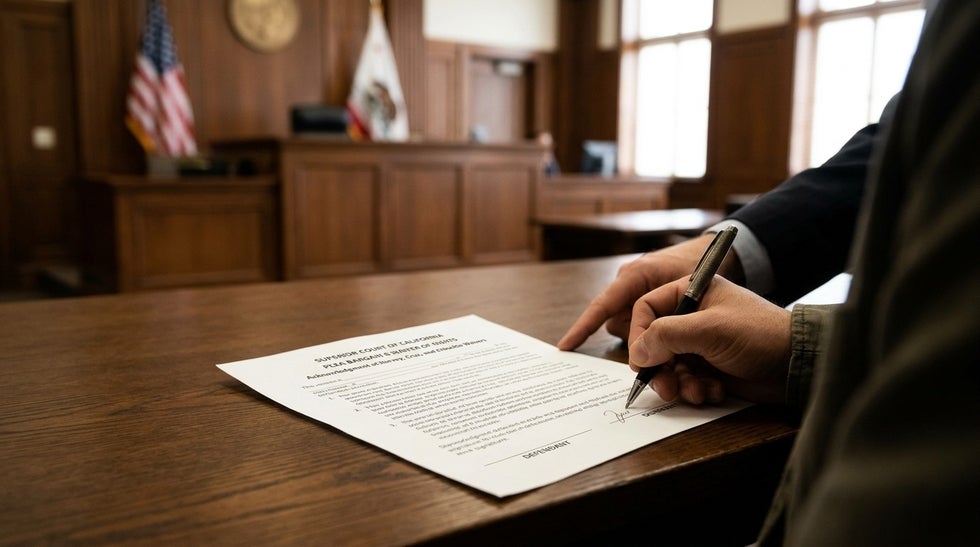
A California plea form asks a defendant to initial a series of waivers, several of them named after court cases. A Harvey waiver lets the judge consider charges that were dismissed when setting the sentence and restitution. A Cruz waiver lets the judge impose a harsher sentence than the bargain if the defendant, released before sentencing, fails to return or breaks the law. An Arbuckle waiver gives up the right to be sentenced by the same judge who took the plea. Each one changes what the plea is worth, and each can be negotiated.
These boxes are initialed in a few minutes at the back of a courtroom. Our attorneys go through them with clients beforehand, because the consequences surface weeks later at sentencing, when it is too late to object.
The waivers on a California plea form
|
Waiver |
What you give up |
Why it matters |
|
Boykin-Tahl (constitutional rights) |
Jury trial, confrontation of witnesses, privilege against self-incrimination |
Required for any valid guilty or no contest plea |
|
Harvey |
The rule that dismissed counts cannot be used against you at sentencing |
Dismissed conduct can raise the sentence and add restitution |
|
Cruz |
The right to the bargained sentence, and to withdraw the plea, if you violate release terms before sentencing |
A missed court date can turn a probation deal into the maximum term |
|
Arbuckle |
Sentencing by the judge who accepted the plea |
A different judge may view the case less favorably |
|
Time waiver for sentencing |
The right to be sentenced within the statutory period |
Allows a delay for a probation report or to complete conditions |
|
Appeal waiver |
The right to appeal some or all issues |
Limits review of errors, including sentencing errors |
|
Jury trial on aggravating factors |
The right to have a jury decide facts used to impose an upper term |
Allows the judge to rely on those facts |
|
Search and seizure (Fourth) waiver |
The right to refuse searches while on probation |
Police may search person, home, and car without a warrant during probation |
|
Credit (Johnson) waiver |
Custody credits already earned or to be earned |
More actual time if probation is later violated |
Background on negotiated dispositions is on our plea bargaining page, and the types of plea are explained under no contest and guilty pleas and Alford and West pleas.
The Harvey waiver
In People v. Harvey, a defendant pleaded guilty to two robberies and a third count was dismissed. The trial judge then used the facts of the dismissed count to choose a longer sentence. The California Supreme Court held that this was improper. Implicit in a plea bargain is the understanding that the defendant will suffer no adverse sentencing consequences from the facts underlying counts that are dismissed, unless the defendant agrees otherwise.
A Harvey waiver is that agreement. With it, the judge may consider the dismissed counts when deciding:
- Whether to grant probation and on what conditions.
- Which term to select within the sentencing range.
- Restitution. Under Penal Code 1192.3, a plea bargain in which charges are dismissed with a Harvey waiver allows the court to order restitution to the victims of the dismissed counts.
The dismissed counts are not convictions. They do not count as priors and do not appear as convictions on a record. What to negotiate: whether the waiver is given at all, whether it is limited to restitution only, and a cap on the restitution amount. Prosecutors often insist on a Harvey waiver in theft and fraud cases with several victims, because it is the only way those victims are paid.
The Cruz waiver
Under Penal Code 1192.5, when a judge accepts a plea bargain that specifies the punishment, the judge cannot impose a more severe sentence. If the judge later decides not to follow the bargain, the defendant has the right to withdraw the plea. In People v. Cruz, the California Supreme Court held that this protection applies even to a defendant who fails to appear for sentencing, unless the defendant expressly gave it up.
A Cruz waiver is that express agreement. It is used when a defendant pleads guilty and is released, on his or her own recognizance or on bail, until a later sentencing date. The defendant agrees that the bargain holds only if he or she:
- Appears on the sentencing date.
- Commits no new offenses.
- Complies with any other stated terms, such as cooperating with the probation department, enrolling in a program, or staying away from a victim.
If the defendant willfully violates a term, the judge may sentence up to the maximum for the offenses pleaded to, and the plea cannot be withdrawn. A related arrangement, sometimes called a Vargas waiver, sets two sentences in advance: a lower one if the defendant returns as promised and a specified higher one if not.
Limits on Cruz waivers
- The waiver must be part of the plea agreement when the plea is entered, and the defendant must understand it. A judge cannot add it afterward as a condition of release.
- The violation must be willful. A person who missed court because of hospitalization, custody in another county, or a real emergency has not willfully failed to appear. The judge decides at a hearing where the defendant can present evidence.
- The court must find the violation by a preponderance of the evidence.
The practical advice is simple. If you sign a Cruz waiver, treat the sentencing date as immovable, avoid any police contact, and keep proof of everything you were ordered to do. If you miss the date, a bench warrant will issue; contact your lawyer the same day and return to court voluntarily with documentation.
The Arbuckle waiver
People v. Arbuckle recognized that when a plea is entered before a judge who retains sentencing discretion, the defendant reasonably expects that judge to impose the sentence. It is an implied term of the bargain. If a different judge is assigned, the defendant may object and ask to be sentenced by the original judge or, if that judge is unavailable, to withdraw the plea. The California Supreme Court reaffirmed the rule in 2017.
Courts ask for an Arbuckle waiver so that any available judge can handle the sentencing. Whether to give it depends on the case. When the bargain fixes the sentence exactly, little is lost. When the judge has discretion, for example between probation and custody or among terms, and gave an indication of the likely sentence, the right to that judge is valuable and should not be waived casually.
Waivers that cannot be enforced
Not everything in a plea form is binding. Under Penal Code 1016.8, a provision of a plea bargain that requires a defendant to give up the benefit of future changes in the law that may apply retroactively is void as against public policy. A plea agreement is deemed to incorporate later ameliorative changes the Legislature makes retroactive. A waiver must also be knowing and voluntary. A defendant who was not told of the direct consequences of the plea, including immigration consequences for noncitizens, may have grounds to withdraw it.
Before you sign
- Read each waiver and ask what happens if it is triggered.
- Ask whether the Harvey waiver can be limited to restitution and whether the amount can be capped.
- Know the maximum sentence you are exposed to under a Cruz waiver, and get the release terms in writing.
- Ask who will sentence you and whether the judge has indicated a sentence.
- Confirm what the probation search terms will be.
- Make sure everything promised is stated on the record. Side understandings that are not in the transcript or the form are not enforceable.
Frequently asked questions
What is a Harvey waiver?
A Harvey waiver is a defendant's agreement, as part of a plea bargain, that the judge may consider the facts of charges that are being dismissed when deciding the sentence, the terms of probation, and restitution. Without it, dismissed counts cannot be used to increase punishment. The name comes from People v. Harvey, a 1979 California Supreme Court case.
What is a Cruz waiver?
A Cruz waiver is an agreement made when a defendant pleads guilty and is released until sentencing. The defendant agrees that if he or she fails to return for sentencing, commits a new offense, or violates other release terms, the judge may impose a sentence greater than the plea bargain, up to the maximum, and the defendant will not be allowed to withdraw the plea. It comes from People v. Cruz (1988).
What is an Arbuckle waiver?
Under People v. Arbuckle, a defendant who pleads guilty before a particular judge is entitled to be sentenced by that same judge. An Arbuckle waiver gives up that right, so any judge may impose the sentence. Courts ask for it routinely for scheduling reasons.
What happens if you violate a Cruz waiver?
The prosecution must show the violation was willful. If the judge finds it was, the negotiated sentence no longer binds the court, which may sentence up to the maximum for the charges pleaded to, and the plea stands. A bench warrant is usually issued when a defendant does not appear. A person who missed court for a reason beyond his or her control should return immediately with proof.
Does a Harvey waiver mean I am admitting the dismissed charges?
No. The dismissed counts do not become convictions and do not appear as convictions on your record. The waiver lets the judge take their underlying facts into account for the sentence and lets the court order restitution to the victims of those counts.
Should I agree to an Arbuckle waiver?
It depends on the judge. If the judge who took the plea indicated a favorable sentence or is known to be fair in similar cases, keeping the right has value. If the plea bargain fixes the exact sentence, the identity of the sentencing judge matters less. It is a point to discuss with your lawyer before the plea, not a formality.
What are Boykin-Tahl waivers?
They are the constitutional rights every defendant gives up by pleading guilty or no contest: the right to a jury trial, the right to confront and cross-examine witnesses, and the privilege against self-incrimination. The judge must confirm on the record that the defendant understands and voluntarily waives them. The names come from Boykin v. Alabama and In re Tahl.
Can I withdraw my plea if the judge will not follow the plea bargain?
Generally yes. Under Penal Code 1192.5, if the court withdraws its approval of a negotiated plea, the defendant must be allowed to withdraw the plea. A valid Cruz waiver is the main exception: a defendant who willfully breaks its terms has given up that right.
Related reading from our attorneys
- Plea bargaining in criminal cases
- No contest versus guilty pleas in California
- Restitution in California criminal cases
Offered a plea with waivers you do not understand? Ask before the hearing, not after
The Bulldog Law's criminal defense attorneys negotiate the terms of plea agreements, including the waivers, and review offers for people who want a second opinion. Call (888) 928-1609 or reach us online.