
By the The Bulldog Law Criminal Defense Team • Reviewed by a licensed California criminal defense attorney
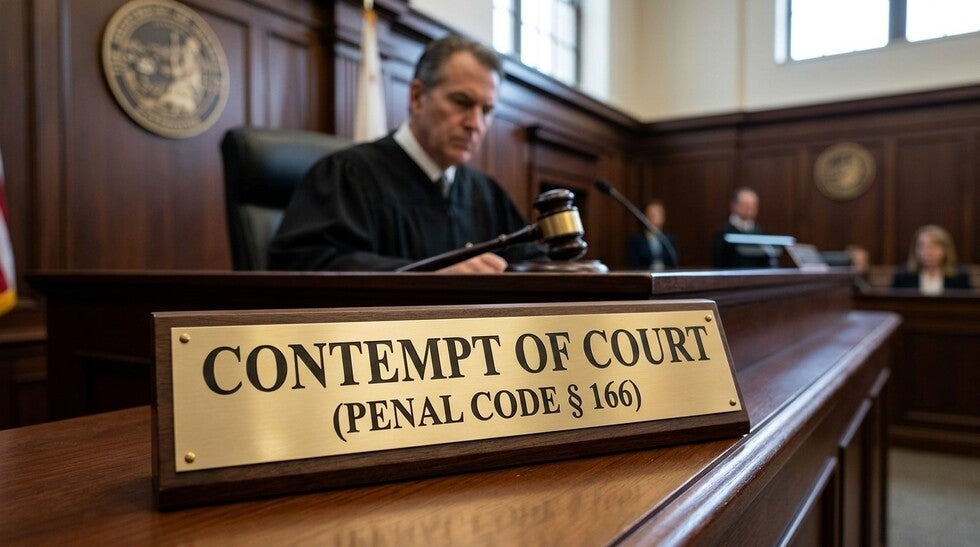
Penal Code § 166 makes it a MISDEMEANOR up to 6 months to willfully disobey the terms of any lawful court order: the workhorse subdivision is 166(a)(4), covering criminal protective ordersissued in pending cases, stay-away and no-contact terms, and court directives generally, with other subdivisions reaching courtroom disruption and refusals to be sworn.The DV lane escalates: under § 166(c), violating a protective order in a domestic-violence context carries its own structure mandatory minimum jail where violence or injury accompanies the violation, and WOBBLER (felony) exposure for repeat violations within seven years or violations involving violence.
Two facts organize every real case. First, the four ELEMENTS are the four DEFENSES: a valid order, YOUR knowledge of it, your ABILITY to comply, and a WILLFUL violation and each fails in recurring, provable ways. Second, the myth that fills jail beds: “THEY CONTACTED ME FIRST” IS NOT A DEFENSE protective orders bind the RESTRAINED person only, an invitation from the protected party does not suspend the order, and responding to their call, their text, their appearance at your door is YOUR violation, prosecutable and prosecuted.
The only lawful path to permitted contact is MODIFICATION through the court - a motion counsel files, often successfully where the protected party genuinely wants contact. This guide from The Bulldog Law's criminal defense team covers how these violations get charged, the element-by-element defenses, the pending-case stakes, and the modification path.
How § 166 Cases Actually Happen
- The pending-case CPO the biggest source: a criminal protective order issues at arraignment in every DV filing, and the weeks after are a minefield the apology text, the “just to talk” call, the RECORDED JAIL PHONE line (monitored, transcribed, and charged), the drive past the house. Each contact is a new count, and a violation while the underlying case is pending also detonates bail and release terms meaning custody, on the spot, before the new charge is even filed.
- The invited-contact trap the protected party calls, texts, invites, shows up; the restrained person responds; the response is the crime. Reconciling couples walk into this constantly and the record (their invitation) becomes MITIGATION and context, sometimes powerfully so, but not a legal defense. The lawful route exists and works: modification motions, “peaceful contact” order conversions, and level-downs that courts grant regularly when the protected party supports them and counsel presents it properly.
- Custody and family-court overlap exchange-time contact, communication beyond the order's carve-outs, and third-party relays: the co-parenting cases where the order's EXACT text (what contact is excepted, through what channel) is the entire dispute - and where message evidence cuts both ways.
- Probation and other orders stay-away terms, no-alcohol and program orders, and court directives whose breach gets charged under § 166 alongside probation-violation proceedings two tracks from one act, each needing its own answer.
- Where the SISTER statute applies violations of civil restraining orders (DV, civil harassment) are typically charged under § 273.6 our dedicated guide covers that lane while § 166 carries the contempt framework and the criminal-court orders; prosecutors choose, the elements rhyme, and the defenses below serve both.
The Four Elements Are the Four Defenses
- A VALID order expired orders, orders issued without jurisdiction or proper procedure, and terms too vague to obey are attacked first; you cannot willfully violate an order that wasn't lawfully in force or didn't clearly prohibit the conduct.
- KNOWLEDGE you must have known the order existed and what it required: never served, never present at issuance, and never-informed defendants (more common than courts like to admit, especially with modified terms) defeat this element proof of service and the transcript are where this fight lives.
- ABILITY to comply orders demanding the impossible fail: the payment order against genuine inability (contempt cannot jail poverty documented financial incapacity is a defense, not an excuse), the stay-away from a location circumstances forced you through, the compliance the other party physically prevented.
- WILLFULNESS accidental encounters in a shared small town, misunderstandings of ambiguous terms, third-party relays you didn't direct, and the chance grocery-store aisle are not willful defiance context, immediacy of departure, and the absence of pattern prove it. Add the standard overlays: identity (who actually sent the message authentication battles apply fully), false accusation (protective orders are leverage in breakups and custody wars, and fabricated-violation reports are a documented pattern the weak-case audit answers), and resolution structure because a § 166 outcome during a pending DV case shapes THAT case's negotiation, the two must be defended as one strategy, with record relief mapped for the end.
Frequently Asked Questions
What happens if you violate a criminal protective order?
A new misdemeanor count under PC 166 (or 273.6) up to 6 months per violation plus the immediate consequences that often hurt more: bail or OR revocation in the pending case (custody now, not later), a harder line from the prosecutor in every negotiation, and in DV contexts the 166(c) escalators: mandatory minimum jail where violence accompanied the violation and wobbler felony exposure for repeats within seven years. Multiple contacts are charged as multiple counts. If a violation has already happened: stop all contact instantly, preserve the full communication record (especially anything showing their initiation), and get counsel before the next hearing early, honest handling routinely contains these, while a second violation while the first is pending is how cases spiral.
They contacted me first doesn't that mean I'm allowed to respond?
No this is the myth that fills jail beds. The order restrains YOU, not them: their call, their text, their invitation, their appearance at your door does not suspend it, and your response however brief, however wanted is a prosecutable violation. What their initiation IS: powerful mitigation and context (prosecutors and judges weigh it, and it supports modification), and evidence counsel uses. What it is NOT: a legal defense. The lawful path when both people want contact exists and works a modification motion converting the order to ‘peaceful contact' or dissolving it, which courts grant regularly when the protected party supports it and it's presented properly. Until a judge signs that change, the order means exactly what it says. Route the reconciliation through counsel, not through texts.
Is contempt of court a felony?
Standard PC 166 contempt is a misdemeanor up to 6 months. Felony exposure arrives through the DV protective-order lane: 166(c) makes repeat violations within seven years, and violations involving violence or credible threats, chargeable as wobblers (16 months to 3 years), with mandatory minimum jail terms attached to injury-involved violations even at the misdemeanor level. Stacking does the rest: each contact is its own count, related conduct draws its own statutes (stalking, threats, harassment), and a violation during a pending case costs custody through bail revocation before trial ever nears. The exposure math is exactly why ‘it was just a text' cases deserve real defense the elements (validity, knowledge, ability, willfulness) fail more often than people assume.
How do I change a protective order so we can have contact?
Through the court it's the only lawful route, and it succeeds more often than people expect. Counsel files a modification motion: criminal protective orders can be converted from full stay-away to ‘peaceful contact' (allowing non-harassing communication and presence) or terminated, and judges grant modifications regularly when the protected party genuinely supports the change (their statement matters enormously), the underlying case's posture allows it, and any conditions (counseling, program progress) are met. What never works: informal agreement between the parties the order binds until a judge changes it, and ‘we both wanted it' is mitigation at a violation hearing, not permission. If you're separated from family by an order both households want lifted, the modification motion is the first filing to make - not the first text to send.
Court orders are the one place in criminal law where the paper itself is the crime scene what it says, whether you knew, whether you could comply, whether you chose not to. Read yours like it's radioactive, change it only through a judge, and defend violations on the elements they so often fail. The Bulldog Law's criminal defense team handles § 166, § 273.6, and protective-order modifications across California. Contact the firm online or call (888) 928-1609 - 24/7.