
Updated October 2026 | The Bulldog Law | California Criminal Defense
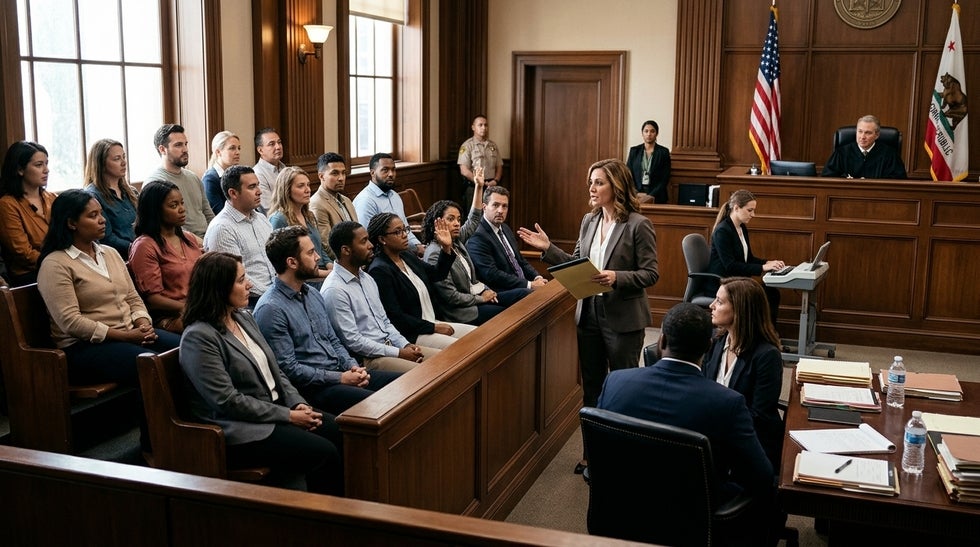
When a California criminal case heads to trial, the jury that decides a defendant's fate is chosen through a carefully scripted process, and every question asked can shape the outcome of the entire case.
How Voir Dire Works in a California Criminal Trial
In my practice, I see that voir dire is the first real courtroom battle where attorneys probe potential jurors for hidden bias. The judge begins by introducing the case, the parties, and the witnesses expected to appear.
The judge also asks each juror about personal hardships; those who would face undue hardship may be excused. Under CCP 223, attorneys then have the right to question jurors directly, and the court cannot limit the scope arbitrarily.
Judge's role and initial juror screening
The judge screens the panel for basic eligibility, confirming that jurors are registered voters or licensed drivers. Anyone who ignores a summons risks penalties outlined on our page about checking for an active California arrest or bench warrant.
After initial screening, the judge asks about potential hardships and may excuse those who cannot serve without causing undue strain, ensuring the final panel can focus on the case.
Attorney questioning and the scope of CCP 223
Each side then asks tailored questions about jurors' backgrounds, experiences with law enforcement, and ability to follow the law. The judge must allow this questioning to proceed unless it becomes clearly irrelevant or harassing.
Attorneys use this time to uncover any bias that could affect a fair trial, and the judge decides whether a juror's answer shows an inability to be impartial.
Use of written questionnaires and statutory basis (Penal Code 1046)
In longer or sensitive cases, jurors may complete a written juror questionnaire covering prior convictions, relationships, and attitudes toward police. This written tool helps attorneys spot bias before oral questioning.
California law treats criminal juries the same as civil juries, as mandated by Penal Code 1046, so the same procedural safeguards apply to both types of trials.
Peremptory Challenges: Limits and Strategic Use
In my experience, peremptory challenges are a valuable but finite resource that each side must manage carefully. A peremptory challenge lets an attorney remove a juror without stating a reason, but the number available varies by case type.
California law sets specific limits: misdemeanors allow six peremptory challenges per side, while felonies grant more, depending on the severity of the charge. Tracking these numbers is essential to avoid wasting a chance.
Statutory allocation of peremptory challenges by case type
For misdemeanor trials, each side receives six peremptory challenges. In felony cases, the number rises, often to twelve per side, reflecting the greater stakes and larger juries involved.
These allocations are codified in California statutes and guide attorneys in planning their challenge strategy from the outset of voir dire.
Strategic timing: when to use or pass a challenge
Attorneys typically alternate using peremptory challenges, deciding whether to strike a juror now or pass and risk losing the opportunity later.
Once both sides pass, the jury is sworn and the chance disappears. Readers comparing related California statutes also review our guide on whether an alleged victim can drop charges in California.
Effective lawyers keep a running tally of remaining challenges, noting which jurors are next in line, so they can act quickly when a bias appears.
Preserving a challenge for cause by exhausting peremptories
If a judge denies a challenge for cause, the defense can preserve the issue for appeal by using a peremptory challenge on that juror, then exhausting all remaining peremptories before objecting to the final panel.
Documenting the denial and the steps taken creates a clear appellate record, showing the trial court's error and protecting the defendant's right to an impartial jury.
|
Case Type |
Peremptory Challenges per Side |
Typical Jury Size |
Key Statute |
|---|---|---|---|
|
Misdemeanor |
6 |
12 jurors |
Penal Code 1055 |
|
Felony (Class A) |
12 |
12 jurors |
Penal Code 1055 |
|
Felony (Class B) |
10 |
12 jurors |
Penal Code 1055 |
|
Felony (Class C) |
8 |
12 jurors |
Penal Code 1055 |
Challenges for Cause: Grounds and Preservation
In my courtroom work, a challenge for cause is the primary tool to remove a juror who cannot be fair. Unlike peremptories, there is no limit on how many can be raised.
To succeed, the attorney must show that the juror has actual or implied bias, has formed an opinion on the case, or fails to meet statutory qualifications such as English proficiency.
Valid grounds for a challenge for cause
Actual bias includes a personal belief that makes impartiality impossible, while implied bias covers relationships to parties, attorneys, victims, or witnesses that could sway judgment.
Other valid grounds are prior opinions about the case, inability to follow the presumption of innocence, or statutory disqualifications like a recent felony conviction.
Judicial determination and rehabilitative questioning
The judge listens to the juror's answers and may ask follow-up questions to see if the bias can be set aside. If the juror can show neutrality, the judge may reject the challenge.
Effective questioning by defense counsel draws out the bias clearly, giving the judge a solid basis to grant the challenge.
Preserving a denied challenge: peremptory use and appellate record
When a judge denies a challenge for cause, the defense must use a peremptory challenge on that juror, then exhaust all remaining peremptories before objecting to the final jury composition.
Creating a detailed record of the denial, the peremptory use, and the exhaustion of challenges ensures the issue can be reviewed on appeal, protecting the defendant's right to a fair trial. California domestic violence laws and defenses
CCP 231.7 and the Modern Batson Rule in California
In my professional experience defending California felony cases, I have seen how CCP 231.7 changed the game for jury selection. This statute, effective for trials starting in 2022, creates the strictest anti-bias procedure in the nation. It protects jurors from exclusion based on race, gender, or sexual orientation.
Before this law, courts relied on older standards that often failed to catch implicit bias. Now, the California Supreme Court and trial judges must actively police these strikes. This shift ensures that race-based peremptory strike attempts face immediate and rigorous scrutiny from the bench.
Historical background: Batson v. Kentucky and California's Wheeler motion
The U.S. Supreme Court ruled in Batson v. Kentucky that using race to strike jurors violates the Equal Protection Clause. This 1986 decision set the national standard for fair jury selection. California had already reached a similar conclusion under its own state constitution in 1978. Readers comparing related California statutes also review our guide on California Penal Code 187 murder prosecutions.
For decades, lawyers filed wheeler motions to challenge discriminatory strikes. The old three-step process required proving a pattern of bias, which was often difficult. You can review the original Cornell's summary to see how this doctrine evolved over time.
CCP 231.7 requirements and presumptively invalid reasons
Under the new Code of Civil Procedure 231.7, any party or the court can object to a strike. The judge must sustain the objection if a reasonable person might view the protected trait as a factor. Purposeful intent is no longer required to win the objection.
The law lists specific reasons that are presumptively invalid, such as distrust of police or living in a high-crime area. Judges must confirm any claimed behavioral issues, like lack of eye contact, before allowing the strike. This rule applies to both the prosecution and the defense teams.
Remedies when a discrimination objection is sustained
If the court sustains a discrimination objection, it has several options to fix the problem. The judge can reseat the juror, quash the entire panel, or grant other appropriate relief. These remedies ensure the trial remains fair and unbiased for all parties involved.
In serious cases like California Penal Code 187 murder prosecutions, these safeguards are critical. A biased jury could lead to a wrongful conviction or an unfair acquittal. The court prioritizes a fair process above all else in these high-stakes trials.
What the Defense Seeks to Learn During Voir Dire
Jury selection is about elimination, not selection. The defense cannot pick who serves, but we can remove those who cannot be fair. We look for jurors who struggle with the presumption of innocence or hold strong views on the specific crime.
Understanding what the defense is trying to learn helps explain our questioning strategy. We probe for personal experiences that might cloud judgment. We also identify potential deliberation leaders who could sway the entire group during private discussions.
Assessing presumption of innocence and burden-of-proof attitudes
We ask jurors directly if they can presume a defendant innocent until proven guilty. Many people admit they cannot, especially when the charge is serious or the defendant stays silent. This honesty helps us identify jurors who might already be biased against our client.
We also test their understanding of the burden of proof. If a juror believes the defense must prove innocence, that is a major red flag. We use this information to decide whether to challenge for cause or save a peremptory strike.
Detecting personal experiences that create bias
We look for jurors who are victims, witnesses, or relatives of police officers. These connections can create strong emotional reactions to the facts of the case. A juror with a personal history of victimization may struggle to remain neutral during testimony.
We also ask about views on specific offenses like drugs or firearms. Strong opinions on these topics can prevent fair consideration of the defense. Knowing these views early helps us shape our trial themes and arguments effectively.
Identifying potential deliberation leaders and their impact
One confident juror can often steer the entire group during deliberations. We watch for individuals who speak assertively or dominate the questioning process. A single firm believer can sometimes produce a hung jury or move the verdict.
Identifying these leaders is a key part of defense strategy jury selection. We want to know who might hold out for a conviction. This insight helps us plan our opening statement and closing arguments to reach those specific individuals. Readers comparing related California statutes also review our guide on how a California preliminary hearing works.
Practical Steps for Defendants During Jury Selection
I have seen many defendants freeze up during voir dire, which can hurt their case. Staying calm and engaged helps your attorney read the room better. Your presence and demeanor are part of the story the jury sees from the start.
Many clients ask what should a defendant do during this process. The best answer is to listen, observe, and follow your lawyer's instructions. You do not need to speak unless asked, but your body language matters significantly to the jurors.
Defendant's role and what to expect during questioning
You will likely be asked to stand or sit in a specific spot while jurors are questioned. The judge and attorneys will ask about your background and the charges. You should answer any direct questions honestly and briefly, without volunteering extra information.
It is normal to feel nervous, but try to maintain steady eye contact with the jury. This shows confidence and respect for the process. Your attorney will signal when to look at the jurors or when to look at the judge.
Coordinating with counsel on challenges for cause and peremptories
Your attorney will communicate with you during breaks to discuss potential challenges. We use peremptory challenges strategically, so you should trust our judgment on who to remove. We track every juror's responses to build a fair and impartial panel for the trial.
If you notice a juror who seems clearly biased, let your lawyer know quietly. Do not confront the juror directly or make comments about them in the courtroom. We will handle all objections and challenges through the proper legal channels with the judge.
Typical duration of jury selection and factors that affect it
Jury selection can take anywhere from a few hours to several days. Felony trials often involve larger panels and more complex questioning than misdemeanors. The judge's pace and the number of challenges requested will affect the total time.
Understanding how long does jury selection take helps set realistic expectations for your schedule. In complex cases, we might spend two or three full days just on voir dire. It is important to stay patient and focused throughout this entire process.
How Bulldog Law Guides Defendants Through California Jury Selection
Our seasoned California criminal defense team reviews every piece of evidence early, spotting weaknesses and protecting your constitutional rights from the first phone call. We move quickly to shape a strategy that fits your case.
From the initial interview to the courtroom, we fight aggressively to secure the best possible outcome; call (888) 928-1609 for a confidential case review and personalized guidance.
Full statutory definitions and statewide court rules are maintained by Code of Civil Procedure 223 and Cornell's summary for criminal proceedings across all 58 California counties.
Frequently Asked Questions
What are the specific peremptory challenge limits for criminal cases in California?
In most felony trials each side receives 10 peremptory challenges; capital or life-sentence cases allow up to 20. Misdemeanor cases are limited to 6 peremptories, with extra challenges when multiple defendants are charged.
These limits are set by California law and cannot be exceeded, ensuring both parties have a fair chance to shape the jury while respecting statutory boundaries.
How does a Batson challenge work during voir dire in California courts?
A Batson challenge arises when a party suspects a peremptory strike is based on race, ethnicity, gender, or another protected class. The moving side must state a neutral reason for each challenged strike.
Under Code of Civil Procedure 231.7, the court evaluates whether a reasonable person would see a protected characteristic as a factor; if so, the strike is disallowed.
What are the consequences if a juror lies on the voir dire questionnaire in California?
Providing false information can be deemed perjury, a felony punishable by up to four years in state prison under Penal Code 118.
The court may also dismiss the juror, and the defense can request a new juror or even a mistrial if the deception threatens a fair trial.
Can a California prosecutor use peremptory challenges based on race or gender?
No. Peremptory challenges may not be used to exclude jurors because of race, gender, sexual orientation, religion, national origin, or other protected traits.
Violating this rule triggers a Batson analysis under CCP 231.7, and the court will likely reinstate the improperly struck juror.
What steps must attorneys take to document peremptory challenges under California law?
Attorneys must record each peremptory strike on the official jury questionnaire and note the reason if a Batson objection is raised.
Failure to follow the CCP 231.7 procedure can result in the strike being invalidated and may expose the party to appellate review.
How much does jury selection typically cost for a defense case in Los Angeles County, California?
Costs vary widely, but defendants often face expenses for juror fees, subpoenaed witnesses, and attorney time, typically ranging from $2,000 to $10,000 in Los Angeles County.
Additional expenses may arise for extended voir dire, expert consultations, or travel, so budgeting early with your attorney is essential.
What is the difference between a challenge for cause and a peremptory challenge in California?
A challenge for cause requires a specific reason, bias, relationship, prior knowledge, or statutory disqualification, and has no numerical limit.
A peremptory challenge allows removal without stating a reason, but is limited in number and subject to the anti-discrimination rules of CCP 231.7.