
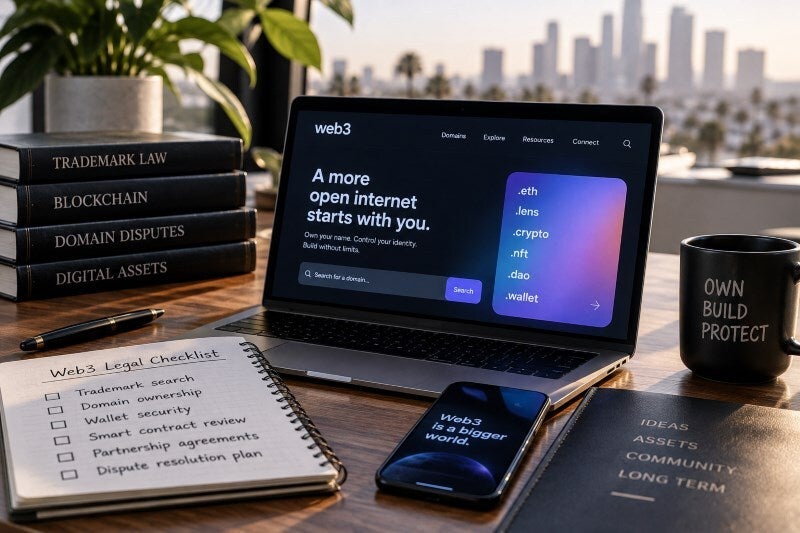
Web3 Domain Name Disputes can arise when a blockchain name copies a protected brand, a founder leaves while controlling the project's primary name, a wallet holding the name is compromised, or several contributors claim ownership of the same digital identity. Unlike a conventional domain registered through a traditional registrar, blockchain-native names may be controlled through smart contracts and wallets, making technical possession, intellectual property rights, and legal ownership separate questions.
These disputes are part of the broader challenges facing Web3 projects and decentralized internet participants, where control over digital infrastructure can shift quickly even while the underlying legal rights remain contested.
Quick answer
A person who controls a Web3 domain does not necessarily own every trademark, brand, wallet, or business right associated with that name. Disputes may involve trademark infringement, cybersquatting theories, breach of contract, company ownership, wallet control, fraud, or intellectual property claims. The available remedy depends on the naming system, the parties' agreements, trademark rights, how the name was acquired, and who controls the wallet or smart contract.
What is a Web3 domain name?
Blockchain naming systems replace long wallet addresses with human-readable identifiers. A name can potentially point to cryptocurrency addresses, decentralized websites, content hashes, profiles, smart contracts, or other blockchain resources.
Ethereum Name Service, for example, allows names ending in .eth to resolve to blockchain addresses and other data. Unlike a conventional domain, control may be exercised through the blockchain address recognized by the relevant smart contracts.
That makes blockchain names part of a larger move toward decentralized digital identity. Similar ownership and verification questions arise in blockchain identity and proof-of-personhood systems, where an on-chain identifier may carry significant reputational and economic value.
Web3 Domain Name Disputes and trademark rights
Registering a blockchain name first does not automatically eliminate another party's trademark rights. A Web3 project that uses a name confusingly similar to an existing brand may still face claims under federal trademark law if the use creates actionable confusion regarding source, sponsorship, affiliation, or approval.
A stronger dispute may arise when someone deliberately acquires a blockchain name matching a known project and then uses it to impersonate the brand, redirect customers, solicit cryptocurrency, or demand payment from the trademark owner.
Before launching a project name, founders should consider the same trademark and copyright planning addressed in protecting cryptocurrency trademarks and copyrights. Obtaining a blockchain name does not substitute for evaluating trademark clearance or registering valuable marks where appropriate.
Does the UDRP apply to blockchain domains?
Not necessarily. The Uniform Domain Name Dispute Resolution Policy applies to covered traditional domain names within the ICANN system, including common generic top-level domains such as .com, .net, and .org.
A blockchain-native name such as a .eth name operates through a different technical system and is not automatically subject to the same registrar-based UDRP process. That distinction can substantially change enforcement strategy.
A company may simultaneously own example.com and example.eth, but the mechanisms for challenging control of those names may be different. This reflects the broader shift toward verifiable and decentralized web architecture, where smart contracts can replace traditional intermediaries for certain functions.
Can federal cybersquatting law apply?
The federal Anti-Cybersquatting Consumer Protection Act can impose liability when a person has a bad-faith intent to profit from a protected mark and registers, traffics in, or uses a qualifying domain name that is identical or confusingly similar to the mark.
Whether a particular blockchain-native name fits the statutory definition and how a remedy could be enforced should be analyzed carefully rather than assumed. The statute defines a domain name broadly, but blockchain naming systems do not always function like conventional DNS registrations.
Even when a specialized cybersquatting remedy is uncertain, ordinary trademark, unfair competition, contract, or fraud theories may still be relevant depending on how the name is being used.
Who owns a Web3 domain held in a founder's wallet?
This is one of the most practical Web3 Domain Name Disputes. A founder may register a project's name from a personal wallet before the company is formally organized. Years later, the name may become a valuable business asset.
Technical wallet control does not necessarily establish beneficial ownership. Relevant evidence can include:
- Founder and operating agreements.
- Company reimbursement records.
- Employment or contractor agreements.
- Trademark registrations.
- Project communications about ownership.
- The source of funds used to acquire the name.
- Wallet and transaction history.
Addressing ownership early is part of the broader formation strategy for structuring Web3 ventures in California. A project's core domain, social accounts, repositories, wallets, and intellectual property should not remain ambiguously controlled by individual founders.
Wallet control can determine whether a court order is practical
With a conventional domain, a registrar or registry may be able to implement a transfer order. A blockchain name may instead depend on control of a private key or smart contract.
A court may potentially issue orders directed at an identifiable person, but enforcing those orders becomes more complicated when the holder is anonymous, outside the jurisdiction, or no longer controls the relevant wallet.
Smart contract architecture therefore matters. The same tension between code-based control and contractual ownership appears throughout smart contract disputes involving blockchain businesses.
What if someone registers a Web3 name to impersonate another user?
Blockchain names can make wallet addresses easier to recognize, but that convenience can also facilitate impersonation. A bad actor may register a visually similar name or imitate the identity of a founder, exchange, game, DAO, or token project.
That can lead users to send digital assets to the wrong address or interact with fraudulent smart contracts. When many wallets or identities are created to distort trust or participation, the conduct may resemble the broader identity-manipulation risks discussed in cryptocurrency Sybil attacks.
Projects should preserve screenshots, wallet addresses, transaction hashes, messages, naming records, and evidence showing how the disputed identity was presented to users.
Web3 names in games, metaverses, and virtual worlds
A blockchain name can function as more than a payment address. It may become a gamertag, avatar identity, guild name, business storefront, virtual property label, or persistent identity across platforms.
These uses create overlapping trademark, licensing, contract, and platform-rule questions. Virtual-world naming issues are part of the broader framework for metaverse ownership and digital rights.
Competitive gaming projects may face similar problems when team names, player identities, sponsorship brands, and digital assets interact. The firm's analysis of Web3 gaming and crypto esports rights illustrates why ownership of a digital identity should be addressed contractually before it becomes commercially valuable.
Open-source projects can still have trademark rights
Decentralized software and open-source licensing do not necessarily place a project's name or brand in the public domain. Code may be available under an open-source license while trademarks remain separately protected.
Developers should distinguish permission to copy or modify software from permission to use a project's branding. That separation is part of the broader legal framework for open-source technology and digital rights.
What happens when a name works across multiple chains?
Some projects attempt to make blockchain identities portable across different networks. That can create conflicts when similar names exist under separate registries or when bridging systems produce competing ownership claims.
The person who controls a name on one blockchain may not automatically control an equivalent identifier elsewhere. Technical architecture, registry rules, project contracts, and trademark rights may all need to be considered. Similar questions arise when comparing cross-chain and multi-chain blockchain architecture.
Evidence to preserve in Web3 Domain Name Disputes
Parties should preserve evidence before wallets, websites, or project accounts change:
- Blockchain registration and transfer transactions.
- Wallet addresses and transaction hashes.
- Smart contract and registry information.
- Trademark registrations and applications.
- Founder, employment, and contractor agreements.
- Emails, Discord messages, and project records.
- Website and social-media screenshots.
- Evidence of customer confusion or impersonation.
- Offers to sell the disputed name.
- Records showing who paid registration or renewal costs.
Where can a Web3 domain dispute be litigated?
Traditional domain disputes may proceed through UDRP proceedings, federal litigation, or other available processes. Blockchain naming disputes may require ordinary court claims, arbitration, contractual remedies, or platform-specific procedures instead.
Jurisdiction can be particularly difficult when a wallet owner is pseudonymous or located outside California. Before seeking emergency relief, parties may need to determine whether a court has authority over the defendant and whether any resulting order can practically reach the asset. Those issues are central to jurisdictional challenges in digital-asset disputes.
Web3 Domain Name Disputes lawyers in California
Web3 Domain Name Disputes require separating technical control from legal rights. A wallet may control a blockchain name while a company owns the trademark, a founder agreement may assign the asset to a business, or another party may claim that the name was registered in bad faith.
Bulldog Law helps Web3 businesses, founders, developers, investors, and digital-asset holders evaluate disputes involving blockchain names, trademarks, wallet control, smart contracts, online identity, and project ownership. Early review can help preserve on-chain evidence and determine whether trademark enforcement, contract claims, emergency relief, negotiation, or another strategy may be appropriate. No particular outcome can be guaranteed.