
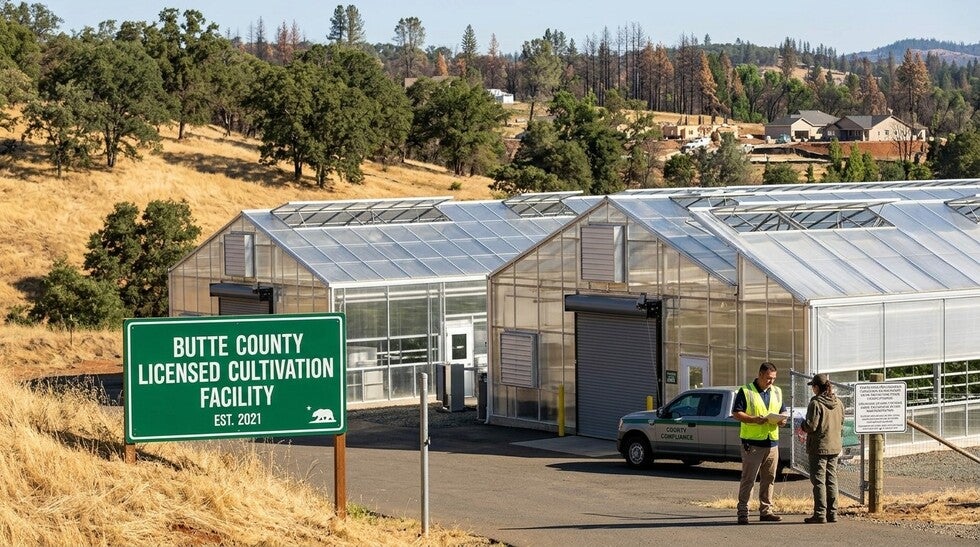
Cannabis Cultivation in Butte County is legal in some situations and criminal in others. California adults 21 and older may grow up to six cannabis plants per private residence for personal use, but larger grows, commercial activity without proper licensing, local ordinance violations, federal land cultivation, and evidence of sales can create serious legal exposure under Health and Safety Code section 11358 and related laws.
The defense must look at more than the plant count. A Butte County cannabis case may involve the county ordinance, parcel size, indoor versus outdoor cultivation, water source rules, visibility from public areas, neighbor complaints, DCC licensing, alleged possession for sale, transportation, environmental allegations, and the special problems created by Paradise rebuild properties after the Camp Fire.
Cannabis Cultivation in Butte County under HS § 11358
Health and Safety Code section 11358 is California's cannabis cultivation statute. After Proposition 64, adults 21 and older generally may cultivate up to six living cannabis plants for personal use, subject to state and local rules. Growing more than six plants can be prosecuted as a misdemeanor in many cases, and the charge can become more serious when aggravating factors apply.
Aggravating circumstances may include certain prior serious or violent convictions, registration status, repeat cultivation convictions, environmental harms, illegal water diversion, hazardous substances, or other facts listed by statute. Prosecutors may also file related charges if they believe the grow was intended for sale, transport, or distribution.
A defense strategy should begin by asking:
- How many living plants were actually present?
- Was the grow tied to one private residence?
- Was the person 21 or older?
- Was the cultivation personal, medical, commercial, or sales-related?
- Did law enforcement count immature plants, dead plants, or harvested material incorrectly?
- Was there a valid search, warrant, consent, or probation condition?
- Did the alleged conduct violate state law, local ordinance, or both?
Bulldog Law's guide to Trinity County cannabis cultivation and possession for sale shows why rural cannabis cases often turn on location, plant count, sales evidence, and whether prosecutors can prove more than personal use.
Cannabis Cultivation in Butte County and the county ordinance
Butte County's cannabis cultivation ordinance adds local land-use rules to California's statewide personal cultivation framework. The county generally allows adults 21 and older to cultivate up to six cannabis plants per private residence, but the local rules may limit where and how cultivation occurs.
In unincorporated Butte County, personal cultivation may be affected by parcel size, whether the grow is indoors or outdoors, setbacks, fencing, public visibility, water source rules, security, residence requirements, and prohibited locations near schools, parks, bus stops, occupied residences, or certain zones. Local ordinance violations can trigger civil penalties, code enforcement problems, and factual issues that later appear in a criminal investigation.
Important ordinance-related defense questions include:
- Was the property in unincorporated Butte County or within a city's separate rules?
- Was the cultivation area indoors, outdoors, locked, fenced, and concealed from public view?
- Was there a legal residence on the property?
- Did the accused own the property or have a written lease?
- Was water drawn lawfully from a permitted well or municipal source?
- Did code enforcement issue notices before law enforcement became involved?
- Were civil land-use issues incorrectly treated as criminal intent?
For Chico-area defendants, criminal defense representation in Chico may involve overlapping city rules, county rules, student housing, rentals, and North Butte County courthouse logistics.
Commercial cultivation, DCC licensing, and sales allegations
Commercial cannabis cultivation in California requires proper state licensing through the Department of Cannabis Control. Older industry materials may still refer to CDFA because cultivation licensing was historically associated with that agency, but California's current cannabis licensing system is handled through DCC.
If the government claims the grow was commercial, the defense must review license status, application records, local approvals, business structure, canopy size, employees, invoices, packaging, ledgers, scales, communications, and whether the facts actually support a sales theory. A plant count above six is not the same thing as proof of possession for sale.
Related charges can include possession for sale under HS § 11359, transportation or furnishing under HS § 11360, tax violations, environmental charges, conspiracy, or money-related allegations. Evidence of packaging, customer lists, large cash amounts, scales, repeated communications, and distribution routes may be used by prosecutors, but each item has to be tested in context.
Federal policy changes do not eliminate California licensing duties. Bulldog Law's article on federal marijuana rescheduling and cannabis business strategy is relevant because federal reform debates do not automatically legalize unlicensed California cultivation or remove all federal risks.
Plumas National Forest, federal land, and boundary disputes
Cannabis cultivation on federal land remains illegal under federal law. That matters in eastern Butte County, where Plumas National Forest boundaries, backcountry roads, private parcels, access easements, timber areas, and rural properties can create jurisdictional disputes.
If a grow is alleged to be on or near federal land, the defense should confirm the exact GPS location, parcel boundary, land ownership, access route, water source, and whether federal or state officers conducted the search. A case on private land under California law is different from a case on federal land handled through the Eastern District of California.
Backcountry cases can also involve separate natural-resource allegations. Bulldog Law's article on minor forest products transportation charges is useful when rural investigations involve vehicles, forest access, wood products, public land boundaries, or resource enforcement beyond cannabis alone.
Paradise rebuild properties and Camp Fire context
Paradise, Magalia, Concow, and surrounding communities present unusual cannabis compliance issues because of the Camp Fire rebuild. A property may have changed structures, temporary housing, accessory buildings, fences, utilities, water access, lot lines, storage areas, and visibility patterns after 2018. A cultivation setup that might have been hidden or compliant before rebuilding may look different after debris removal, grading, new construction, or neighboring lots changing use.
The Camp Fire context does not excuse illegal cultivation. It can, however, affect whether a person understood the rules, whether the structure qualified as a residence or accessory structure, whether the property boundary was clear, whether water access was lawful, whether cultivation was visible from a new public route, and whether a neighbor complaint accurately described the property.
For Paradise-area clients, legal representation serving Paradise may need to account for rebuild permits, temporary housing, property records, insurance documents, contractor activity, and community visibility after the fire.
Search and seizure defenses in cultivation cases
Cannabis cultivation cases often begin with a neighbor complaint, aerial observation, code enforcement visit, odor report, traffic stop, probation search, utility concern, trash search, or warrant. The legality of the search can become the most important issue in the case.
The defense should examine whether officers had a valid warrant, whether the warrant described the place and items with enough detail, whether probable cause was stale, whether officers exceeded the warrant, whether consent was voluntary, whether code enforcement acted as a criminal investigative tool, and whether any probation or parole condition actually authorized the search.
Evidence to preserve includes:
- warrant and affidavit materials;
- body-camera footage;
- photos of the grow area before removal;
- plant count documentation;
- code enforcement notices;
- property maps, parcel records, and leases;
- water, utility, and permit records;
- communications showing personal use or compliance efforts.
Immigration, employment, and non-citizen risks
Cannabis may be legal under California law in some contexts, but it remains sensitive for immigration, federal employment, professional licensing, firearm ownership, and federal background checks. Non-citizens, including lawful permanent residents, visa holders, DACA recipients, H-2A workers, and applicants for immigration benefits, should not treat a cannabis case as minor without immigration-informed advice.
Employment in cannabis cultivation can also create risks for people whose status depends on federal law. A worker who believed a job was lawful under California licensing rules may still need advice before speaking to police, federal agents, immigration officials, or prosecutors.
How Butte County compares with other rural cannabis counties
Rural cannabis defense is highly local. Butte County cases may involve Chico rentals, Oroville court proceedings, Paradise rebuild properties, foothill parcels, Plumas National Forest boundaries, water access, and county code enforcement. Other counties may focus on different terrain, enforcement history, and local ordinances.
For comparison, Amador County cannabis cultivation defense may involve Sierra foothill parcels, different county rules, and different local enforcement patterns, even though HS § 11358 applies statewide.
Where Cannabis Cultivation in Butte County cases are handled
Butte County criminal cases are handled in the Superior Court of California, County of Butte. The Criminal Division is located at the Butte County Courthouse, One Court Street, Oroville, CA 95965-3303. The North Butte County Courthouse is located at 1775 Concord Avenue, Chico, CA 95928. These are public court facilities. Bulldog Law has no affiliation, endorsement, partnership, special access, or special relationship with the court.
A state cannabis case may involve arraignment, release conditions, discovery, suppression motions, code enforcement records, negotiations, diversion eligibility, trial, sentencing, civil fines, or property issues. A federal land case may proceed separately in federal court and should be treated as a different legal problem from an ordinary county ordinance dispute.
What to do after a cultivation arrest or investigation
Do not make statements about plant counts, ownership, sales, customers, water use, licensing, property access, or who helped with the grow without legal advice. A casual explanation can be used to prove knowledge, control, intent to sell, or commercial purpose.
Practical steps include:
- preserve all licenses, applications, permits, leases, and ownership records;
- save photos of the grow area, fencing, locks, visibility, and structures;
- preserve water source records, utility records, and code enforcement notices;
- identify whether the property is city, county, private, or federal land;
- do not delete texts, invoices, maps, or grow records;
- avoid contacting witnesses in a way that could create new accusations;
- tell counsel immediately about immigration, licensing, probation, or federal land issues.
Cannabis Cultivation in Butte County lawyers in California
Bulldog Law helps clients facing Cannabis Cultivation in Butte County allegations, including HS § 11358 cultivation, county ordinance violations, personal-use disputes, commercial licensing issues, possession for sale, transportation allegations, Plumas National Forest federal land concerns, Paradise rebuild property issues, search challenges, immigration risks, and courthouse proceedings in Oroville and Chico.
No lawyer can promise dismissal, reduced charges, no civil penalties, or a specific outcome. What Bulldog Law can do is review the search, count the plants accurately, analyze the ordinance, challenge sales assumptions, preserve compliance evidence, identify federal jurisdiction problems, and build a defense focused on the exact facts prosecutors must prove.