
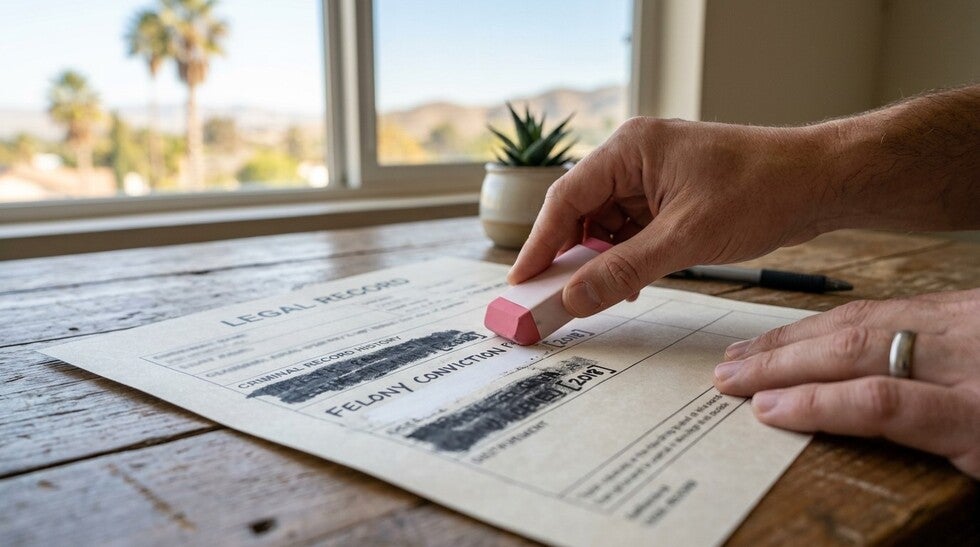
California's Clean Slate law, Senate Bill 731, has been in effect since July 1, 2023. It automatically seals most criminal records without a petition, a lawyer, or a fee. Eligible misdemeanor convictions clear about one year after the case ends. Most non-serious, non-violent felony convictions, including those with prison time, clear four years after the sentence is completed with no new felony. Arrests that never led to charges clear on their own timelines. It is the most sweeping record-sealing reform in California history, but "automatic" has real limits, real exclusions, and a state processing system worth verifying. This guide from The Bulldog Law's expungement and post-conviction relief practice explains exactly what SB 731 clears, who is left out, how the Department of Justice actually processes relief, and what a "sealed" record does and does not hide.
What Is SB 731, California's Clean Slate Law?
SB 731 is the 2022 law, effective July 1, 2023, with provisions phasing in through 2024, that expanded California's automatic record relief system to cover most felonies, including, for the first time, felonies that carried state prison sentences.
It builds on AB 1076 (2019), which created the original automatic-relief machinery. Every month, the California Department of Justice reviews the statewide criminal-history database and grants relief to everyone who has become eligible, no application required. SB 731 supercharged that system, reaching convictions dating back to January 1, 2005, and arrests dating back to 1973.
It also added a petition pathway for many records that don't qualify automatically. Together, these laws mean millions of Californians' records have been or will be sealed from public background checks, a shift the firm first covered in how expungement has changed in California.
Honestly, when I first read through SB 731, I was surprised by how far it reaches. Most people still think clearing a felony record means years of paperwork and court fights. In many cases now, that's just not true anymore.
Why SB 731 Matters for Everyday Californians
According to a report cited by the Clean Slate Initiative, approximately eight million people in California currently live with an arrest or conviction record. That's a huge number of people who may be held back from jobs, housing, and a fresh start, often for mistakes that happened years ago.
SB 731 was built to fix that. And so far, the California DOJ has sealed over 11 million records since the first wave of automatic relief began, making it the largest record-relief effort in such a short time in U.S. history.
How SB 731 Connects to the Bigger Picture of Criminal Justice Reform
The law didn't come out of nowhere. California had already taken steps with AB 1076 in 2019, which started the automatic-relief process for misdemeanors and some felonies. SB 731 pushed that door wide open.
For the first time, people who went to state prison, not just those on probation, can have their felony records sealed without ever stepping foot in a courtroom. That's a real change, and it matters.
What Records Are Sealed Automatically and When?
The Clean Slate timeline depends on what happened in the case: arrests without charges clear fastest, misdemeanors next, and prison felonies after a four-year crime-free wait.
Here is the automatic-relief schedule:
-
Misdemeanor arrest, no conviction, sealed one year after the arrest if charges were never filed, the case was dismissed, or you were acquitted.
-
Felony arrest, no conviction, sealed three years after the arrest if charges were never filed. SB 731 extended this to all felony arrests, including felonies punishable by state prison.
-
Misdemeanor conviction, sealed after the sentence is completed, generally about one year after the case ends.
-
Felony conviction with probation, relief upon successful completion of probation. SB 731's 2024 expansion even reaches people who violated probation but later completed all terms of supervision (for convictions on or after January 1, 2005).
-
Felony conviction with prison time, for convictions on or after January 1, 2005, sealed automatically four years after completing the sentence and any parole or supervision, with no new felony conviction in that window, as long as the offense was not serious, violent, or sex-registrable.
Two things pause the clock: a new criminal case, and unpaid court-ordered obligations tied to the sentence. Staying clean and closing out every term of the sentence is what starts and keeps the countdown running.
What Happens to Your Record While You Wait?
While the clock ticks down, your record is still visible. Employers and landlords doing background checks may still see the conviction during that waiting period. So even though automatic relief is coming, it hasn't arrived yet, and you need to know where you stand right now.
The smart move is to pull your own RAP sheet (criminal history report) from the California DOJ so you know exactly what's there and what's still showing. You can check what's really in your California criminal record to understand exactly what those records contain.
Who Is NOT Eligible for Automatic Relief?
Three categories sit outside Clean Slate's automatic system: serious felonies, violent felonies, and any offense requiring sex-offender registration. Registrable sex offenses are never eligible for relief at all.
"Serious" and "violent" have precise statutory meanings under Penal Code §§ 1192.7 and 667.5(c), the same lists that drive Three Strikes. Whether a past conviction technically falls on those lists is itself a legal question worth having an attorney answer. Charging labels and reality don't always match.
People with pending cases, active supervision, or outstanding sentence obligations also wait until those close. Being outside the automatic lane, however, is not the end of the road, that is what the petition pathway is for.
Don't Assume You're Disqualified Without Checking
Here's something I've noticed in practice: a lot of people look at their old conviction, see the word "felony," and assume they can't get any relief. That assumption is often wrong.
The law is specific. A conviction labeled a "serious" felony by the DA's office at the time may not actually fall under the exact statutory definitions in Penal Code § 1192.7. The label and the legal category aren't always the same thing. An attorney can quickly tell you which column your case falls in, and that check is worth doing before you give up.
Automatic Relief vs. Petition Relief: What's the Difference?
Automatic relief happens without you lifting a finger. Petition relief requires asking the sentencing court, and SB 731 dramatically expanded who is allowed to ask.
Before SB 731, a felony that ended in state prison generally could not be dismissed at all. Now, most such convictions either clear automatically (after the four-year wait) or can be brought to a judge by petition when they miss the automatic criteria, for example, older convictions outside the date windows, cases with complicating supervision history, or records the DOJ's automated review skipped.
The petition route runs through the same body of tools the firm uses daily: 17(b) reductions, PC 1203.4 dismissals, and sealing motions, explained in plain language in what expungement means and how to expunge your record.
The strategic point: "not automatic" almost never means "not possible."
When Does Petition Relief Make More Sense?
Petition relief gives you something automatic relief does not, a chance to make your case in front of a judge. In some situations, that actually produces a better result.
For example, if your conviction sits near the edge of the "serious" or "violent" categories, a petition lets an attorney argue the exact facts of your case. Sometimes, a judge who hears what happened, and sees how much has changed since then, is willing to grant relief that the automated DOJ sweep would never catch.
How Does the DOJ Actually Clear Records and How Do You Check?
Every month, the California DOJ sweeps the statewide criminal-history database and flags newly eligible records for relief, but the system is automated, imperfect, and worth verifying with your own record.
Relief happens at the state repository level: the DOJ marks the record, and courts and agencies update accordingly. The rollout has been phased, core provisions July 1, 2023; expansions through July 1, 2024, and with millions of records in scope, processing is not instant. Cases with data errors, out-of-date dispositions, or unusual histories can be missed entirely.
According to the Clean Slate Community of Practice, the California DOJ successfully provided relief related to over 11 million records in 2022, with another 740,000 records relieved in 2023, a massive undertaking carried out through monthly automated audits. But the scale also means errors happen.
The reliable way to confirm is to request your own criminal history (RAP sheet) from the DOJ and read what it actually says. The firm's guide to what's really in your California criminal record shows how. And who controls the state's criminal-record system explains where the data lives.
If relief that should have happened hasn't, an attorney can push the correction through.
Why the DOJ System Makes Mistakes
The DOJ's automated review matches records using things like name, date of birth, and case identifiers. But those identifiers aren't always consistent across courts, police departments, and DA offices. When data doesn't match cleanly, the system can skip the record entirely.
To be fair, this isn't the DOJ being lazy. It's a genuine technology and data challenge at massive scale. But it means your relief may have been earned without ever being applied, and you'd never know unless you checked.
What Does a "Sealed" Record Actually Do and Not Do?
Sealing removes the record from the background checks most employers and landlords use, but it does not erase it for law enforcement, the courts, or several important exceptions.
What changes: the arrest or conviction stops appearing on standard commercial background checks. Under California's Fair Chance Act, employers can't ask about convictions before a conditional offer anyway, a combination that genuinely reopens employment and housing doors.
What doesn't change:
-
Police, prosecutors, the DOJ, the FBI, and judges still see the full history.
-
K-12 education employers and teacher credentialing can still consider it.
-
Firearm prohibitions remain exactly as they were. Restoring gun rights is a separate fight, see firearm rights after a Governor's pardon.
-
Sex-offender registration is untouched.
-
Federal consequences, including immigration, follow their own rules entirely.
Sealed means hidden from the public, not deleted from the system.
According to the Clean Slate Initiative, the law opens the door to meaningful employment, housing, and education for over a million Californians, and the research backs that up. But knowing the limits of sealing is just as important as knowing what it helps with.
The Immigration Exception You Need to Know
This one trips people up. Under federal immigration law, a sealed California record does not disappear from federal databases. For anyone with a non-citizen immigration status, green card holders, visa holders, DACA recipients, or anyone in removal proceedings, the sealed record may still be seen and used by federal immigration authorities.
If immigration is a concern, the relief strategy needs to go beyond sealing. An attorney can look at the full picture and help you understand what combination of tools gives you the strongest position.
If It's Automatic, Why Would You Still Need a Lawyer?
Because "automatic" fails quietly, and because the best outcomes usually stack multiple forms of relief that the computer will never file for you.
The recurring situations where counsel changes the result:
-
Verifying the DOJ actually processed relief you earned, and forcing the fix when it didn't.
-
Filing petitions for records outside the automatic lane: prison-term felonies with complications, older convictions, borderline serious/violent classifications.
-
Sequencing relief for maximum effect: a 17(b) reduction to misdemeanor before dismissal, then sealing.
-
Cleaning up data errors that block eligibility.
-
Building the full ladder, dismissal, then Certificate of Rehabilitation, then pardon, for clients whose goals (licensing, immigration, firearms) need more than sealing. All part of the broader toolkit in criminal appeals and post-conviction relief in California.
A conviction touches nearly every area of life. Making sure the law's promise actually lands on your record is worth an hour with an attorney.
The Stack: Why One Type of Relief Isn't Always Enough
Here's something most guides don't tell you. For some clients, getting the PC 1203.4 dismissal is just the first step. After that, a Certificate of Rehabilitation can open up licensing boards that wouldn't consider the dismissal alone. And a Governor's pardon, which the Certificate supports, can restore firearm rights.
None of that happens automatically. Each step requires its own filing, its own showing to the court or state, and its own timing. An attorney who knows how to build that sequence can get you to a place that a simple automatic sealing never could.
If you're thinking about your next steps, the expungement and post-conviction relief team at The Bulldog Law handles the full stack, from Clean Slate verification to Certificates of Rehabilitation, across California.
Frequently Asked Questions
What is SB 731 in California?
SB 731 is California's Clean Slate law, in effect since July 1, 2023. It requires the state Department of Justice to automatically seal eligible criminal records every month, no petition or fee required. Most misdemeanor convictions clear about a year after the case ends. Most non-serious, non-violent felony convictions, including those with prison sentences, for convictions on or after January 1, 2005, clear four years after the sentence and supervision are completed with no new felony. Arrests that never produced charges clear after one year (misdemeanors) or three years (felonies). Serious felonies, violent felonies, and sex-registrable offenses are excluded from automatic relief.
Are felonies automatically expunged in California?
Many are. Under SB 731, felony convictions that are not serious, violent, or sex-registrable are sealed automatically, probation cases upon successful completion, and prison cases four years after the sentence and parole end with no new felony conviction (for convictions on or after January 1, 2005). Felonies outside the automatic system, including many serious or violent classifications, can often still be addressed by petition in the sentencing court. The only category never eligible for relief is a felony requiring sex-offender registration.
Does SB 731 apply to sex offenders?
No. Offenses that require sex-offender registration under Penal Code § 290 are excluded from Clean Slate relief entirely, they are never eligible for automatic sealing. Felony convictions requiring registration are not eligible for relief at all under SB 731. Serious and violent felonies are also excluded from the automatic system, though many of those can still pursue petition-based relief. Registrants' options run through different tools, such as the tiered registry's termination process, which an attorney can evaluate separately.
Do sealed records show up on background checks?
Not on the ones most people worry about. Once the DOJ grants relief, the record stops appearing on standard commercial background checks used by most employers and landlords. California's Fair Chance Act separately bars asking about convictions before a conditional job offer. But sealing is not deletion: law enforcement, prosecutors, courts, the DOJ, and the FBI still see the complete history. K-12 education employment and teacher credentialing can still consider it. Firearm, registration, and immigration consequences are unchanged. Always verify your own RAP sheet to confirm the relief actually posted.
What is the difference between sealing and expungement in California?
These two terms are related but not the same thing. Expungement under PC 1203.4 means your guilty plea is withdrawn, a not-guilty plea is entered, and the case is dismissed, but it doesn't hide the record from all background checks. Sealing under SB 731 goes further: it removes the record from the commercial background checks that most private employers and landlords use. In practice, the strongest outcomes often combine both, a PC 1203.4 dismissal followed by a seal, rather than relying on one alone.
SB 731 turned record-clearing from a paperwork battle into a right that arrives on schedule for those who qualify, and whose records process correctly. The smart move is the same either way: find out exactly what your record says today, confirm what has cleared, and fight for what hasn't. The Bulldog Law's criminal defense and expungement teams handle Clean Slate verification, petitions, and the full post-conviction ladder across California. Call (888) 928-1609 for a free consultation.