
Updated October 2026 | The Bulldog Law | California Criminal Defense
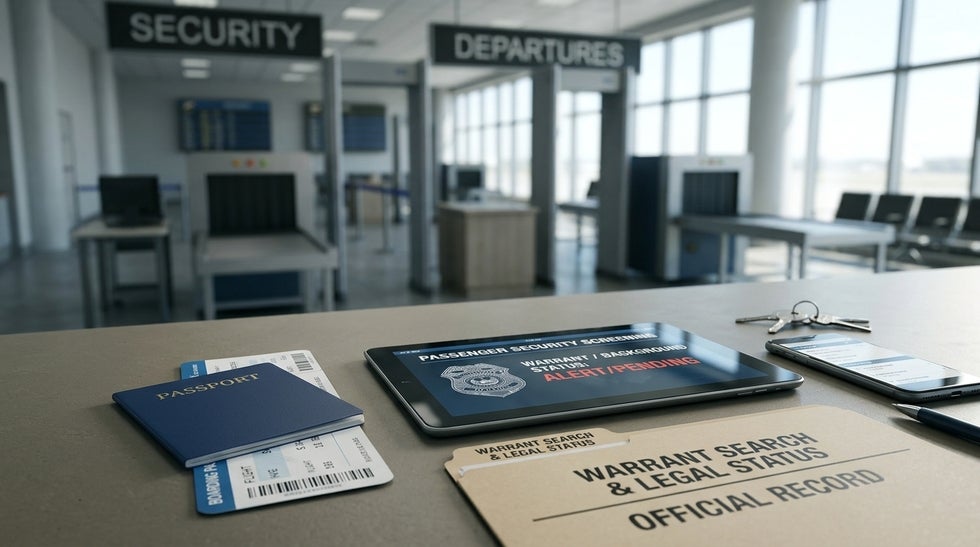
On a domestic flight, a warrant will usually not stop you at the airport, because the Transportation Security Administration does not check for warrants. TSA screeners compare your name to the terrorist watchlist through Secure Flight, verify that your identification matches your boarding pass, and screen you and your bags for weapons; they are not police, they have no access to the criminal warrant databases, and they cannot arrest anyone. The warrant gets found when police become involved: airport police called to a checkpoint for a prohibited item, a fake ID, or a disturbance run warrant checks, and Customs and Border Protection checks every passenger arriving in the United States from abroad against the NCIC database. A bench warrant for a missed court date will not trip a domestic checkpoint, but it means any contact with any officer, anywhere, ends in custody, and an arrest at an airport two states from the issuing court means a long wait for extradition. The order that works is to clear the warrant and then travel.
The Bulldog Law's attorneys get this question from people who discovered a warrant days before a flight, from people who suspect one and want to know whether a trip is safe, and from people who were arrested at an airport and are calling from a jail far from home. The honest answer has two parts: the mechanics, which favor the traveler on domestic flights more than people expect, and the risk, which is larger than the mechanics suggest because a warrant does not go away and an arrest in the wrong place is far worse than a surrender in the right one. What follows is what each agency checks, what happens when a warrant is found, how probation and parole change the answer, and how a California warrant is cleared quickly enough to keep the trip. Call (888) 928-1609 or message our team before you book, or before you board.
What TSA checks, and what it does not
TSA's screening has two parts. Secure Flight, run before you arrive, compares the name, date of birth, and gender on your reservation against the federal terrorist watchlist and the No Fly and Selectee lists, and assigns a screening level. At the checkpoint, a Travel Document Checker verifies that your ID is authentic and matches the boarding pass, and you and your belongings are screened for weapons, explosives, and prohibited items. The TSA's own description of the process does not include a criminal records check because there is none. Secure Flight does not query the National Crime Information Center or any state warrant system, and a Travel Document Checker looking at a California driver's license sees a license, not a record.
TSA officers are federal employees but not law enforcement officers. They cannot arrest, detain beyond the screening, or search for evidence of crimes. When they find something that is a crime, a firearm in a carry-on, a quantity of drugs, a counterfeit ID, or when a passenger is disruptive, they call the airport's police department, which is a real police agency: LAPD at LAX, San Francisco Police at SFO, the San Diego Harbor Police, airport divisions of county sheriffs elsewhere. Those officers do what any officer does when they detain someone: they identify the person and run the name, and the warrant comes up. A traveler with a warrant who has nothing prohibited, a valid ID, and an ordinary demeanor walks through a domestic checkpoint without a check being run. A traveler with a warrant and a forgotten pocketknife does not.
Where the warrant is found
Airport police encounters. The checkpoint referral above, a dispute at the gate, a report of intoxication, a baggage issue, an officer who happens to be present when a traveler is stopped for anything. Airport police run warrants as a matter of course on anyone they detain, and airports are among the places people with warrants are most often arrested by accident.
Customs and Border Protection. Every traveler arriving in the United States from abroad is processed by CBP, and CBP's primary inspection queries NCIC. An active warrant, misdemeanor or felony, state or federal, appears, and the traveler is sent to secondary inspection, held, and turned over to the local police or the U.S. Marshals. There is no equivalent check on departure; the United States has no exit control, and a departing traveler is not stopped by CBP. The person with a warrant who flies abroad leaves without incident and is arrested on return. Some destination countries check INTERPOL notices, and a traveler with a serious felony warrant can be refused entry or detained there.
Cash and the DEA. Travelers carrying large amounts of cash are identified by ticket data and TSA referrals and questioned by DEA task force officers at California airports, as our page on civil asset forfeiture explains; a warrant check is part of that encounter.
The destination. A warrant that was not found at the departure airport travels with the person. A traffic stop in another state, a hotel incident, any contact with police, produces an arrest on a California warrant far from California.
What happens when it is found
Officers confirm the warrant with the issuing agency and determine whether it is extraditable. In-state California warrants are always enforced: the traveler is booked into the local county jail and transported to the issuing county, or held for pickup, which can take days. Out-of-state felony warrants are generally extraditable, and the traveler is held pending the issuing state's decision to extradite and the proceedings our attorneys describe on our extradition page, which can take weeks in custody. Out-of-state misdemeanor warrants are frequently flagged as non-extraditable, and the traveler may be released, but the warrant remains active, and the arrest is reported to the issuing court. Federal warrants are enforced everywhere, by any agency, and a person arrested on a federal warrant is held for the U.S. Marshals and a first appearance in the district of arrest; our federal defense page and our page on indictments cover what follows.
The consequences of the airport arrest, beyond the missed flight, are the ones that make the clear-it-first advice more than caution. The person is now in custody rather than voluntarily before the court, which affects bail. The person is in the wrong county or state, which adds transport time. The arrest is a new fact in the case. And, for a bench warrant, the failure to appear that created it is a separate offense that is now harder to explain.
Probation, parole, and pretrial release
A person on probation or parole may have no warrant and still be unable to fly lawfully. Formal probation and parole conditions in California routinely require permission to leave the county or the state, and a trip taken without it is a probation violation or a parole violation regardless of whether anyone notices at the airport. Pretrial release conditions, including own recognizance and a bail bond, commonly restrict travel and require surrender of a passport in serious cases, and a defendant who flies in violation of a release condition faces revocation and, if a bond is involved, a bail agent who treats the trip as flight. A person who has left and not returned is in the category our absconding page describes, and a warrant will have issued. The request to travel is made to the probation officer or the court in advance, and it is usually granted for work, family, and documented reasons.
Non-citizens face a separate layer. A person with a pending criminal case or a warrant who leaves the United States may be unable to re-enter, and a conviction that occurred while abroad or an outstanding charge can make a returning green card holder inadmissible; our immigration attorneys review any international travel plan for a client with a pending case before the ticket is bought.
Clearing a California warrant before you fly
The first step is knowing whether a warrant exists, which our page on how to find out if you have a warrant covers: the county court's online index, the sheriff's warrant search, a call from an attorney to the clerk. The second step depends on the type.
Bench warrants for a missed court date, an unpaid fine, or a probation violation are recalled by appearing. In most California counties an attorney can appear on a misdemeanor bench warrant without the client present, under Penal Code 977, have the warrant recalled, and obtain a new court date, often within a day or two of being retained; a felony bench warrant requires the client's appearance, which an attorney arranges as a scheduled surrender with a bail argument prepared. Our page on bench warrants covers the process. The warrant is cleared, the court date is set, and the trip proceeds.
Arrest warrants on a new charge, including Ramey warrants obtained before a complaint is filed, are resolved by surrender: counsel contacts the detective or the prosecutor, arranges a time and place, and the client is booked and released or taken to arraignment with counsel present, rather than arrested in a terminal. A surrender arranged by counsel is the difference between a bail hearing with a prepared argument and a night in a jail in another state.
Infraction and traffic warrants, the most common kind, are cleared by paying or by appearing, and a citation release promise that was missed is handled the same way. Warrants from other states require counsel in that state, and our attorneys refer and coordinate. In every case the sequence is the same: find out, clear it, then travel, because the warrant does not expire, the airport is one of the places it is most likely to be found, and the person who is arrested there has lost the choice of where and how to face it.
Frequently asked questions
Can you fly with a warrant?
On a domestic flight, usually yes, because TSA does not run warrant checks. Screeners verify that your ID matches your boarding pass and screen you for weapons and explosives; they have no access to criminal warrant databases and are not law enforcement. The risk is at the gate only if an officer is there for another reason, if your name is on a law enforcement lookout, or if you are flagged by a bag or behavior and police are called. International travel is different: Customs and Border Protection checks the NCIC database on every arrival, and a felony warrant will be found.
Does TSA check for warrants?
No. TSA uses the Secure Flight system to compare passenger names against the terrorist watchlist and the No Fly List, not against state or federal criminal warrant databases. TSA officers are not police and cannot arrest anyone. If they encounter a problem, a prohibited item, a fake ID, a disturbance, they call airport police, and airport police do run warrant checks on the people they detain.
Can you fly with a bench warrant for a missed court date?
Domestically, the bench warrant itself will not stop you at the airport, for the same reason: TSA does not check. But a bench warrant means a court has ordered your arrest, and any encounter with police, at the airport, in a traffic stop at the destination, or on the return, ends in custody, often in a jurisdiction far from the court that issued it, with extradition or a long wait to follow. The sensible order is to clear the warrant and then fly.
What happens at the airport if you have a warrant and get caught?
Airport police verify the warrant, confirm it is extraditable if it is from another state, and arrest you. You miss the flight and are booked into the local jail. For an in-state warrant you are held for the issuing county or transported. For an out-of-state felony warrant you are held pending extradition, which can take weeks. For a misdemeanor warrant from another state, most agencies will not extradite, and you may be released with instructions to appear, but the warrant remains active.
Can you fly internationally with a warrant?
Leaving the United States does not involve an exit check by CBP, so a departing passenger with a warrant is generally not stopped. Returning is where it happens: every arriving traveler is checked against NCIC, and an active warrant, state or federal, results in detention at the port of entry and arrest. Some foreign countries also check U.S. warrant information through INTERPOL for serious offenses, and a person with a felony warrant may be refused entry or detained abroad.
Related reading from our attorneys
- How to find out if you have a warrant in California
- Bench warrants in California
- Extradition and out-of-state arrests
A warrant and a flight to catch? Most California warrants can be cleared faster than you think
The Bulldog Law's defense attorneys recall bench warrants, arrange surrenders on arrest warrants, and obtain travel permission for clients on probation and pretrial release, in courts across California, often within days. Visit our criminal defense page, call (888) 928-1609, or reach us online.