
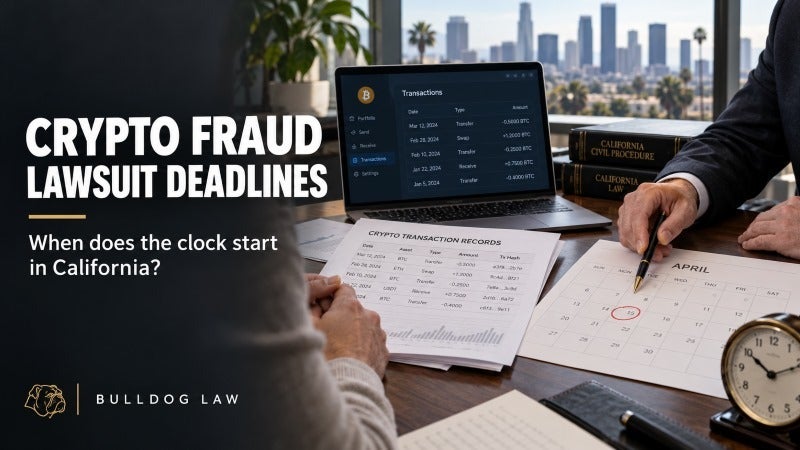
A fake investment dashboard can display profits long after cryptocurrency has disappeared. A promoter may blame withdrawal delays on technical problems. These circumstances complicate the crypto fraud statute of limitations in California: when did you discover, or reasonably should you have discovered, the fraud?
Quick answer: California fraud claims generally have a three-year limitations period under Code of Civil Procedure section 338(d), subject to discovery rules. However, other claims may have different deadlines, and an unknown defendant does not automatically stop the clock. Contract terms, earlier warning signs, and the steps you took to investigate all deserve prompt review.
Why There Is No Universal Crypto Lawsuit Deadline
“Crypto fraud” describes alleged conduct, not a single legal claim. A lawsuit might involve intentional misrepresentation, breach of contract, or securities violations. Each requires its own deadline analysis.
The distinction between criminal fraud and civil fraud also matters. A prosecutor's charging deadline does not determine when an investor must file a civil lawsuit. California Penal Code provisions should not be used to calculate a private plaintiff's filing deadline.
Potential periods include:
- Fraud or mistake: Generally three years under CCP 338(d), with discovery affecting when the claim accrues.
- Written contract: Generally four years under CCP 337, ordinarily measured from breach.
- Oral contract: Generally two years under CCP 339, ordinarily measured from breach.
- Certain federal securities fraud claims: Under 28 U.S.C. section 1658(b), the earlier of two years after discovery of the facts constituting the violation or five years after the violation.
These are starting points, not interchangeable options. In crypto OTC disputes involving failed settlements or counterparty fraud, the facts determine whether contract claims, fraud claims, or both are supportable. Likewise, meme coin securities fraud allegations require analysis of the transaction and statute involved. Not every token dispute qualifies for securities remedies.
Delayed Discovery and California's Crypto Fraud Statute of Limitations
CCP 338(d) ties accrual to discovery of the facts constituting fraud. Courts consider both actual knowledge and what reasonable investigation should have revealed.
You generally do not need a completed forensic report, a confession, or a lawyer's confirmation before the period begins. Suspicion that wrongdoing caused your loss can create a duty to investigate.
For example, suppose a platform rejects withdrawals in February, demands unexplained payments in March, and disappears in June. June is not automatically the discovery date. Earlier messages and your response may matter. A temporary outage alone, however, does not necessarily establish fraud discovery.
In cryptocurrency romance scam cases, personal trust and repeated reassurances can help explain the chronology, but they do not automatically excuse every delay.
When delayed discovery is needed to overcome an apparent time bar, the complaint generally must explain when and how discovery occurred and why reasonable diligence would not have uncovered the facts earlier. Understanding how statutes of limitations operate means examining both the period and its starting point.
Does a Hidden Identity Stop the Clock?
Usually, ignorance of the defendant's identity alone does not postpone accrual. Knowing only a wallet address or screen name is therefore a reason to investigate promptly.
CCP 474 permits fictitious “Doe” defendants when its requirements are satisfied. A later amendment identifying the defendant may relate back to the original filing, but that protection is not automatic. Genuine ignorance, the original allegations, and applicable procedural rules matter.
Deliberate concealment presents a separate question. In Bernson v. Browning-Ferris Industries, the California Supreme Court recognized that intentional concealment of identity can support equitable estoppel in appropriate circumstances involving a diligent plaintiff. A pseudonym alone does not guarantee extra time.
Foreign entities can add cross-border jurisdiction and service complications. Those obstacles should be evaluated while deadlines are being assessed, rather than after identification efforts end.
Contract Terms That Need Immediate Review
Download the agreement that applied when you opened the account or made the transaction. Reviewing blockchain agreements can reveal provisions addressing:
- Shortened periods for bringing claims.
- Mandatory notice or informal dispute procedures.
- Arbitration demands and filing requirements.
- Choice of law and the required forum.
A contractual provision is not necessarily enforceable merely because it appears in the terms. Its wording, applicable law, and the claim involved require review. Similarly, crypto arbitration clauses may affect where and how proceedings must begin. Do not assume a customer-support complaint satisfies a formal filing requirement.
Build a Timeline Before Evidence Disappears
Organize records around dates, including facts that might undermine your preferred discovery date. Useful materials include:
- Transfers, transaction hashes, wallet addresses, and account statements.
- Withdrawal attempts, rejection notices, and additional payment demands.
- Advertisements, promised returns, and communications explaining delays.
- Your inquiries, searches, reports, and responses received.
- Agreement versions and any written promises concerning deadlines.
Preserving crypto evidence for court involves more than proving a transfer occurred. Messages can establish what you knew and when. Preserve originals and metadata where available.
If someone later charges you to recover the funds, document that separately. A secondary crypto recovery scam may create a different claim; it does not automatically restart the deadline against the original wrongdoer.
Frequently Asked Questions
Does reporting fraud to the FBI or a regulator preserve my civil claim?
Do not assume so. Reporting crypto fraud or market manipulation serves a different purpose from commencing your own lawsuit or arbitration. A pending investigation does not automatically protect your filing deadline.
Do repayment negotiations pause the deadline?
Not automatically. Counsel can evaluate whether particular conduct supports an exception or whether a written tolling agreement is appropriate. Any agreement needs careful review of the parties, claims, dates, and defenses it covers.
What if the transfers occurred more than three years ago?
That does not answer the question by itself. Discovery, the claim asserted, and any applicable exceptions require review. Conversely, a recent discovery does not necessarily overcome every outside cutoff, including an applicable statute of repose.
Does each new loss restart the clock?
Not necessarily. Separate transactions may require separate analysis, but continuing consequences or additional losses do not automatically revive an expired claim.
Have a California Crypto Lawyer Review the Earliest Possible Deadline
A timeliness assessment should identify potential claims, competing accrual dates, contractual requirements, and facts supporting any exception. Defendants may raise a California statute-of-limitations defense before the underlying fraud allegations are resolved.
Contact Bulldog Law to discuss your transaction history, discovery timeline, and agreements. Bring the earliest warning signs as well as the clearest proof of fraud so counsel can evaluate what action may be needed to preserve viable claims.