
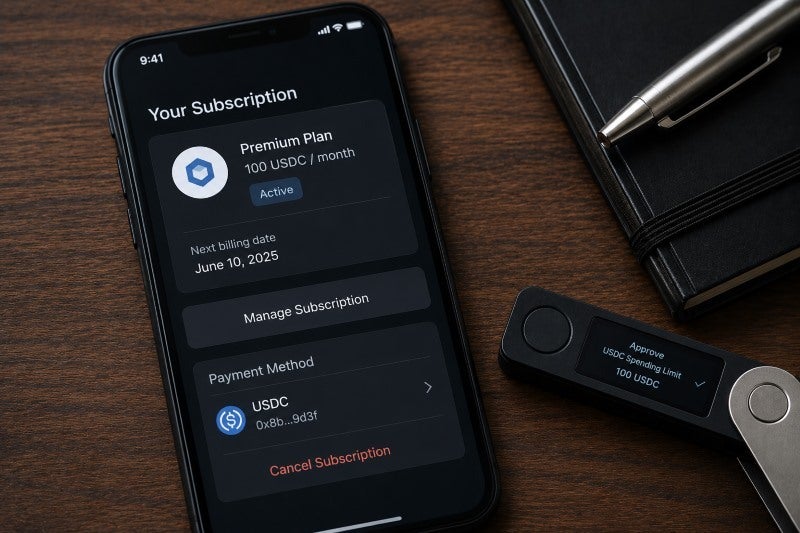
Crypto Subscription and Auto-Renewal Payments can create serious consumer protection risk when a business charges customers repeatedly through wallets, tokens, stablecoins, exchange accounts, or crypto payment processors. In California, recurring payment models must be built around clear consent, understandable renewal terms, practical cancellation rights, refund procedures, and accurate records. The use of blockchain technology does not remove those duties.
The main issue is simple: a business should not rely on confusing wallet approvals, buried terms, unclear token pricing, or hard-to-use cancellation flows to keep collecting payments. Consumers may have claims if they were enrolled without proper consent, charged after cancellation, denied promised refunds, or unable to stop recurring crypto payments in a practical way.
Why Crypto Subscription and Auto-Renewal Payments create legal risk
Crypto Subscription and Auto-Renewal Payments are different from ordinary credit card subscriptions because the payment mechanics can be harder for consumers to understand. A customer may sign a message, approve a token allowance, connect a wallet, authorize a stablecoin transfer, or use an exchange-based payment tool without fully understanding that future charges may occur.
Common risk areas include:
- Recurring charges that are not clearly disclosed before purchase.
- Wallet permissions that allow more access than the consumer expected.
- Token or stablecoin charges that change in value before or after billing.
- Cancellation flows that require extra steps, manual wallet revocation, or support tickets.
- Refund promises that do not explain whether refunds are made in dollars, tokens, or stablecoins.
- Payment failures caused by gas fees, network congestion, exchange holds, or depegs.
- Disputes over whether the customer consented to automatic renewal or only to one purchase.
For businesses that pay contributors, vendors, or service providers in digital assets as part of a subscription operation, cryptocurrency payment and contract risks can also affect tax records, classification, valuation, and written payment terms.
Crypto Subscription and Auto-Renewal Payments under California law
Crypto Subscription and Auto-Renewal Payments should be evaluated under California's automatic renewal and consumer protection rules. California's Automatic Renewal Law generally requires automatic renewal or continuous service terms to be presented clearly and conspicuously before the consumer agrees. Businesses also generally must obtain affirmative consent and provide an acknowledgment that includes the renewal terms, cancellation policy, and information about how to cancel.
California law also focuses on cancellation access. A business that allows consumers to accept an automatic renewal offer online should be careful about requiring a cancellation method that is harder, slower, or more confusing than enrollment. For crypto businesses, that means the cancellation process should not depend on unclear blockchain steps that a reasonable consumer would not understand.
Recurring crypto billing can also raise risk under California's Unfair Competition Law, False Advertising Law, Consumer Legal Remedies Act, and related consumer protection theories if the business uses misleading statements, hidden conditions, dark patterns, or unfair billing practices. The legal analysis depends on the facts, the disclosures, the customer journey, the transaction records, and the harm alleged.
Consent, wallet authorization, and token allowances
Consent is one of the most important issues in recurring crypto payments. A business should not assume that a connected wallet equals permission to charge the consumer indefinitely. The consumer should understand what is being approved, how often charges will occur, how much may be charged, how the amount is calculated, and how to stop future payments.
Wallet-based subscription systems should clearly explain:
- Whether the payment is one-time or recurring.
- The billing interval, such as monthly or annual billing.
- The asset used for payment, including token symbol and network.
- How token value will be calculated if pricing is tied to U.S. dollars.
- Whether the consumer is granting a token allowance or only approving one transfer.
- How to revoke wallet permissions and cancel the subscription.
- Whether gas fees, exchange fees, or network fees are refundable.
If a subscription business uses a DAO treasury, multisig wallet, or smart contract system to manage customer payments, DAO governance and treasury control issues may affect who has authority to change billing logic, process refunds, or stop disputed collections.
Cancellation terms and consumer claims
A recurring crypto payment system should give consumers a practical way to cancel. A customer should not have to guess whether cancelling means disconnecting a wallet, revoking a token approval, emailing support, submitting an exchange ticket, burning an NFT pass, or waiting for a smart contract cooldown period.
Businesses should avoid cancellation terms that are vague or one-sided. Risk increases when a company says cancellation is available, but then requires steps that are confusing, unavailable, or not disclosed before purchase. A consumer claim may be stronger if the customer saved screenshots showing that cancellation buttons did not work, support did not respond, wallet revocation was not explained, or the business continued charging after cancellation.
If customer payments are controlled through a shared wallet and required signers refuse to issue refunds or stop future charges, multisig signer refusal disputes may overlap with customer protection, treasury control, and breach of contract issues.
Refund disputes and crypto price changes
Refunds can be complicated when a consumer paid in crypto. A customer may pay one ETH, but the subscription price may have been advertised as a fixed dollar amount. By the time the refund is requested, the asset's value may have moved significantly. The business should define whether refunds are calculated by token amount, U.S. dollar value at payment, U.S. dollar value at refund, or another method.
Refund policies should address:
- Whether refunds are available after a renewal charge.
- Whether unused time is prorated.
- Whether refunds are made in the same asset or in U.S. dollars.
- Who bears network fees, gas fees, and bridge fees.
- What happens if the token is illiquid, delisted, frozen, or depegged.
- How refunds are handled if the consumer's wallet is compromised or unavailable.
Stablecoins do not eliminate refund risk. If a business accepts or refunds stablecoins, a depeg can create disputes over who bears the loss. stablecoin depeg loss claims may become relevant when consumers expected a dollar-equivalent payment but received an asset that no longer held its value.
Custody, account freezes, and access problems
Recurring crypto payments may depend on exchanges, wallet providers, payment processors, custodians, bridges, or smart contracts. If one of those systems freezes funds or blocks withdrawals, consumers may still expect refunds, cancellations, or access to services. The business should plan for these events before launching a subscription product.
For example, a consumer may say they cancelled, but an exchange-based payment still processed. A business may say it approved a refund, but the custodian blocked the transaction. A payment processor may flag an account for compliance review. These facts can turn a billing complaint into a custody or platform-access dispute.
When consumers cannot access funds or a company cannot process refunds because a platform controls the assets, crypto custody disputes with exchanges and wallet providers may affect the available legal options.
KYC, sanctions, and compliance concerns
Some crypto subscription businesses must identify customers, screen wallets, monitor suspicious activity, or restrict access in certain jurisdictions. Compliance controls can be legitimate, but they should not be used as a vague excuse to deny cancellation, keep charging customers, or withhold refunds without explanation.
If a subscription product involves exchange services, custodial wallets, financial services, cross-border payments, tokenized memberships, DeFi access, or investor-like benefits, the business should evaluate compliance before accepting recurring payments. KYC and AML requirements for crypto startups may affect onboarding, billing, wallet screening, and account restrictions.
Sanctions screening can also matter. A business should not knowingly process payments involving blocked persons, sanctioned wallets, or prohibited jurisdictions. At the same time, customers should receive accurate information about why access or payment processing is restricted when the business can lawfully provide it. crypto sanctions compliance for wallets and DeFi can affect subscription payments, refunds, and account access.
NFT memberships, token-gated subscriptions, and access disputes
Some businesses use NFTs or tokens as subscription passes, memberships, or access credentials. These models can create unique disputes. A consumer may buy an NFT expecting continued access to a service, only to learn that access requires recurring payments, additional token holdings, platform approval, or ongoing wallet verification.
Businesses should clearly separate ownership of an NFT from the right to receive a continuing service. If benefits can change, expire, be suspended, or require additional payment, those limits should be disclosed before purchase. If an NFT marketplace or account is suspended, NFT marketplace suspension options may affect creators, collectors, and consumers who cannot access or transfer subscription-linked assets.
Taxes and records for recurring crypto payments
Recurring crypto payments can create tax records for both businesses and consumers. A business may need to track the fair market value of tokens received, refunds issued, transaction fees, chargebacks or reversals, and income recognition. Consumers may also need records if paying with appreciated crypto triggers gain or loss reporting.
If tax forms, exchange records, or wallet activity do not match what the consumer reported, IRS digital asset mismatch notice issues may arise later. Businesses should preserve payment timestamps, valuation methods, wallet addresses, refund confirmations, customer invoices, and cancellation records.
Token grants used to compensate founders, advisors, or employees who build the subscription product can create separate records. token vesting disputes over unpaid grants may become relevant if the subscription business breaks down and contributors claim they were not paid what they were promised.
Consumer claims and evidence to preserve
Consumers who dispute recurring crypto charges should preserve evidence early. Crypto transactions can be traceable, but the legal dispute usually depends on what the consumer saw, what they agreed to, how they tried to cancel, and what happened after the charge.
Useful records include:
- Checkout screens, subscription terms, renewal disclosures, and pricing pages.
- Wallet approval screens, token allowance records, and transaction hashes.
- Emails, text messages, support tickets, chatbot transcripts, and cancellation confirmations.
- Exchange records, payment processor records, wallet histories, and refund attempts.
- Marketing materials, influencer posts, whitepapers, Discord announcements, and account dashboards.
- Evidence showing when the consumer cancelled and whether charges continued afterward.
Recurring crypto payments can also appear in divorce, support, or hidden asset disputes. crypto records in divorce cases may show subscriptions, payments, wallet activity, and digital asset balances. If one party is hiding recurring payments, wallets, or exchange accounts, hidden cryptocurrency discovery strategies may help identify undisclosed assets and payment patterns.
Where crypto subscription disputes may be handled in California
Crypto subscription and auto-renewal disputes may be handled through customer support, arbitration, California Superior Court, small claims court, regulatory complaints, or government enforcement depending on the facts and contract terms. Many consumer agreements contain arbitration clauses, class action waivers, forum selection clauses, or limitations on remedies, so the terms should be reviewed early.
California's automatic renewal rules may be enforced by the California Attorney General's Office and local prosecutors, including district attorneys and city attorneys. Private consumer claims may also be brought under other California consumer protection laws when the facts support them. These government offices and courts are neutral public institutions and are not affiliated with Bulldog Law.
If the amount in dispute is modest, a consumer may consider whether California small claims court is available. If a business faces many complaints, a class action, government investigation, or coordinated refund demand may become possible. The right forum depends on the amount at issue, the evidence, the contract, the customer's location, the business location, and the legal claims.
Practical steps for businesses using recurring crypto payments
Businesses that want to use recurring crypto payments should build compliance into the product before launch. Practical steps may include:
- Present renewal terms clearly before the consumer agrees.
- Obtain affirmative consent for recurring charges, not just a one-time wallet connection.
- Send an acknowledgment that the consumer can retain.
- Make cancellation simple, direct, and at least as practical as enrollment.
- Explain wallet permissions, token allowances, and revocation steps in plain English.
- Define refund calculations for token payments, stablecoin payments, and price changes.
- Preserve billing, cancellation, refund, and valuation records.
- Test the cancellation flow regularly to avoid dark patterns or broken links.
- Review KYC, AML, sanctions, tax, and custody issues before accepting funds.
A compliant subscription model should not depend on consumer confusion. Clear terms, accurate records, and workable cancellation procedures may reduce disputes and make the business easier to defend if a regulator, court, or customer later challenges the billing process.
Crypto Subscription and Auto-Renewal Payments lawyers in California
Crypto Subscription and Auto-Renewal Payments can create legal risk for startups, platforms, creators, payment processors, and consumers. The key issues often include consent, renewal terms, cancellation access, refunds, wallet permissions, custody problems, tax records, and consumer claims.
Bulldog Law helps California clients evaluate disputes involving recurring crypto payments, token-gated subscriptions, NFT memberships, refund problems, cancellation disputes, auto-renewal compliance, and digital asset billing records. Early legal review may help preserve evidence, assess consumer protection exposure, and identify practical options before recurring charges become a larger legal problem.