
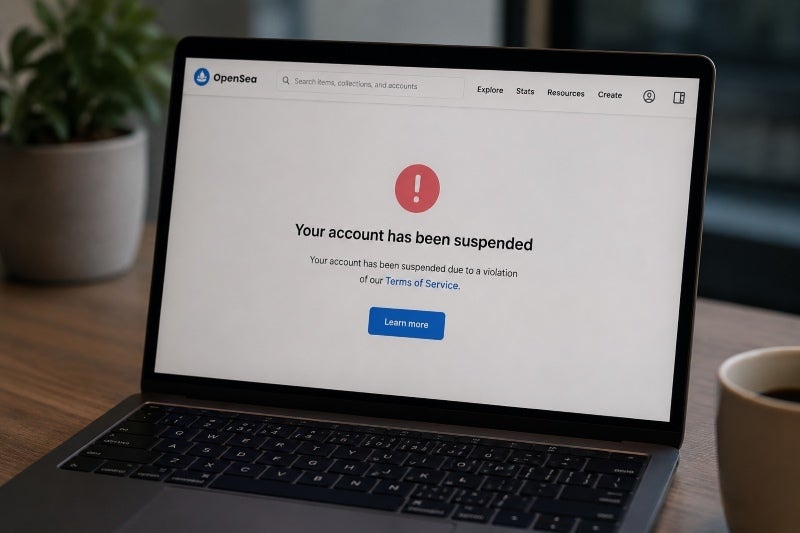
NFT marketplace account suspensions can disrupt sales, royalties, collections, brand partnerships, and access to valuable digital assets. A creator may wake up to a delisted collection. A collector may lose access to a marketplace account after a fraud flag. A business may see royalties paused because the platform claims the project violated its terms. These disputes can involve contract rights, consumer protection issues, intellectual property concerns, tax records, sanctions screening, and fraud investigations.
For California creators and collectors, the legal options depend on the marketplace terms of service, the reason for the suspension, the assets involved, the platform's custody model, and whether the dispute involves a private contract issue or a government, tax, or regulatory concern. A marketplace usually has some right to moderate listings and restrict accounts, but that does not mean every suspension is fair, accurate, or properly handled.
Why NFT marketplace account suspensions happen
NFT marketplaces often use automated tools, manual review teams, user reports, blockchain analytics, and payment risk systems to decide whether to restrict an account or listing. A suspension may be temporary, permanent, collection-specific, wallet-specific, or limited to certain features such as listing, bidding, withdrawing, or receiving royalties.
Common reasons include:
- Suspected stolen NFTs or compromised wallets
- Chargebacks, payment disputes, or suspicious transaction activity
- Alleged copyright, trademark, or publicity rights violations
- Wash trading, market manipulation, or artificial volume
- Fraud reports involving minting, sales, royalties, or project promises
- Sanctions screening, high-risk wallets, or prohibited jurisdictions
- Violation of marketplace terms, community rules, or creator policies
- Disputes over collection ownership, metadata, smart contracts, or royalty rights
A platform may not give a detailed explanation at first. In some cases, the marketplace may withhold details to prevent fraud or preserve evidence. In other cases, the account holder may be dealing with poor customer support, overbroad automated enforcement, or an incomplete review.
Marketplace terms and creator rights
The first place to look is the marketplace agreement. Most platforms reserve broad discretion to remove content, freeze accounts, restrict trading, withhold payouts, or delist NFTs that allegedly violate policy. The key question is whether the platform followed its own terms and whether those terms are enforceable under the circumstances.
Creators should review provisions involving:
- Account suspension and termination
- Listing and delisting rights
- Royalty payment terms
- Intellectual property licenses
- User content and takedown procedures
- Fraud prevention and risk review
- Arbitration, venue, and class action waivers
- Limitations of liability and damages
A creator may have a stronger claim if the marketplace promised specific royalty treatment, verified a collection, promoted the project, accepted fees, or applied policies inconsistently. A collector may have a stronger claim if the platform restricted access to purchased assets without a clear contractual basis or failed to provide a meaningful way to contest the restriction.
Frozen accounts, custody, and access to NFTs
An NFT marketplace suspension is not always the same as losing the NFT. In many cases, the NFT remains in the user's self-custody wallet, but the marketplace blocks trading, listing, bidding, or visibility on that platform. In other cases, the platform may control account access, custody, escrow, payout records, or off-chain metadata that affects practical ownership.
If a suspension functions like a broader crypto exchange account freeze, the user should preserve notices, screenshots, wallet records, login attempts, support tickets, and transaction histories. If the dispute involves who controls assets, metadata, private keys, or platform-held funds, it may overlap with crypto custody disputes.
The custody model matters. A non-custodial marketplace may not be able to transfer a user's NFT, but it may still affect visibility, liquidity, royalties, or marketplace reputation. A custodial platform may have more direct control over assets, payouts, or account records.
Delistings, royalties, and intellectual property disputes
Delistings often happen when someone claims an NFT collection uses unauthorized artwork, trademarks, celebrity likenesses, brand names, music, images, or game assets. The marketplace may remove the listing quickly and investigate later. That can create serious harm for creators if the takedown is mistaken or abusive.
Important questions include:
- Who created the artwork or media?
- Was there a written license or assignment?
- Did the creator use AI-generated, commissioned, or stock assets?
- Did the project use a brand name, logo, character, or celebrity likeness?
- Were royalties promised in writing or only described in marketing?
- Did a smart contract, marketplace setting, or off-chain policy control royalties?
Creators should preserve contracts with artists, designers, developers, promoters, and collaborators. Collectors should preserve purchase records, collection pages, metadata, marketplace messages, and project communications.
Fraud flags, wash trading, and market manipulation
NFT marketplaces may suspend accounts after detecting suspicious trading patterns. These can include repeated sales between related wallets, inflated floor prices, bid manipulation, suspicious wash trading, or volume designed to make a collection appear more valuable than it is.
These facts can resemble broader crypto enforcement concerns. If the alleged conduct involves coordinated hype, paid promotion, or artificial trading, the dispute may overlap with crypto pump and dump risks. If a collection collapses after founders raise funds, stop communicating, or drain project wallets, suspended accounts may become evidence in rug pull claims against founders.
Meme-driven NFT projects can raise similar problems because marketing, influencer posts, wallet concentration, floor price support, and liquidity decisions may all be reviewed after losses occur. A marketplace suspension tied to hype-based trading may involve the same factual concerns seen in meme coin legal risks.
Airdrops, insider information, and disputed benefits
Some NFT projects give holders access to token airdrops, whitelist spots, staking benefits, merchandise, events, revenue shares, or future mints. If a marketplace suspension affects eligibility, royalties, or proof of ownership, the financial consequences may go beyond the NFT image itself.
Projects that distribute tokens or benefits should consider the risks connected to token airdrop compliance, including tax, securities, and eligibility issues. If a creator, employee, marketplace insider, or promoter traded NFTs or tokens before a major listing, reveal, partnership, or benefit announcement, the facts may also raise crypto insider trading concerns.
Account holders should avoid deleting Discord messages, wallet records, screenshots, or project announcements. Those records may help prove eligibility, ownership, damages, or the reason for the marketplace's decision.
Bankruptcy, lending, divorce, and other hidden NFT ownership issues
NFTs can also become part of disputes outside the marketplace. A platform bankruptcy, business breakup, divorce, support case, or loan default can create questions about who owns the NFTs and whether a marketplace suspension is connected to a broader legal problem.
If assets are held by a distressed exchange or platform, the owner may need to evaluate whether the NFT or sale proceeds are affected by crypto exchange bankruptcy. If NFTs are pledged as collateral or connected to a loan default, the dispute may involve crypto loan liquidation disputes.
Family law can also matter. NFTs purchased during marriage, received as compensation, or hidden in private wallets may become relevant in a crypto divorce. If one spouse or parent fails to disclose NFT accounts, sales, royalties, or wallet holdings, lawyers may need discovery strategies for hidden cryptocurrency in support cases.
Tax and compensation records after an NFT suspension
An NFT suspension can make tax reporting harder. A creator may lose access to sales data, royalty records, fee reports, or marketplace statements. A collector may need basis, purchase price, sales proceeds, gas fees, and transaction dates to report gains or losses.
If a creator was paid in NFTs, tokens, or crypto for project work, the records may overlap with getting paid in cryptocurrency. If the IRS later questions NFT sales, royalties, or mismatched exchange records, a taxpayer may need to respond to an IRS CP2000 crypto notice.
Users should download account records whenever possible. If the platform blocks access, the user should preserve blockchain records, wallet histories, email confirmations, screenshots, and any available marketplace exports.
Sanctions, KYC, and compliance flags
Some suspensions are driven by compliance flags rather than marketplace disputes. A platform may restrict an account because a wallet interacted with sanctioned addresses, high-risk jurisdictions, mixers, stolen funds, or suspicious counterparties. A user may also be asked for identity verification, source-of-funds information, or proof of wallet ownership.
Creators and collectors should take these requests seriously. A sanctions issue can implicate crypto sanctions compliance, while marketplace onboarding or project launch obligations may involve KYC and AML requirements.
Users should not submit false documents, altered screenshots, or incomplete wallet explanations. A simple marketplace appeal can become more serious if the platform believes the account is connected to fraud, sanctions evasion, money laundering, or stolen assets.
Legal claims after NFT marketplace account suspensions
Possible claims depend on the facts and the platform's terms. Many marketplaces require arbitration, limit damages, and reserve discretion to remove listings. Those terms matter, but they do not always end the dispute.
Potential legal theories may include:
- Breach of contract if the marketplace failed to follow its own rules
- Breach of the implied covenant of good faith and fair dealing if discretion was used unfairly
- Conversion if assets or proceeds were wrongfully withheld
- Misrepresentation if the platform or project made false statements
- Unfair business practices depending on the conduct and available remedies
- Defamation or business interference in narrow cases involving false public accusations
- Intellectual property claims involving unauthorized artwork, trademarks, or licenses
- Accounting or declaratory relief where ownership, royalties, or balances are disputed
A strong case usually requires more than frustration with a platform decision. The user should identify the specific policy, contract term, transaction, communication, or error that supports the claim.
Where NFT marketplace disputes are handled in California
NFT marketplace disputes may be handled through platform appeals, arbitration, California state court, federal court, bankruptcy court, or regulatory complaints. The correct forum depends on the user agreement, the parties, the claims, the amount at issue, and whether federal intellectual property, securities, sanctions, tax, or bankruptcy issues are involved.
Many platforms require arbitration. If arbitration applies, the claimant should follow the notice procedure in the marketplace terms. If a lawsuit is available, California civil claims may be filed in the appropriate county superior court. In Los Angeles County, civil matters may proceed in the Superior Court of California, County of Los Angeles, including Stanley Mosk Courthouse at 111 North Hill Street, Los Angeles, CA 90012. The court handles civil cases neutrally and has no affiliation with Bulldog Law.
Federal court may be involved when the dispute includes copyright, trademark, federal securities issues, bankruptcy, diversity jurisdiction, or federal seizure. In Southern California, federal civil matters may proceed in the United States District Court for the Central District of California, including the First Street courthouse at 350 West 1st Street, Los Angeles, CA 90012.
Practical steps after an NFT account suspension
Creators and collectors should act quickly to preserve records and avoid making the dispute worse.
- Save the suspension notice, emails, support tickets, and appeal forms
- Download account records, royalty reports, sales history, and fee statements if available
- Preserve wallet addresses, transaction hashes, metadata, collection pages, and screenshots
- Identify every related wallet, marketplace account, collaborator, and smart contract
- Review the marketplace terms, appeal process, arbitration clause, and deadlines
- Gather licenses, artist agreements, project contracts, and royalty documents
- Do not create fake records, alter screenshots, or delete Discord, Telegram, or email messages
- Get legal advice before responding if the suspension involves fraud, sanctions, taxes, law enforcement, or high-value assets
A clear appeal should be factual, concise, and supported by documents. Accusations, threats, and unsupported claims usually do not help. The goal is to create a record that can support reinstatement, settlement, arbitration, litigation, or regulatory review if needed.
NFT marketplace account suspensions lawyers in California
NFT marketplace account suspensions can affect creators, collectors, founders, investors, businesses, and families. The dispute may involve frozen accounts, delistings, royalty rights, fraud flags, marketplace terms, intellectual property, tax records, sanctions screening, or custody issues.
Bulldog Law helps clients evaluate California crypto and NFT disputes involving marketplace suspensions, frozen accounts, custody problems, token projects, fraud claims, tax concerns, and digital asset ownership. The firm can review marketplace notices, wallet records, transaction histories, contracts, project communications, and platform terms to help identify practical legal options.