
By the The Bulldog Law Criminal Defense Team • Reviewed by a licensed California criminal defense attorney
California concealed-carry licensing transformed in 2022: the Supreme Court's BRUEN decision struck down “good cause” requirements nationwide, ending the era when California sheriffs could deny permits because you couldn't prove a special need and today, qualified applicants are issued CCWs at rates the state has never seen. What “qualified” means now: 21 or older; a resident of (or, in some counties, principally employed in) the issuing county; NOT a prohibited person under state or federal law (felonies, the 10-year misdemeanor list, DV convictions with their federal lifetime ban, qualifying restraining orders and mental-health prohibitions); completion of the SB 2-era TRAINING 16 hours for new applicants, including live-fire qualification with each carried firearm; and the post-Bruen “good moral character” standard, now cabined to objective disqualifiers and documented conduct rather than a sheriff's mood. The process runs through your county sheriff (or city police) licensing unit: application, fingerprints and a DOJ background check, an interview, references, fees that vary by county (commonly several hundred dollars all-in with training), and statutory decision timelines (90-120 days) that real-world backlogs frequently exceed. And the biggest post-issuance change is WHERE: SB 2 dramatically expanded “sensitive places” where even permit-holders cannot carry with major portions of that list under active federal-court litigation, injunctions shifting what's enforceable making “check the current map before you carry” a permanent rule of California CCW life. This guide from The Bulldog Law's firearm practice walks the process step by step, the denial-and-appeal path, and the piece most guides skip: FIXING the old record - 17(b) reductions, expungements, and restoration work that stands between many good applicants and approval.
The Process, Step by Step
- Confirm eligibility FIRST run your own record before the government does: any felony, any 10-year-list misdemeanor (DV battery, brandishing, threats), any DV conviction ever (federal lifetime), active restraining orders, and pending charges are disqualifiers or practical denials and several are FIXABLE in advance (step 6). Applying while disqualified wastes fees and creates a denial record.
- Apply to your county's licensing authority the standard state application (BOF 1032) through the sheriff's (or city PD's) portal: complete, consistent, and honest omissions and “forgotten” arrests are character findings waiting to happen; disclose and explain instead.
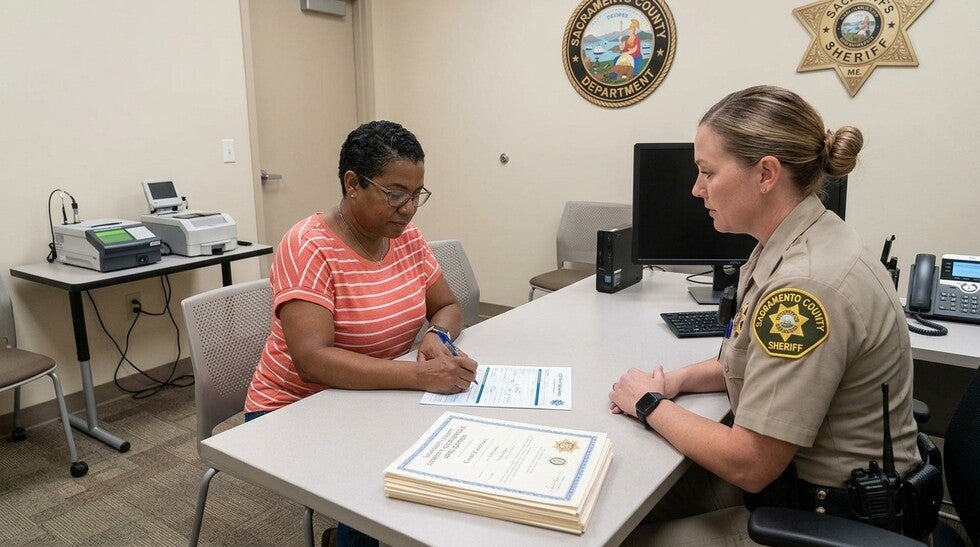
- Background, interview, references Live Scan fingerprints, the DOJ check, character references, and a licensing interview; some counties add psychological evaluation. Treat the interview like testimony: prepared, brief, accurate.
- Training - the SB 2 course: 16 hours for initial applicants (8 for renewals) from an approved provider law, safe handling, storage, and live-fire qualification with EACH firearm to be listed on the permit.
- Issuance, conditions, and renewal licenses run two years (with county-added conditions on some), list specific firearms, and renew with the shorter course; report changes (address, firearms) per your county's rules, and carry ONLY within the license's terms - because carry outside them revives the § 25400 crime the permit exists to avoid.
- If your record is the obstacle fix it BEFORE applying: wobbler felonies reduce under 17(b) (a misdemeanor ‘for all purposes' lifts the felony ban); eligible convictions expunge under 1203.4 (which helps the character review even though it does not itself restore gun rights); straight felonies route through the Certificate of Rehabilitation and pardon path; and old DV-labeled pleas deserve counsel's review for every lawful vacatur and reclassification avenue this record-work is the actual gateway for a large share of would-be applicants, and it's exactly the work a defense firm does.
Sensitive Places, Denials, and the Rules of the Road
WHERE YOU STILL CAN'T CARRY: SB 2's expanded sensitive-places list schools and campuses, government buildings and courts, hospitals and medical facilities, public transit, parks and playgrounds, stadiums, bars, and more, plus a default rule for private commercial property absent posted permission is the most litigated gun statute in the state: federal courts have enjoined portions and revived others as appeals proceed, so the enforceable map SHIFTS, and the permit-holder's rule is permanent vigilance: verify current status before carrying anywhere on the contested list, and when in doubt, secure the firearm in the vehicle per transport rules.DENIALS AND APPEALS: written denial reasons are required;
The review path runs through the issuing agency's appeal process and, beyond it, writ relief in superior court - and the productive response depends on the reason: character findings built on old arrests get answered with context and record-cleaning; disqualifying convictions get answered with the restoration work above; procedural and delay problems get answered with follow-up and, where needed, mandamus pressure on statutory timelines. THE RULES OF THE ROAD once licensed, stated plainly because violations un-ring nothing: carry only listed firearms, only within conditions, never in enforceable sensitive places, never while drinking; a CCW is a license the same system can suspend and any arrest, protective order, or DV allegation suspends the whole project instantly. One more honest note for the denied and the impatient: carrying WITHOUT the permit is not a protest, it's a crime with its own wobbler exposure that then disqualifies you from the permit forever - the lawful path is slower and it is the only one that ends with you armed AND unarrested.
Common CCW Application Problems to Avoid
A California CCW application is more than a form and a training certificate. The licensing authority will review the information provided by the applicant and may compare it with criminal-history and other government records.
Small inconsistencies can therefore create unnecessary problems.
Incomplete Criminal-History Disclosures
Applicants sometimes assume an old arrest does not matter because there was no conviction. That can be a mistake.
If the application asks about arrests, citations, convictions, or other history, answer according to the wording of the application and provide accurate information. Do not guess dates or invent explanations. If an old record is unclear, obtain the record before submitting the application.
An omitted arrest or inconsistent answer can create a separate credibility issue even when the underlying incident would not have automatically disqualified the applicant.
Failing to Review the Record Before Applying
The licensing agency will conduct its own background investigation. Applicants should not wait for the agency to discover problems before looking at their own records.
Before applying, review old convictions, probation records, restraining orders, domestic-violence history, and other potential firearm prohibitions. Some records may have remedies available, while others may create permanent or temporary restrictions.
Record cleanup does not automatically restore firearm rights in every situation. The specific prohibition must be identified first.
Assuming Training Alone Makes Someone Eligible
Completing the required CCW training does not overcome a statutory firearm prohibition.
Training is only one part of the licensing process. An applicant must still satisfy the applicable eligibility requirements and complete the licensing authority's background and application process.
This is particularly important for people with prior convictions, domestic-violence-related records, restraining orders, or other circumstances that may affect firearm possession.
Carrying Before the Permit Is Issued
An applicant should not carry a concealed firearm simply because the application has been submitted, fingerprints have been completed, or the training course has been passed.
Until the license is actually issued and valid, the applicant does not have the authority that comes with a California CCW.
If a person is legally permitted to possess a firearm but does not have a CCW, California's separate concealed-carry laws still apply. The § 25400 crime can create an entirely new criminal problem and can also complicate future licensing.
Keep Documentation for Everything
Applicants should keep copies of the application, training certificate, correspondence with the licensing authority, interview requests, supporting documents, and the final decision.
If the agency requests additional information, respond accurately and within the required time.
If an application is denied, the written decision and the reasons stated by the agency become especially important. They can help determine whether the problem is an actual statutory prohibition, a background issue, a character determination, missing documentation, or a procedural problem.
A CCW Is Not the Same as Unlimited Carry
Receiving a CCW does not mean California's firearm laws stop applying.
The license remains subject to its terms and to other state and federal firearm restrictions. Location restrictions can also change as legislation and court decisions develop.
Before carrying, permit holders should verify the current rules for the specific location, firearm, and circumstances rather than relying on an old article, social-media post, or information from a previous permit application.
The safest approach is to treat the CCW as a continuing legal responsibility, not simply a document obtained after completing the application process.
Frequently Asked Questions
Is California ‘shall-issue' for CCWs now?
Functionally close: Bruen eliminated ‘good cause,' so issuing agencies can no longer deny qualified applicants for lacking a special need eligibility now turns on objective criteria (age, residency, not prohibited, training) plus a good-moral-character review that courts have pushed toward documented, objective disqualifiers rather than discretion. Result: issuance rates in formerly restrictive counties (Los Angeles included) have multiplied since 2022. The friction that remains: processing backlogs beyond the statutory 90-120 days, county-by-county variation in interviews and psychological screening, and character findings built on arrest histories the last being answerable with preparation and record-cleaning before you apply.
How long does it take to get a California CCW?
The statute says a decision within 90 days of application (or 30 days after background results, whichever is later) reality in high-volume counties runs from a few months to well over a year, with fingerprinting, interview scheduling, and training availability adding their own queues. Ways to shorten it: apply complete (deficiencies restart clocks), book the 16-hour training early (course seats bottleneck), respond to agency requests same-week, and calendar the statutory deadlines persistent, documented follow-up (and, in extreme delay, writ pressure on the timeline) moves files that silence doesn't. Renewals (8-hour course) run faster; start them 90+ days before expiration so coverage never lapses.
Where can't I carry even with a permit?
SB 2's expanded sensitive-places list: schools and universities, government buildings and courthouses, polling places, hospitals, public transit, parks and playgrounds, stadiums and casinos, bars, and a default ban on private commercial property without posted permission with the critical caveat that this list is under active federal litigation: courts have enjoined portions (the private-property default and several categories have gone in and out of effect) while appeals proceed. The permit-holder's discipline: check the current enforceable map before carrying anywhere contested, when uncertain secure the firearm in your vehicle under transport rules, and never treat last year's injunction news as this year's law. Violations are criminal charges that also end the permit the stakes of guessing wrong are the whole license.
I was denied what are my options?
Start with the written reasons the response depends on them. Character denials built on old arrests and stale conduct: answered with context, documentation, and often the record-cleaning that should have preceded the application expungements strengthen the file, 17(b) reductions convert wobbler felonies into misdemeanors ‘for all purposes,' and both change the review's inputs. Disqualifying-conviction denials: answered with the restoration map - 17(b) where the prior wobbles, the Certificate of Rehabilitation and pardon path where it doesn't, and careful analysis of DV-labeled priors and their federal consequences. Procedural denials and endless delay: administrative appeal, then writ review in superior court. What NOT to do: reapply unchanged (same inputs, same output) or carry anyway (a crime that ends the question permanently). Have counsel read the denial - most of them are roadmaps.
The California CCW went from near-impossible to genuinely attainable in one Supreme Court decision and the applicants still being turned away are mostly people with fixable records and unprepared files. Do the record work first, the application right, and the sensitive-places homework forever. The Bulldog Law's firearm practice handles the record-cleaning, restoration, and denial fights that open this door. Contact the firm online or call (888) 928-1609.