
Updated October 2026 | The Bulldog Law | California DUI Defense
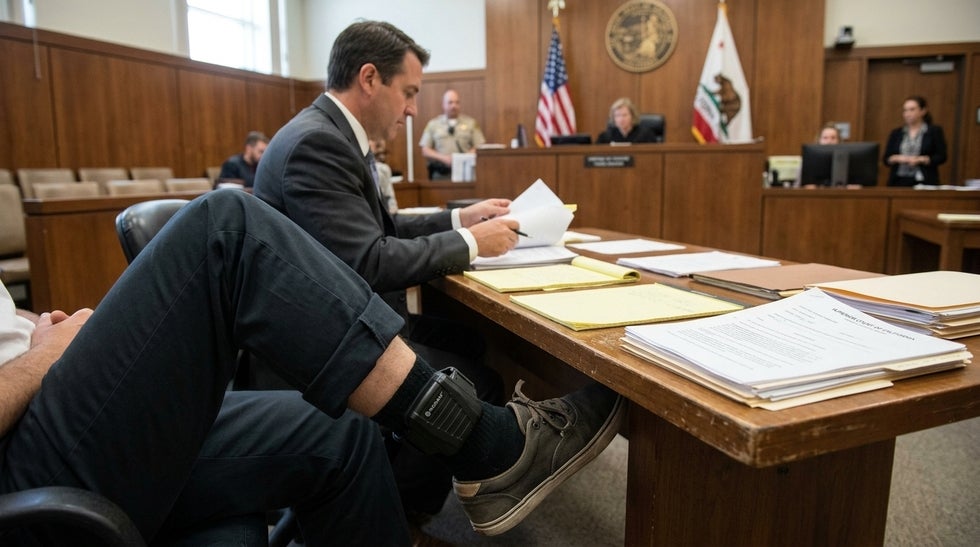
A SCRAM bracelet is an ankle monitor that detects alcohol through the skin. Every 30 minutes it samples the wearer's perspiration, measures the alcohol in it, and uploads the reading to a monitoring company that reports confirmed drinking events and tampering to the court or probation. California judges order it as a condition of bail or pretrial release in repeat DUI and alcohol-related cases, as a condition of probation in second and third DUI cases and some domestic violence cases, and in family court. The wearer pays for it, typically $10 to $15 a day plus installation, for a period the judge sets, usually 30 days to a year. The device is designed for total abstinence: a single drink registers, and a confirmed drinking event is a violation that can mean remand or a probation revocation. The readings can be contested, and the device can be removed early by motion.
The Bulldog Law's DUI attorneys see SCRAM from the moment it is proposed, at the bail hearing where it is the condition that gets a second-offense client out of custody, through the months of monitoring, to the violation report that arrives because the client used hand sanitizer at work. The device is a useful tool for the defense, because an unbroken record of sobriety on SCRAM is the strongest mitigation evidence a DUI defendant can present, and it is a trap for the unprepared, because the rules are strict and the monitoring company's report is treated as fact until it is challenged. What follows is how the device works, when and why California courts order it, the cost and the rules, the false-positive problem, and what happens when the report says alcohol. Call (888) 928-1609 or message our team.
How the device works
SCRAM, Secure Continuous Remote Alcohol Monitor, is the brand name of the device made by SCRAM Systems that dominates the market; competing transdermal monitors work on the same principle and are ordered under the same terms. The bracelet is fitted to the ankle, locked, and worn continuously. Its sensor draws a sample of insensible perspiration, the vapor the skin constantly emits, every 30 minutes, and measures the ethanol in it. Because a fraction of consumed alcohol is eliminated through the skin in proportion to blood alcohol, the transdermal reading tracks blood alcohol with a lag of an hour or two. The readings are stored on the device and uploaded, through a base station in the wearer's home or a cellular modem on the newer units, to the monitoring company, which reviews them and reports to the court, probation, or pretrial services.
The device also monitors itself. A temperature sensor and an infrared sensor detect whether the bracelet is against skin, so that placing a barrier between the sensor and the skin, submerging the device, or removing it registers as a tamper event. A strap sensor detects cutting. Tamper events are reported like drinking events, and the monitoring companies treat them as presumptive violations.
The distinction that matters is between a drinking event and an environmental or product exposure. Alcohol consumed produces a transdermal curve that rises over an hour or more, peaks, and declines at a rate consistent with metabolism, over several hours. Alcohol from an external source, hand sanitizer, perfume, cleaning products, a spilled drink, produces a sharp spike that drops quickly, because there is no body of alcohol in the blood to sustain it. The monitoring company's analysts classify events by the shape of the curve, and a confirmed drinking event is one the analyst judges consistent with consumption. The classification is a judgment, and it is where the defense begins when a report is wrong.
When California courts order it
Bail and pretrial release. The most common use. A defendant arrested for a second or third DUI, a DUI with a high blood alcohol level, a DUI with injury, or a DUI while on probation for a prior faces a bail amount the family may not be able to post and a prosecutor arguing for detention. SCRAM is the condition that resolves it: the judge releases the defendant on bail or on supervised own recognizance with a no-alcohol condition enforced by the bracelet, and the prosecutor's public safety objection is answered. Our attorneys propose it in those cases before the prosecutor does, because a release with SCRAM is better than custody without it, and because the months of compliance that follow become the sentencing argument.
Probation. In a second or third DUI case, a judge imposing probation may order SCRAM for a period as a condition, alongside the DUI program, the ignition interlock device required under Vehicle Code 23575 and following, and the zero-tolerance driving rule that applies to everyone on DUI probation. The interlock and SCRAM address different conduct: the interlock prevents driving after drinking, SCRAM prevents drinking at all. A judge who orders both has decided the defendant should not drink for the period, and a violation of either is a probation violation. SCRAM is also ordered in felony DUI cases as part of a sentence that avoids prison, and increasingly as a condition in domestic violence cases where alcohol was a factor.
Family and dependency court. Outside criminal court, SCRAM is ordered in custody disputes where one parent's drinking is alleged, as a condition of visitation, and by child welfare agencies as a condition of reunification. The reports go to the family court or the social worker, and the consequences are custodial rather than penal.
Diversion and treatment programs. Some diversion programs and collaborative courts, including DUI courts in several counties, use SCRAM as a monitoring tool for participants, with a drinking event resulting in program sanctions rather than a criminal violation.
Cost, duration, and the rules
The wearer pays the monitoring company directly. Installation is typically $50 to $150, and daily monitoring runs about $10 to $15, so a 90-day order costs $1,000 to $1,500 and a year $4,000 to $5,000, on top of the fines, the program, the interlock, and the SR-22 that a DUI already carries. Courts may reduce or waive the fee on a showing of inability to pay, and the monitoring companies offer sliding scales in some counties; the request is made when the device is ordered, with income documentation, because a fee the defendant cannot pay becomes a violation of its own.
The duration is set by the judge. As a bail condition, SCRAM typically runs until the case resolves, which may be 30 days or six months. As a probation condition, 90 days to a year is common, with longer periods in felony and repeat cases. The order can be modified: our attorneys move to remove SCRAM early on a record of compliance, typically after 90 clean days, and judges grant the motion more often than defendants expect, because a clean record is the point.
The rules come from the monitoring agreement and the court order, and they are strict. No alcohol, in any amount, including non-alcoholic beer, which contains trace alcohol, and foods cooked with wine. No alcohol-containing products on or near the device: hand sanitizer, perfume, cologne, aftershave, mouthwash, some lotions, and cleaning sprays. No submersion: showers are permitted, baths, pools, and hot tubs are not. No obstruction: nothing between the device and the skin, and the strap is not to be adjusted. The base station must be plugged in and the wearer must be within range for the daily upload, or the device must have cellular coverage. Missed uploads and low batteries are reported. Our attorneys review the rules with every client at installation, because most violation reports we see are rule violations by people who did not drink.
False positives and the defense of a violation
The monitoring companies describe their classification as reliable, and in most cases it is. The reported drinking events that are wrong tend to fall into recognizable categories. Environmental exposure misclassified as consumption, where a prolonged exposure, a bartender's shift, a shared bathroom with a heavy perfume user, painting with solvent-based products, produced a curve long enough to look like drinking. Products applied near the device, which produce the sharp spike the analysts are trained to recognize but occasionally do not. Medical conditions: diabetes, certain fermentation disorders, and some medications can produce or mimic transdermal alcohol. And tamper alerts from a device worn loosely, a strap that loosened with weight loss, an obstruction from a sock or a bandage, or an interruption from a medical procedure.
A violation report is contested with the data. The monitoring company produces the readings, the curve, and the analyst's notes on request, and our attorneys obtain them in every contested case. An expert in transdermal alcohol monitoring can evaluate whether the curve is consistent with consumption, whether the absorption and elimination rates match a human body, and whether the alternative explanation the client offers is consistent with the readings. The device's own logs show when the wearer was in range, when the battery was low, and when the temperature sensor read something other than skin. And the client's own record, work schedules, receipts, and witnesses, places the client somewhere alcohol was or was not.
The posture determines the stakes. On bail or pretrial release, a reported drinking event supports a prosecution motion to revoke release, and the hearing is immediate; a defendant who is remanded loses the job and the liberty the release preserved, so our attorneys respond to a violation report the day it arrives, with the explanation and the request for the data, before the motion is filed. On probation, a reported event is a violation under Penal Code 1203.2, and the court may summarily revoke probation and issue a bench warrant pending a hearing, at which the prosecution must prove the violation by a preponderance of the evidence. The hearing is where the data and the expert are presented, and the result ranges from a finding of no violation to reinstatement with modified terms, added jail, or, in repeat cases, revocation and imposition of the suspended sentence. A first reported event in an otherwise clean record is treated by most judges as a warning; a pattern is not.
Why the device helps the defense
A DUI defendant who wears SCRAM for six months and produces an unbroken record has shown the court the one thing a judge cannot otherwise know: that the drinking has stopped. That record is the centerpiece of the sentencing presentation in a repeat case, alongside the character letters and the DUI program completion, and it changes outcomes: probation where jail was expected, a shorter interlock period, an early termination of probation. Our attorneys sometimes propose SCRAM voluntarily, before any court orders it, for clients facing a second or third DUI, because a defendant who arrives at sentencing with 120 clean days on a monitor has done the court's work for it. The device is expensive, the rules are strict, and the violation reports are not always right; used deliberately, it is also the most persuasive evidence of rehabilitation a defendant can buy.
Frequently asked questions
What is a SCRAM bracelet?
An ankle monitor that tests for alcohol through the skin. SCRAM stands for Secure Continuous Remote Alcohol Monitor, the brand name of the most widely used device. It samples the wearer's sweat about every 30 minutes, measures transdermal alcohol, and uploads the readings to a monitoring company that reports to the court or probation. It also detects tampering and removal. Courts in California order it as a condition of bail, pretrial release, or probation in DUI and alcohol-related cases, and sometimes in domestic violence and child custody matters.
Can a SCRAM bracelet detect one drink?
Usually, yes. The device is sensitive enough to register a single standard drink, which typically produces a transdermal reading in the range the monitoring company flags, though a small amount consumed slowly with food may fall below the reporting threshold. The monitoring company's software distinguishes a drinking event, which rises and falls over hours in a characteristic curve, from environmental exposure, which spikes and drops quickly. The premise of the device is total abstinence, and the court treats any confirmed drinking event as a violation.
How much does a SCRAM bracelet cost in California?
The wearer pays. Installation runs roughly $50 to $150, and daily monitoring runs about $10 to $15, so a 90-day order costs $1,000 to $1,500 and a year costs $4,000 or more. Courts can reduce or waive the fee for defendants who cannot afford it, and a request for a fee reduction should be made at the time the device is ordered, with proof of income.
How long do you have to wear a SCRAM bracelet?
As long as the court orders, which is typically 30 to 90 days as a condition of bail, and 90 days to a year as a condition of probation in a second or third DUI case. The period is set by the judge and can be shortened by motion on a record of compliance, or extended after a violation. Removal requires a court order; cutting the strap is a tampering event reported within minutes.
What happens if a SCRAM bracelet detects alcohol?
The monitoring company sends a violation report to the court, probation, or the pretrial services unit, and the response depends on where in the case the wearer is. On bail or pretrial release, a confirmed drinking event supports a motion to revoke release and remand the defendant. On probation, it is a probation violation under Penal Code 1203.2 and leads to a hearing where the judge can modify terms, add jail, or revoke probation. The reading can be contested on the data: the curve, the rate of absorption and elimination, and the possibility of environmental or product exposure.
Related reading from our attorneys
- Ignition interlock devices in California
- Own recognizance and supervised release
- Probation violations under Penal Code 1203.2
SCRAM ordered, or a violation reported? The data decides it, and we get the data
The Bulldog Law's DUI defense attorneys negotiate monitoring conditions at bail hearings, move to remove devices early on compliance, and contest violation reports with the monitoring data and expert review, in courts across California. Visit our criminal defense page, call (888) 928-1609, or reach us online.