
A cryptocurrency network splits while your tokens are on an exchange, pledged for a loan, or being sold. Afterward, both sides claim the assets associated with the new chain. A crypto hard fork entitlement dispute in California may turn on the agreement, the timing of the transaction, and whether anyone can practically access the new assets.
Quick Answer
There is no universal rule that gives every customer, lender, borrower, buyer, or seller the new assets after a hard fork. The contract, account arrangement, fork mechanics, and applicable law matter. A platform's decision not to support a new chain may also affect access. California courts have examined these disputes, but the result in one case does not determine every agreement.
What Happens During a Crypto Hard Fork?
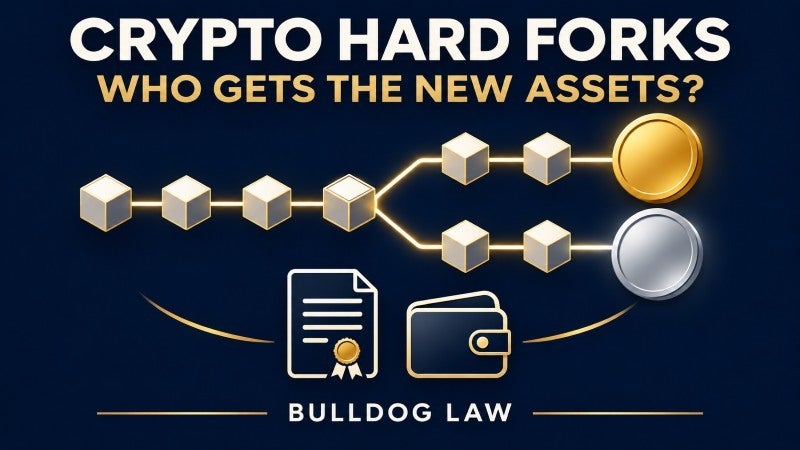
A hard fork occurs when a blockchain protocol changes in a way that can cause the network to diverge from its earlier rules. Depending on what participants support, a separate chain and a new asset may result. Not every hard fork produces a valuable new token or gives every account holder an immediately accessible balance.
In some network splits, the new chain begins with a copy of the earlier transaction history. Addresses reflected on the original ledger at a specified point may also be reflected on the new chain. That technical record, however, does not by itself answer which party has a contractual right to an asset held through an intermediary.
A fork differs from an airdrop distributing tokens, although a distribution can sometimes follow a fork. It also differs from a token migration, where holders may be asked to exchange or move assets under a separate process.
Start With the Contract and the Relevant Date
Review the version of the agreement that applied when the fork and the disputed transaction occurred. Look for provisions addressing:
- Forked assets, protocol changes, and the platform's discretion to support a chain.
- Whether the customer retains ownership or has a contractual claim against the platform.
- Rights to additional assets, distributions, proceeds, or benefits associated with the original cryptocurrency.
- When a sale settles or a loan transfer takes effect.
- Notice, withdrawal procedures, fees, and limits on liability.
Do not assume that a reference to “all benefits” necessarily resolves the question. Its meaning depends on the complete agreement and the nature of the asset. The platform's published fork policy and any notices to customers may also be relevant, including whether they formed part of the agreement.
Crypto Hard Fork Entitlement for Assets Held in Custody
When an exchange or custodian holds cryptocurrency for a customer, the custodian may control the infrastructure needed to interact with the new chain. Its agreement may address whether it will credit, distribute, sell, or decline to support forked assets.
In Archer v. Coinbase, Inc., a California Court of Appeal considered a customer's claims concerning Bitcoin Gold after Coinbase declined to support that fork. The court affirmed judgment for Coinbase on the record before it, including because the customer did not establish an agreement requiring Coinbase to provide the asset. The decision does not mean every custodian has identical terms or that every fork dispute must have the same outcome.
A customer reviewing rights against a crypto custodian should ask whether the agreement promised support, permitted discretion, or set conditions for withdrawal. A platform might support trading, permit withdrawal only, or decline to provide access altogether.
Control of private keys is important to practical access, but key control alone does not settle the parties' legal rights. Avoid attempting to export or use keys without understanding the applicable security risks and authorization.
What If the Cryptocurrency Was Lent or Pledged?
The answer may differ depending on whether the owner lent the assets, pledged them as collateral, or placed them with a custodian without authorizing a transfer.
For a loan of cryptocurrency, examine whether the agreement transferred title or required repayment of equivalent units, and whether it allocates forked assets or similar benefits. A lender who transferred tokens may have a contractual claim against the borrower rather than direct control over the wallet holding the original assets.
For a secured loan, the Bitcoin loan documents may specify who can access forked assets and whether they become collateral. The original collateral description, custody arrangement, and any amendments need to be read together.
For example, a borrower pledges Bitcoin before a split. The wallet provider controls access, while the lender claims that the loan agreement covers resulting assets. The borrower disputes that reading. The analysis may involve the pledge terms and the separate custody arrangements for pledged crypto, rather than a rule based solely on whose name appears on the account.
Who Has a Claim When Crypto Was Sold Around the Split?
Disputes can arise when the parties agree on a sale before a fork but settlement or delivery occurs afterward. The date of the trade, the transfer time, and the fork's relevant block height may all matter.
A contract might expressly allocate forked assets to the seller or buyer. If it does not, the parties may disagree about when ownership or the contractual right to the original asset passed. A transaction visible on-chain provides useful evidence, but the wallet receiving the asset may be a platform's pooled wallet rather than the buyer's personal address.
For over-the-counter crypto transactions, preserve the trade confirmation, messages, settlement instructions, and transfer records. Those documents can help establish what the parties intended and whether delivery was completed before the relevant point.
Platform Support and Practical Access
A person may believe an agreement gives them the benefit of a fork but still face technical obstacles. The custodian may need to implement new software, review network security, or decide whether to offer withdrawals. A new chain may also lack sufficient security or reliable liquidity.
Ask the platform for its policy and a written explanation of whether it:
- Recognizes the new asset or credits customer accounts.
- Permits withdrawals, trading, or only a limited recovery process.
- Requires action by a deadline or charges a recovery fee.
- Has changed its position since the fork.
Support for an original asset does not necessarily mean support for a new branch. Similar practical questions arise when a platform changes which assets it supports in an exchange delisting, although a fork creates its own contractual and technical issues.
Do not assume a quoted market price establishes the recoverable value of an inaccessible asset. Availability, trading volume, timing, fees, and the specific alleged breach may all matter.
Evidence and Options for Resolving a Dispute
Preserve account statements from before and after the fork, wallet addresses, transaction hashes, platform notices, and the relevant agreements. Also retain records showing when the asset became accessible and any attempts to request support or withdrawal.
Blockchain evidence can help establish timing and movement, while account records and communications help connect those transactions to the parties and their agreement.
Before filing a case, review the contract's dispute provisions. Some agreements contain crypto arbitration clauses, notice requirements, or governing-law terms. Their applicability and enforceability require review.
A negotiated outcome may address access, a transfer, or monetary compensation. If the parties settle in digital assets, a cryptocurrency settlement agreement should identify the token, network, transfer procedure, and release terms.
Frequently Asked Questions
Does holding the original asset guarantee I receive the forked asset?
No. The fork's mechanics, the account arrangement, and the applicable agreement all require review.
Can an exchange refuse to support a fork?
That may be permitted under the agreement and applicable law. The answer depends on the platform's obligations and the facts, including any promises made to customers.
What if both parties claim the new asset?
Compare their agreements, the timing of the split and transactions, and the evidence of control and access. An attorney can assess available claims and resolution procedures.
Crypto Hard Fork Entitlement Lawyers in California
Bulldog Law helps clients review custody, loan, and sale agreements involving disputed digital assets. A focused review of the contract, platform policy, and transaction history can clarify the available options. Taking steps toward cryptocurrency litigation preparation can also preserve evidence while the parties evaluate a resolution.