
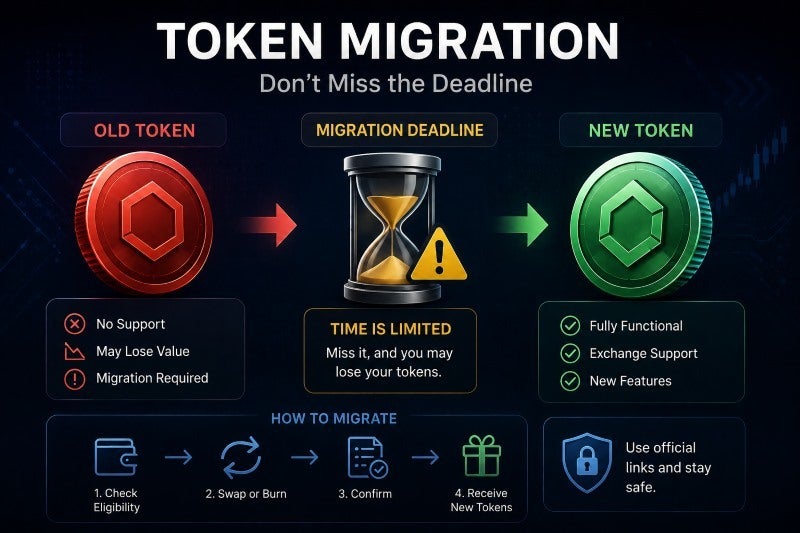
Token Migration Disputes can arise when a crypto project replaces an old token with a new one and holders miss the swap, burn, claim, or upgrade deadline. A holder may still own the original token on-chain, but the project, exchange, or market may treat the old token as unsupported, worthless, frozen, or ineligible for conversion. In California, these disputes usually turn on the migration notice, token terms, exchange support, smart contract mechanics, investor disclosures, and whether the project gave holders a fair and practical chance to migrate.
A missed token migration deadline does not automatically mean the holder has no legal rights. It also does not automatically mean the project must reopen the migration. The legal analysis is fact-specific. A holder may have stronger arguments if the project made unclear announcements, changed deadlines, failed to support exchange-held tokens, concealed technical problems, or treated similarly situated holders differently.
Why Token Migration Disputes happen
Token Migration Disputes often happen because blockchain upgrades move faster than ordinary investors can follow. A project may announce a token swap after a smart contract bug, protocol upgrade, rebrand, merger, bridge failure, exchange listing change, exploit, or tokenomics redesign. Some holders see the announcement immediately. Others miss it because they hold tokens on an exchange, in cold storage, through a custodian, or in a wallet they rarely check.
Common disputes include:
- A holder misses the claim deadline and is told old tokens can no longer be swapped.
- An exchange supports the migration for some users but not others.
- The project changes the swap ratio, deadline, or eligibility rules.
- Old tokens remain visible in wallets but have little or no trading market.
- A migration contract fails, pauses, or rejects valid claims.
- Investors allege the project used the migration to dilute holders or favor insiders.
- Scammers create fake migration portals that drain wallets.
When a migration follows a failed launch, delayed token generation event, or changed tokenomics, token sale refund demand issues may overlap with holder claims because the migration can change what investors originally agreed to receive.
Token Migration Disputes and notice to holders
Token Migration Disputes often begin with notice. A project may argue that it announced the migration through its website, X account, Discord, Telegram, Medium post, governance forum, exchange announcement, or wallet interface. Holders may argue that the notice was scattered, confusing, too short, or not reasonably designed to reach people who held tokens through exchanges or custodians.
Important notice questions include:
- Where was the migration announced?
- How long was the migration window open?
- Were old-token holders directly notified when possible?
- Did exchanges or custodians receive instructions?
- Were deadlines, swap ratios, and consequences clearly disclosed?
- Did the project change the deadline or claim process after launch?
- Were warnings given about fake migration links and wallet drainers?
The strength of a holder's claim may depend on whether the project's notice was clear enough for a reasonable holder to understand what action was required. A project should preserve migration announcements, exchange communications, claim portal versions, support tickets, governance posts, and internal records explaining how the notice plan was chosen.
Exchange support and old-token value after migration
Exchange support can decide whether a migration succeeds for ordinary holders. Some exchanges automatically convert old tokens to new tokens. Others require users to withdraw before a deadline. Some suspend deposits, trading, or withdrawals during the migration. If an exchange does not support the upgrade, holders may be left with old tokens they cannot easily swap or sell.
If a trading venue removes the old token or refuses to support the new one, exchange delisting legal risks may affect notice, liquidity, investor claims, and project disclosure duties. If the exchange freezes accounts during the migration, crypto exchange account freeze disputes may affect whether a holder had a practical chance to withdraw, claim, or swap before the deadline.
Custody structure matters too. A holder who keeps tokens in self-custody may be able to interact directly with a migration contract. A holder whose tokens are on a centralized exchange may depend on the exchange to act. crypto custody disputes with exchanges and wallet providers can become relevant when the holder needs records, account access, or proof that tokens were held during the migration window.
Smart contract changes, burns, and upgrade mechanics
Token migrations can be technically simple or highly complex. A project may require holders to burn old tokens, approve a smart contract, claim new tokens, bridge assets, sign a message, or complete KYC before receiving the new asset. Each step creates possible disputes.
Potential technical problems include:
- The migration contract rejects valid wallet addresses.
- The burn transaction succeeds but the new token is not delivered.
- The claim portal closes earlier than announced.
- A contract upgrade changes balances, allowances, or vesting schedules.
- Gas fees or network congestion prevent timely claims.
- A bridge or wrapped asset system fails during the migration.
- A holder signs a malicious approval on a fake migration page.
If the migration was caused by a code vulnerability or failed upgrade, smart contract audit dispute issues may affect whether the loss was caused by a missed bug, inadequate review, post-audit code changes, or poor user disclosures. If the migration involved cross-chain assets, bridge exploit claims after frozen assets may also be relevant when old or wrapped tokens cannot be redeemed as expected.
Airdrops, claim portals, and eligibility disputes
Some projects structure a migration as an airdrop or claim process rather than a one-for-one automatic swap. That can create eligibility disputes. A holder may be excluded because the snapshot date was earlier than expected, the wallet was on an unsupported chain, the holder used an exchange wallet, or the project treated the wallet as suspicious.
If the migration is handled as a distribution, token airdrop tax and securities risks may affect how the project describes the new token and how holders preserve claim records. If the project denies migration eligibility based on wallet clustering, bot activity, or multiple-wallet use, airdrop farming and Sybil accusation disputes may help frame the evidence needed to challenge or defend the exclusion.
Projects should avoid using vague eligibility language if the migration affects valuable property rights. Holders should save screenshots of eligibility pages, wallet snapshots, failed claim attempts, and any appeal responses.
Investor complaints and disclosure duties
Investor complaints often arise when the migration appears to reduce value, dilute holders, favor insiders, or change the economic bargain. A project may argue that migration was necessary for security, scalability, exchange support, compliance, or product development. Holders may argue that the migration was used to avoid obligations or reset the project on unfair terms.
Disclosure issues may include:
- Whether the project warned holders that missing the deadline could make old tokens unsupported.
- Whether insiders received private notice or extended migration rights.
- Whether the project disclosed security, listing, or liquidity problems before the migration.
- Whether old-token value was accurately described after the deadline.
- Whether the migration changed supply, vesting, governance, or redemption rights.
If insiders traded before a migration announcement, deadline extension, delisting, or exchange support decision, crypto insider trading risk may become part of the evidence. If the migration affected securities-like token rights, crypto securities compliance for token issuers may also affect the project's disclosure and investor-claim analysis.
Bankruptcy, platform failures, and inaccessible migrated tokens
Migration disputes can become worse if an exchange, custodian, or project treasury becomes insolvent. A holder may have owned old tokens before the migration but may not know whether the exchange claimed, swapped, held, lost, or commingled the new tokens. Account records, platform terms, and bankruptcy orders may determine what the holder can recover.
If a platform failure prevents holders from receiving migrated tokens, customer funds in crypto exchange bankruptcy may affect ownership rights, claim filing, asset tracing, and recovery timing. Holders should preserve account statements from before and after the migration, exchange notices, proof of balances, and support communications.
Evidence to preserve in Token Migration Disputes
Token Migration Disputes are evidence-heavy. The key issue is usually not only whether the holder missed a deadline, but why the deadline was missed and whether the project, exchange, or custodian handled the process fairly.
- Migration announcements, blog posts, governance proposals, Discord posts, and X updates.
- Claim portal screenshots, eligibility results, failed transaction records, and appeal messages.
- Wallet addresses, transaction hashes, token balances, snapshot records, and old-token holdings.
- Exchange notices, account statements, deposit records, withdrawal attempts, and support tickets.
- Smart contract addresses, burn records, approvals, migration contract transactions, and bridge records.
- Tokenomics versions, whitepapers, investor updates, and statements about old-token value.
- Internal communications, if available, showing notice planning, insider knowledge, or deadline decisions.
If a dispute goes to court or arbitration, blockchain evidence in court may affect authentication, wallet attribution, expert testimony, and whether transaction records prove what the holder claims.
Where token migration disputes may be handled in California
Token migration disputes may be handled through a project appeal process, exchange support process, private negotiation, arbitration, California Superior Court, federal court, bankruptcy court, or regulatory complaints depending on the facts. Claims may involve breach of contract, fraud, negligent misrepresentation, unfair competition, conversion, securities issues, custody disputes, or requests for declaratory relief.
California Superior Court may be available when jurisdiction and venue are proper. Federal court may be involved if the dispute includes federal securities claims, bankruptcy, diversity jurisdiction, or cross-border defendants. Some token terms, exchange terms, or claim portals may require arbitration or identify a specific forum. Courts, agencies, and arbitration providers are neutral institutions and are not affiliated with Bulldog Law.
Emergency relief may be considered if a migration deadline is approaching, assets are about to be burned, exchange withdrawals are closing, or a project is distributing recovery tokens in a way that may exclude valid holders. The available remedy depends on the contract, evidence, jurisdiction, and whether a court can issue a practical order.
Practical steps after missing a token migration deadline
A holder who misses a migration deadline should avoid panic transfers or unofficial claim links. Practical steps may include:
- Save the old-token wallet records and exchange account records.
- Identify the official migration announcement, deadline, and claim process.
- Check whether the project, exchange, or custodian offered an appeal or late-claim process.
- Preserve screenshots of failed claims, wallet balances, and support requests.
- Do not approve transactions through unofficial migration portals.
- Compare project statements about old-token value with trading and liquidity records.
- Evaluate whether the value at issue justifies a demand letter, arbitration, litigation, or regulatory complaint.
Projects should also respond carefully. Clear notices, documented deadline decisions, accurate old-token disclosures, and consistent appeal procedures may reduce the risk that a migration becomes a larger investor dispute.
Token Migration Disputes lawyers in California
Token Migration Disputes require legal analysis that connects migration notices, exchange support, old-token value, smart contract changes, missed deadlines, custody records, and investor complaints. A holder may need to prove that they owned eligible tokens and that the project, exchange, or custodian handled the migration unfairly or inconsistently.
Bulldog Law helps California clients evaluate token migration disputes involving missed swaps, burn deadlines, smart contract upgrades, exchange support failures, old-token value, claim denials, custody records, and investor complaints. Early legal review may help preserve evidence, identify responsible parties, and evaluate practical options before migration records disappear or appeal windows close.