
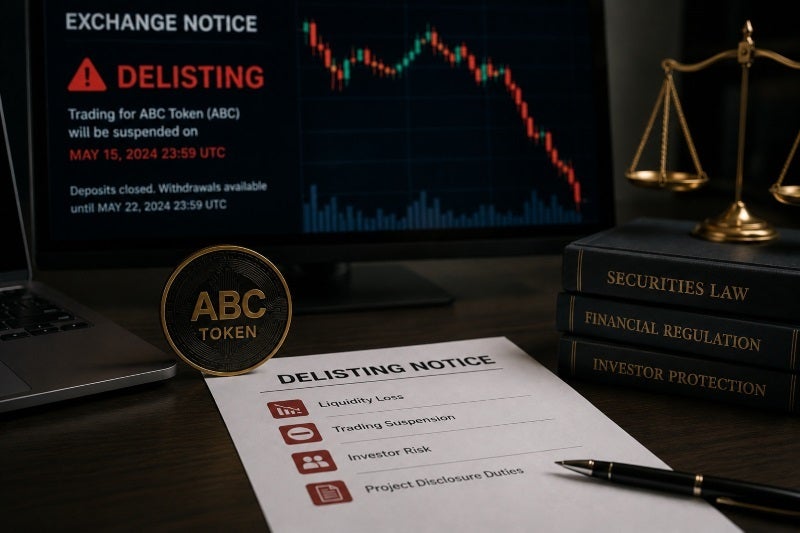
Exchange Delistings can cause sudden price drops, liquidity problems, investor panic, and disputes over what token projects, exchanges, founders, promoters, and insiders knew before trading stopped. A delisting does not automatically prove wrongdoing, but it can become important evidence in claims involving disclosure failures, market manipulation, contract rights, custody problems, and investor losses.
For California token projects and investors, the key questions are practical: why was the token delisted, who received notice, whether the project disclosed material risks, whether insiders traded before the announcement, and whether investors can still withdraw, sell, bridge, or custody their assets. The answers usually depend on the exchange's terms, listing agreement, project disclosures, trading history, wallet records, public statements, and communications between the project and the exchange.
Why Exchange Delistings happen
Exchange Delistings can happen for many reasons. An exchange may remove a token because of low trading volume, liquidity concerns, regulatory risk, unsupported network upgrades, smart contract vulnerabilities, sanctions concerns, suspected manipulation, project inactivity, inaccurate listing information, token migration problems, or internal business decisions.
A delisting may involve one trading pair, one jurisdiction, or the entire token. Sometimes the exchange only stops trading while allowing withdrawals for a limited time. In other situations, trading, deposits, and withdrawals may be restricted together. Investors should read the exact exchange notice because the difference between trading suspension and withdrawal suspension can be important.
For token projects, a delisting can damage reputation, reduce market access, trigger investor claims, affect treasury value, and create pressure from founders, advisors, employees, and tokenholders. For investors, the immediate harm is often liquidity loss. A token that was easy to sell yesterday may become difficult or expensive to trade once major markets remove it.
Notice obligations and exchange terms
There is no single rule that every crypto exchange must give every investor advance notice before every delisting. Notice duties often depend on the exchange's user agreement, listing agreement, applicable law, jurisdiction, and the reason for removal. A centralized exchange may reserve broad discretion to suspend trading, halt deposits, restrict withdrawals, or delist assets. That does not mean every decision is immune from challenge, but it does mean the written terms matter.
Investors should preserve the exchange notice, account messages, email alerts, help-center posts, trading logs, withdrawal records, and screenshots showing deadlines. If the account is frozen or withdrawals are blocked, exchange account freeze rights may become part of the dispute, especially when investors cannot move assets before a delisting deadline.
Project teams should also preserve listing communications. If the exchange warned the project about compliance problems, liquidity concerns, inaccurate disclosures, or suspicious trading, those communications may become evidence in later investor claims. If the exchange gave no meaningful explanation, the project may need to evaluate whether the listing agreement provides appeal rights, notice rights, or dispute procedures.
Project disclosure duties after a delisting threat
A token project should be careful when it learns that a major exchange may delist its token. Public statements should be accurate, complete enough to avoid misleading investors, and consistent with what the team actually knows. Overconfident statements such as “there is no problem” or “the delisting will not happen” can create risk if internal communications show serious concerns.
Disclosure duties depend on the facts and legal context. A token project may face claims if it makes misleading statements about exchange support, liquidity, compliance reviews, trading volume, market-making arrangements, token unlocks, insider sales, or the project's ability to cure listing problems. If the token was sold in a transaction that may involve securities laws, disclosure obligations may be more significant.
Airdrops can also create disclosure and tax complications. If a project uses an airdrop to maintain market interest after a delisting, or to compensate holders for lost liquidity, token airdrop compliance risks should be evaluated before the project announces or distributes replacement assets.
Insider trading, advance notice, and selective disclosure
Delisting news can be market-moving. If founders, employees, advisors, market makers, investors, or exchange contacts learn about a delisting before the public, trading on that information may create legal risk depending on the facts. The risk increases when insiders sell before the announcement, transfer tokens to new wallets, hedge exposure, or privately warn favored investors while the public remains unaware.
Not every pre-announcement trade proves misconduct. People may trade for unrelated reasons. But timing, wallet attribution, private messages, and transaction size can matter. If a project insider sells shortly after receiving a warning from an exchange, investors may argue that the trade was unfair or deceptive.
Projects should document who knew about a possible delisting, when they learned it, what restrictions were placed on trading, and how the information was disclosed. crypto insider trading risk can be significant when confidential exchange information, listing decisions, or tokenomics changes affect market value.
Exchange Delistings and investor claims
Exchange Delistings may lead investors to consider claims against token issuers, founders, promoters, exchanges, market makers, or other parties. A claim is not automatic just because the token lost value. Investors generally need evidence of a legal wrong, such as misrepresentation, omission, manipulation, breach of contract, fraud, unfair business practices, or custody failure.
Potential investor claims may involve:
- False statements that a listing was secure or guaranteed.
- Failure to disclose a known delisting threat.
- Insider sales before a delisting announcement.
- Wash trading or artificial volume used to obtain or maintain a listing.
- Failure to allow withdrawals after trading was suspended.
- Misuse of treasury funds during a liquidity crisis.
- Failure to disclose token unlocks, market-maker arrangements, or control over supply.
If the delisting follows allegations that the project was a fraud or abandonment scheme, rug pull legal claims against founders and promoters may be relevant. If the issue involves coordinated hype, artificial demand, and later selling, crypto pump-and-dump enforcement exposure may also need to be evaluated.
Meme coins, promotions, and market manipulation concerns
Delistings often affect meme coins and highly promoted tokens because those assets can depend heavily on attention, exchange access, and social media momentum. A meme coin may have little traditional business activity, so liquidity loss can be especially damaging when an exchange removes a major trading pair.
Legal risk increases when promoters make exaggerated claims, hide compensation, coordinate pump campaigns, use bots, or suggest that exchange listings are guaranteed. A sudden delisting may cause investors to review earlier posts, influencer statements, Discord messages, Telegram groups, and wallet activity. meme coin securities and manipulation risks can become important when public hype does not match project realities.
Some delisting disputes may also involve wire fraud theories if prosecutors allege that interstate communications, online platforms, or electronic transfers were used to carry out a scheme. federal crypto wire fraud cases often depend on communications, intent, investor representations, transaction records, and the flow of funds.
Custody, withdrawals, and exchange insolvency
A delisting is more dangerous when investors cannot withdraw their tokens. If an exchange suspends trading but allows withdrawals, investors may be able to transfer assets to self-custody or another platform. If withdrawals are restricted, the dispute may involve custody rights, platform terms, compliance holds, technical issues, or insolvency concerns.
Investors should not assume that assets listed in an account dashboard are immediately recoverable. The exchange may control private keys, apply withdrawal limits, conduct compliance reviews, pause chains, or restrict certain jurisdictions. crypto custody disputes with exchanges and wallet providers may determine whether an investor can demand access, records, or return of assets.
If the exchange is financially distressed, the delisting may be part of a larger liquidity or bankruptcy problem. customer funds in crypto exchange bankruptcy may be treated differently depending on the platform terms, custody structure, bankruptcy court orders, and account records.
Tax and compensation issues after a token is delisted
A delisting may affect tax reporting, but it does not automatically create a deductible loss. Investors may need to determine whether they sold, exchanged, abandoned, or still hold the asset. A token that becomes illiquid may still have some value, and tax treatment can depend on facts, timing, records, and applicable IRS rules.
Investors should preserve purchase records, sale records, exchange notices, withdrawal attempts, wallet balances, pricing data, and any evidence showing whether the token became worthless or inaccessible. For employees, advisors, or contractors who were paid in a token that later delisted, valuation and income reporting can become difficult. digital asset compensation risks may involve whether the token was wages, contractor pay, bonus compensation, an investment, or a disputed grant.
Delistings in divorce, support, and hidden asset disputes
Delistings can also matter in family law and support disputes. A spouse may claim that a token is now nearly worthless because it was delisted, while the other spouse may argue that the holder sold before the announcement, moved assets to another exchange, or still controls valuable tokens in self-custody.
Valuation should be tied to specific dates, records, and market conditions. crypto valuation in divorce cases may require trading history, exchange records, wallet tracing, and expert analysis. If a party suspects that delisted tokens or replacement assets were hidden, hidden cryptocurrency discovery strategies may help identify wallets, transfers, exchange accounts, and undisclosed holdings.
Where delisting disputes may be handled in California
Delisting disputes may be handled in different forums depending on the claim. Investor lawsuits, founder disputes, fraud claims, contract claims, unfair competition claims, or custody disputes may be filed in California Superior Court when jurisdiction and venue are proper. Some exchange user agreements require arbitration, specify a forum, or limit claims, so the contract should be reviewed early.
Federal court may be involved when the dispute includes federal securities claims, commodities claims, bankruptcy, wire fraud allegations, diversity jurisdiction, or federal agency action. Regulatory issues may involve agencies such as the SEC, CFTC, IRS, Treasury Department, or state financial regulators. These institutions are neutral public agencies and are not affiliated with Bulldog Law.
Emergency relief may be considered if assets are about to be moved, withdrawals are closing, evidence may disappear, or a project treasury is at risk. Depending on the facts, parties may seek a temporary restraining order, preliminary injunction, preservation order, accounting, expedited discovery, or other relief.
Records to preserve after a sudden delisting
Delisting disputes are evidence-heavy. Investors and projects should preserve records before exchange pages change, announcements disappear, chats are deleted, or wallet activity becomes harder to reconstruct.
- Exchange announcements, emails, account alerts, and help-center notices.
- Trading records, order history, deposit records, withdrawal records, and failed transaction logs.
- Wallet addresses, transaction hashes, bridge records, and custody records.
- Project announcements, investor updates, whitepapers, roadmaps, and tokenomics documents.
- Discord, Telegram, Slack, X, email, and direct messages about listing status.
- Internal project communications about exchange concerns or regulatory risk.
- Market-maker agreements, liquidity arrangements, treasury records, and insider trading policies.
- Valuation evidence before and after the delisting announcement.
A clear timeline can help separate ordinary market loss from potentially actionable misconduct. The timeline should show what was known, who knew it, when the market learned it, how assets moved, and what damages followed.
Exchange Delistings lawyers in California
Exchange Delistings can create legal risk for token projects, investors, founders, promoters, insiders, and exchanges. The key issues often include notice, liquidity loss, disclosure duties, insider trading concerns, custody access, tax records, and investor claims.
Bulldog Law helps California clients evaluate disputes involving sudden token delistings, trading suspensions, withdrawal problems, project disclosures, market manipulation claims, tokenholder losses, and exchange-related asset disputes. Early legal review may help preserve records, identify responsible parties, and evaluate practical options before liquidity disappears or claims become harder to prove.