
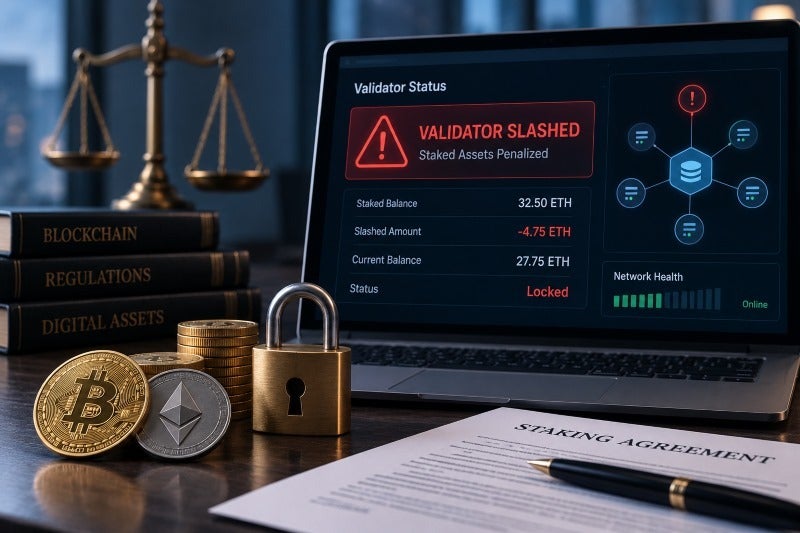
Validator Slashing Disputes can create major losses when staked crypto is penalized, locked, frozen, or reduced because of validator downtime, double-signing, key mistakes, software failures, or platform mismanagement. For California investors, validators, staking providers, DAO members, and Web3 businesses, the main question is whether the loss was a known protocol risk or whether a staking platform, validator operator, custodian, founder, or service provider may be legally responsible.
Slashing is not always wrongful. In many proof-of-stake systems, it is a built-in penalty designed to protect the network. But when users stake through an exchange, liquid staking provider, pooled validator, or third-party operator, legal disputes may arise over disclosures, custody, contract terms, private key control, reimbursement promises, tax records, and account access.
What validator slashing disputes mean
A validator slashing dispute usually begins when a blockchain network penalizes a validator and the user's staked assets are reduced or locked. The penalty may be triggered by conduct such as signing conflicting blocks, being offline for too long, running duplicate validator instances, using outdated software, mishandling validator keys, or failing to maintain proper infrastructure.
For a solo validator, the financial risk may fall directly on the person or business operating the node. For a delegator or customer using a staking platform, the issue is more complicated. The user may not control the validator, may not see technical logs, and may not know whether the loss came from a normal network rule or preventable operational failure.
Liquid staking can add another layer. A user may hold a receipt token tied to underlying staked assets, and the practical loss may appear as reduced redemption value, delayed withdrawals, depegging, or lower rewards. Investors and platforms should understand liquid staking legal risks before assuming that a liquid staking token carries the same risk profile as holding the underlying asset directly.
When validator slashing disputes may be hard to challenge
Some validator slashing losses may be difficult to challenge. If the protocol rules were clear, the user accepted slashing risk, the platform accurately disclosed the risk, and the penalty resulted from ordinary proof-of-stake mechanics, the case may look more like a known investment or network risk than a legal claim.
Terms of service can also matter. Staking platforms often include risk disclosures, liability limitations, arbitration clauses, class action waivers, custody terms, withdrawal restrictions, and language stating that rewards are not guaranteed. These provisions do not automatically end every dispute, but they can affect leverage, forum, damages, and strategy.
The key distinction is often between protocol risk and provider risk. Protocol risk is the known possibility that a blockchain network may penalize a validator. Provider risk involves human or company conduct, such as poor infrastructure, misleading marketing, weak custody controls, undisclosed slashing history, or failure to follow promised procedures. Businesses offering staking products should review cryptocurrency business compliance in California before customer losses lead to complaints or litigation.
When a staking provider may be legally responsible
A staking provider, exchange, validator operator, or custodian may face legal exposure when the facts show more than an ordinary protocol penalty. Possible claims may include breach of contract, negligent misrepresentation, fraud, unfair business practices, breach of custody obligations, negligence, or failure to disclose material risks.
Warning signs may include:
- The platform advertised staking as safe, simple, or low-risk without clearly explaining slashing.
- The provider promised slashing protection, insurance, reimbursement, or professional monitoring but refused to honor it.
- The user cannot obtain validator logs, account records, incident reports, or withdrawal history.
- The provider changed terms after the loss or relied on vague disclosures.
- The loss appears tied to duplicate validator instances, poor key management, missed updates, or repeated downtime.
- The user's account was frozen or withdrawals were blocked while assets continued to lose value.
When a platform controls user assets, the dispute may also involve custody duties. A customer who cannot withdraw, verify, or trace staked assets may be facing issues similar to crypto custody disputes. If the platform restricts access during or after the slashing event, crypto exchange account freeze issues may also become part of the legal analysis.
Validator slashing disputes and key control problems
Validator Slashing Disputes often turn on control. Who controlled the validator signing keys? Who selected the validator software? Who monitored uptime? Who had authority to update systems, migrate keys, restart nodes, or change withdrawal credentials? If the answer is unclear, the dispute may involve governance and authority, not just blockchain mechanics.
Private key control can be especially risky in businesses, DAOs, and founder-led projects. One founder, employee, contractor, or engineer may control validator access without clear written authority or backup procedures. If that person leaves, makes a technical mistake, refuses to cooperate, or acts outside company approval, staked assets may be penalized or locked.
Those facts often overlap with crypto private key disputes. The legal question may be whether the person controlling access acted within authority, followed required procedures, and protected the assets in a commercially reasonable way.
Smart contract terms may also affect the dispute. A staking contract, liquid staking protocol, or validator service agreement may automatically enforce penalties, lockups, or withdrawal delays. Automated code does not always eliminate legal responsibility, but it may limit practical remedies. Companies using automated staking systems should evaluate smart contract legal issues before assuming code alone defines every right and obligation.
DAO, founder, and token governance disputes
Validator slashing can trigger internal conflict when staked assets belong to a DAO, startup, investment group, or token project. Members may disagree over who approved the staking strategy, whether the validator operator was qualified, whether the risk was disclosed, and who must absorb the loss.
DAO governance records can become important evidence. Proposals, votes, multisig approvals, delegate statements, treasury records, and Discord or forum discussions may show whether participants approved the staking decision and understood slashing risk. These issues are closely connected to DAO legal disputes involving member liability, votes, and treasury control.
Founder disputes may also arise when one person controlled wallets, validator infrastructure, or project accounts. If the business relationship breaks down after staked assets are penalized or locked, the matter may resemble crypto business breakup disputes, especially where wallet control, token ownership, and project IP are also contested.
Projects can reduce risk by clearly documenting who may stake assets, who selects validators, who controls keys, how rewards are allocated, how slashing losses are handled, and what approval is required before treasury assets are locked. Strong governance procedures can also help protect token governance rights when a loss affects multiple stakeholders.
Securities, compliance, and disclosure risks
Staking products may raise securities, commodities, consumer protection, and compliance questions depending on how they are structured and marketed. A customer staking directly through a protocol may be in a different position from a customer who transfers assets to a company that pools funds, controls validators, advertises yield, and manages technical operations.
Platforms should be careful with statements about safety, liquidity, guaranteed rewards, insurance, or reimbursement. If marketing materials make staking sound risk-free while the fine print shifts slashing risk to the user, that inconsistency may become important in a dispute.
Token issuers, exchanges, and developers offering staking or yield products should evaluate cryptocurrency securities compliance before customer losses lead to investor complaints, regulatory scrutiny, or private claims. Validator operators may also need to understand Ethereum validator legal defense issues when infrastructure, neutrality, and MEV-related conduct are questioned.
Where validator slashing disputes may be handled
Validator slashing disputes may be handled through platform escalation, arbitration, mediation, California state court, federal court, or regulatory complaints, depending on the parties and governing documents. A platform's terms may select a forum, require private arbitration, limit damages, or choose a governing law. Those clauses should be reviewed before a claim is filed.
Jurisdiction can be difficult because staking systems are often borderless. The customer may be in California, the validator may operate overseas, the protocol may be decentralized, and the platform may be incorporated in another state or country. That does not automatically prevent legal action, but it can affect service of process, discovery, enforcement, and cost.
These questions often overlap with digital asset jurisdiction issues, especially when the dispute involves where assets are considered located and who controls them. If the provider, validator, or exchange is outside the United States, cross-border crypto dispute challenges may shape whether litigation, arbitration, exchange escalation, or negotiation is the most practical path.
Evidence to preserve after a validator slashing loss
Evidence preservation should begin quickly. Blockchain data may remain public, but platform dashboards, support messages, staking terms, validator logs, and governance discussions can change or disappear. Users and businesses should preserve:
- Account statements showing deposits, staking positions, rewards, penalties, and withdrawals.
- Validator public keys, withdrawal addresses, transaction hashes, block data, and slashing event records.
- Terms of service, staking agreements, risk disclosures, and marketing materials.
- Emails, support tickets, chat messages, governance posts, and incident updates.
- Screenshots showing balances, lockups, freeze notices, withdrawal errors, or reward changes.
- Infrastructure logs, uptime reports, software update records, and key migration notes.
- Internal company approvals, DAO votes, board materials, and treasury records.
- Any insurance, slashing protection, reimbursement, or service-level communications.
If the dispute involves a failed transfer, wrong wallet instruction, or withdrawal mistake, the analysis may also involve lost crypto transfer claims. The goal is to preserve enough information to show what happened, who controlled the relevant systems, and how the loss was calculated.
Practical steps before challenging a staking loss
Before challenging a staking loss, identify the exact type of harm. Was the crypto actually slashed, temporarily locked, frozen by a platform, delayed by an unbonding period, reduced by a liquid staking token depeg, or lost through a transfer error? Different causes require different strategies.
Next, review the governing documents. The staking agreement, risk disclosures, platform terms, DAO proposal, validator service contract, and custody documents may explain who bears slashing risk and what remedies are available. Users should also calculate damages carefully, including lost principal, reduced rewards, missed withdrawal opportunities, tax records, and related losses.
A legal review may help determine whether to send a demand letter, pursue arbitration, request records, preserve evidence, escalate with an exchange, evaluate regulatory reporting, or file a civil claim. For businesses, the review should also identify whether future staking agreements need stronger custody terms, clearer disclosures, insurance language, key controls, and incident response procedures.
FAQ about validator slashing disputes
Can users sue after validator slashing?
Users may be able to bring a claim if the loss was caused by breach of contract, misleading disclosure, negligent validator operations, custody failure, account freeze problems, or other legally actionable conduct. A claim is less certain when the loss was clearly disclosed as an inherent protocol risk.
Is validator slashing always permanent?
Protocol-level slashing usually reduces the staked balance under network rules, but related lockups, withdrawal delays, account freezes, and platform reviews may be separate issues. The first step is to identify whether the asset was slashed, locked, frozen, or delayed.
Who may be responsible if a validator operator made a mistake?
Responsibility may depend on the service agreement, the operator's promises, the cause of the mistake, the standard of care, and whether the customer accepted slashing risk. Logs, monitoring records, and communications are often important.
What should I do first after a staking loss?
Preserve records, save screenshots, download statements, identify transaction hashes, request a written explanation, and avoid deleting accounts or messages. Early evidence preservation can make later legal review more effective.
Validator Slashing Disputes lawyers in California
Validator Slashing Disputes require careful review of blockchain records, staking terms, custody arrangements, validator operations, key control, platform disclosures, and dispute resolution clauses. Bulldog Law helps California clients evaluate whether a staking loss was an unavoidable protocol event or the result of preventable misconduct by a platform, validator operator, custodian, founder, or business partner.
If staked crypto has been penalized, locked, frozen, or reduced after a validator incident, early legal review may help preserve evidence, identify responsible parties, and evaluate practical next steps. Bulldog Law provides guidance for digital asset users, investors, validators, Web3 companies, and businesses facing complex staking and validator disputes in California.