
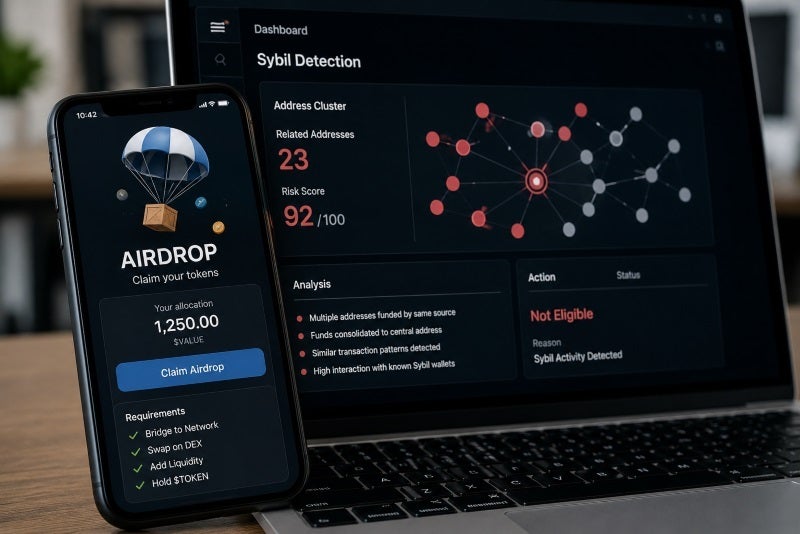
Airdrop Farming and Sybil Accusations can turn a crypto reward campaign into a serious legal dispute. A user may believe they earned tokens through legitimate activity, while a protocol may deny rewards after concluding that the user controlled multiple wallets, used bots, manipulated eligibility, or violated campaign rules. The dispute often depends on the airdrop terms, wallet clustering evidence, user conduct, protocol discretion, and how the project communicated eligibility decisions.
For California users and protocols, the main issue is usually not whether a protocol must reward every wallet that interacted with a project. The harder question is whether the project made clear promises, applied its rules fairly, preserved evidence, and avoided misleading users about rewards, exclusions, or appeal rights. Users should also consider tax, fraud, and wallet-security issues before chasing or challenging an airdrop.
Why Airdrop Farming and Sybil Accusations happen
Airdrop Farming and Sybil Accusations usually begin when a protocol rewards early users, liquidity providers, bridgers, voters, stakers, NFT holders, testnet participants, or community members. Once the community expects a token distribution, users may interact with the protocol repeatedly to improve eligibility. Some users call this participation. Protocols may call it farming, botting, or Sybil activity.
Common disputes include:
- A user is denied rewards because multiple wallets are treated as one cluster.
- A protocol says the user used bots or automated activity.
- Wallets are excluded because funds passed through the same exchange, bridge, or funding wallet.
- A user claims the protocol changed eligibility rules after the activity was completed.
- A project reserves broad discretion to exclude suspected abuse without explaining the decision.
- A user connects to a fake claim page and loses assets while trying to claim an airdrop.
- Tax records are unclear because claimed, denied, or sold tokens are not documented properly.
Airdrop farming often overlaps with DeFi activity such as swaps, bridges, lending, liquidity pools, and yield strategies. For users who farm across multiple protocols, DeFi tax reporting for swaps and liquidity pools can become important because the same transactions used to establish eligibility may also create tax records.
Airdrop Farming and Sybil Accusations in eligibility disputes
Airdrop Farming and Sybil Accusations are usually governed first by the campaign rules. Those rules may appear in a website, blog post, token terms, foundation announcement, claim portal, DAO proposal, governance forum, Discord post, or terms of service. The more vague the rules are, the more room there is for disagreement.
Protocols often reserve discretion to exclude wallets that appear abusive. That discretion may be broad, but it is not always risk-free. A project can create legal exposure if it makes specific promises, induces users to spend money or time, later changes criteria without warning, applies rules inconsistently, or publicly accuses users of fraud without adequate support.
Users should preserve the version of the eligibility rules they relied on. A screenshot after the dispute begins may not show what the rules said when the user acted. Useful records include the original campaign page, wallet history, gas fees, Discord messages, email updates, claim portal screens, and any appeal responses from the project.
Wallet clustering, bot accusations, and attribution limits
Wallet clustering is often the center of an airdrop dispute. A protocol may identify wallets as related because they share funding sources, deposit to the same exchange, interact with the same contracts in the same sequence, use similar gas patterns, bridge through the same route, or claim rewards from the same IP address or device. These signals may be useful, but they are not perfect.
A wallet cluster may suggest common control, but it may also reflect shared infrastructure, centralized exchange withdrawals, friends using the same guide, public farming strategies, copied transaction routes, VPN use, or wallets funded by the same service. A user challenging a Sybil accusation should focus on facts that explain the pattern rather than simply denying the accusation.
Evidence that may help includes:
- Exchange records showing who controlled each wallet.
- Wallet creation history, transaction purpose, and funding sources.
- Device, browser, or account records when available.
- Communications showing independent wallet ownership.
- Receipts for gas fees, bridge costs, or protocol interactions.
- Proof that excluded wallets were controlled by different people or entities.
Protocols should also preserve their analysis. If a user later claims the exclusion was arbitrary, discriminatory, or misleading, the project may need to show the criteria used, the data reviewed, and why the wallet was treated as ineligible.
Denied rewards, contract claims, and protocol discretion
A denied airdrop does not automatically create a legal claim. Many protocols draft terms that give them broad discretion to modify eligibility, exclude abuse, restrict jurisdictions, or cancel rewards. However, users may still explore claims if they can show a clear promise, reliance, measurable loss, unfair application of rules, false advertising, fraud, or breach of terms.
Possible legal theories may include breach of contract, promissory estoppel, fraud, unfair competition, false advertising, unjust enrichment, or defamation if the project publicly labels a user as a bot or fraudster. The strength of any claim depends on the exact words used by the project, the user's conduct, the rules in effect, the value of the denied tokens, and whether damages can be proven.
Protocols should be careful with public statements. Calling wallets “Sybil,” “bot,” or “fraudulent” may be defensible in some contexts, but unnecessary accusations can escalate disputes. A neutral explanation, a documented review process, and a clear appeal path may reduce risk.
Tax issues when airdrops are claimed, denied, or sold
Airdrops can create tax issues even when the legal dispute is mainly about eligibility. If a user receives tokens, later sells them, stakes them, bridges them, or uses them in DeFi, tax reporting may be required depending on the facts. If a user expected an airdrop but never received tokens, the tax treatment may be different from receiving tokens that later lost value.
Users should keep records showing the claim date, wallet address, token amount, fair market value, sale date, transaction fees, and whether the tokens were actually under the user's control. Broader planning around crypto taxes in 2026 may be important for users who receive multiple airdrops, trade rewards, or participate in complex token campaigns.
If a reward is denied, lost, stolen, or becomes worthless, users should be careful before assuming they can deduct the loss. reporting cryptocurrency losses depends on the facts, including whether the user actually owned the asset, sold it, abandoned it, or lost it through theft or another event.
Staking and restaking activities tied to airdrop eligibility can add another layer. staking rewards tax issues may arise when users receive rewards before, during, or after an airdrop campaign. If the IRS or another tax authority later questions reporting, crypto tax audit defense records may include wallet exports, exchange statements, screenshots, valuation data, and airdrop claim records.
Fraud risks around airdrop claim portals
Airdrop disputes often attract scammers. Fake claim portals, impersonator accounts, malicious smart contracts, fake exchange listings, and recovery scams can appear quickly after a popular protocol announces or denies rewards. Users who are frustrated about being excluded may be more likely to trust a fake appeal page or recovery offer.
Wallet drainers are a major risk. A user may think they are signing a harmless claim or appeal message but instead approve a malicious transaction or token allowance. malicious smart contract wallet drainer attacks can leave users with both a denied reward and stolen assets.
Scams may also involve fake customer support accounts, fake exchanges listing the reward token, or paid “airdrop recovery” services. If a user already lost funds, legal options after stolen cryptocurrency may include blockchain tracing, exchange notices, preservation letters, subpoenas, police reports, and civil claims depending on the facts. Users should also treat guaranteed recovery promises with caution because secondary crypto recovery scams often target people who have already suffered a loss.
Account compromise, wrong addresses, and fake platforms
Some users are denied rewards because the protocol says their wallet activity was suspicious. In other cases, suspicious activity may result from a compromised wallet, SIM swap, fake exchange, or wrong address transfer. These facts can change the legal analysis because the user may be dealing with theft or fraud rather than ordinary airdrop exclusion.
If an attacker took over a phone number, email account, authenticator app, exchange account, or wallet recovery process, SIM swap crypto theft liability may involve different responsible parties depending on the facts. If the user was directed to a fraudulent trading venue or claim site, fake crypto exchange scam claims may overlap with airdrop fraud and asset tracing.
Some airdrop losses are caused by user error. A reward may be sent to the wrong chain, wrong wallet, unsupported exchange deposit address, or incompatible contract address. wrong wallet address transfer disputes often depend on whether the recipient can be identified, whether an exchange controls the address, and whether the transfer can be traced or recovered.
Airdrop hype can also be used as part of broader confidence schemes. A scammer may claim that a victim needs to farm a protocol, deposit more funds, or pay taxes and fees to unlock rewards. pig butchering crypto scam recovery strategies may become relevant when the airdrop story was used to build trust and extract more money.
Where airdrop disputes may be handled in California
Airdrop farming disputes may be handled through a protocol appeal process, private negotiation, arbitration, California Superior Court, federal court, or regulatory complaints depending on the facts and terms. Some protocols include forum selection clauses, arbitration clauses, class action waivers, limitation-of-liability provisions, and discretion clauses in their terms of service.
California consumer, business, and fraud claims may be filed in California Superior Court when jurisdiction and venue are proper. Federal court may be involved if the dispute includes federal securities claims, diversity jurisdiction, computer fraud issues, sanctions issues, wire fraud allegations, or federal regulatory action. Courts and agencies are neutral public institutions and are not affiliated with Bulldog Law.
In urgent cases, a user or protocol may need to preserve wallet records, prevent transfers, notify exchanges, or seek emergency relief. The available remedy depends on the evidence, value at issue, identity of the parties, and whether the court can exercise jurisdiction over the relevant people or entities.
Evidence users and protocols should preserve
Airdrop disputes are evidence-heavy. Users should preserve records showing they met eligibility criteria, and protocols should preserve records showing why an exclusion decision was made.
Users should save:
- Campaign rules, claim pages, eligibility dashboards, and protocol announcements.
- Wallet addresses, transaction hashes, gas fee records, bridge records, and staking records.
- Appeal submissions, support tickets, Discord messages, emails, and forum posts.
- Exchange records, funding sources, tax records, and valuation screenshots.
- Proof that allegedly related wallets were controlled by separate people when that is true.
Protocols should preserve:
- Eligibility criteria, internal review policies, exclusion rules, and appeal procedures.
- Wallet clustering methodology, bot-detection data, and decision logs.
- Communications about rule changes, reward calculations, and discretionary exclusions.
- Security records for fake claim sites, impersonators, wallet drainers, and compromised domains.
- Records showing how users were notified of claim deadlines, restrictions, and denials.
Good records can help both sides. A user may prove that the exclusion was mistaken. A protocol may prove that it applied rules consistently and had a reasonable basis for excluding suspicious activity.
Practical steps when an airdrop reward is denied
When a reward is denied, users should avoid angry public accusations or rushed wallet approvals. A better first response is to preserve evidence and understand the protocol's stated reason.
- Save the claim denial screen and eligibility page.
- Download wallet history and identify the transactions that supported eligibility.
- Review the airdrop terms, claim deadline, exclusion language, and appeal process.
- Ask for a written explanation if the protocol offers support or review.
- Do not connect your wallet to unofficial appeal pages or recovery links.
- Preserve tax records if tokens were claimed, sold, staked, or bridged.
- Evaluate whether the value at issue justifies legal action.
Protocols should also respond carefully. A clear review process, accurate communications, and documented decision-making can reduce the risk that Sybil filtering becomes a broader dispute over unfair treatment, misleading promises, or arbitrary denial of rewards.
Airdrop Farming and Sybil Accusations lawyers in California
Airdrop Farming and Sybil Accusations can involve eligibility rules, wallet clustering, bot claims, denied rewards, protocol discretion, tax records, and fraud risks. These disputes often require both technical evidence and legal analysis.
Bulldog Law helps California clients evaluate disputes involving airdrop exclusions, Sybil allegations, wallet attribution, denied rewards, fake claim portals, tax records, wallet drainers, and protocol discretion. Early legal review may help preserve evidence, assess practical options, and avoid mistakes that make a disputed airdrop harder to resolve.