
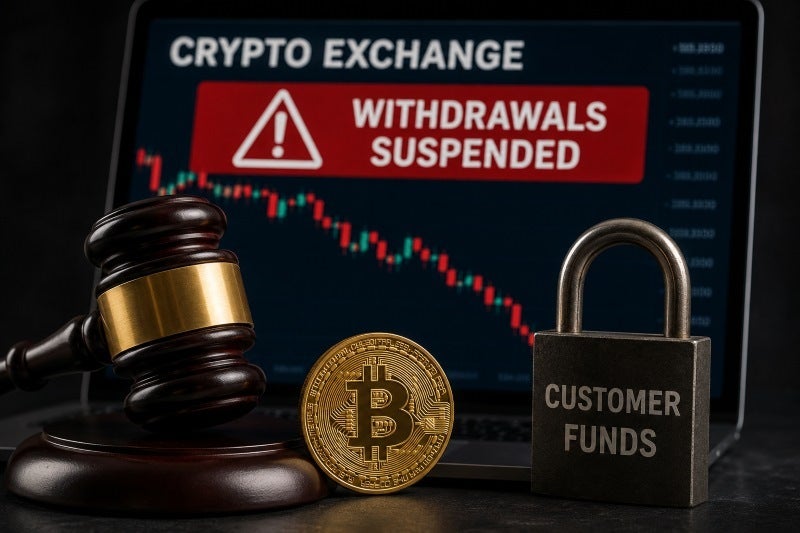
Crypto Exchange Bankruptcy usually begins with the same frightening sequence for customers: withdrawals stop, support tickets go unanswered, account balances remain visible on screen, and the company announces a restructuring, liquidation, receivership, or court-supervised process. The most important question is whether the customer still owns specific crypto assets or whether the customer has only a claim against the failed exchange.
There is no single answer for every exchange. Customer recovery depends on the platform's terms of service, how assets were held, whether the exchange commingled or lent customer assets, whether fiat funds were segregated, whether the customer used an “earn” or staking product, whether fraud occurred, and what the bankruptcy court approves. A customer with coins in a true custody account may be in a different legal position from a customer who transferred assets into a yield program.
Crypto Exchange Bankruptcy and the immediate withdrawal freeze
When a crypto exchange files for bankruptcy, customer withdrawals usually stop because the automatic stay and court-supervised process take control of claims against the debtor. This can feel unfair because the customer may still see a balance inside the app, but the legal system may treat that balance as a claim to be administered through the bankruptcy case.
Customers should not assume that a displayed wallet balance means the exchange still holds the exact tokens. In many failed platform cases, customer assets may have been transferred, lent, pledged, converted, hacked, commingled, or lost before the bankruptcy filing. Blockchain records, internal ledgers, wallet addresses, exchange terms, and court filings all matter.
Common early signs of an exchange crisis include:
- Paused withdrawals described as temporary maintenance.
- Limits on transfers, swaps, or conversions.
- Announcements about liquidity problems or restructuring.
- Conflicting statements from executives, affiliates, or market makers.
- Requests for customers to verify claims through a new portal.
- Unsolicited messages from people offering recovery help.
Customers should be especially careful after a collapse because victims are often targeted again. Bulldog Law's warning about secondary crypto recovery scams after an initial loss explains why customers should not share private keys, seed phrases, wallet access, or upfront payments with strangers claiming they can recover frozen funds.
Who owns the crypto in an exchange bankruptcy?
Ownership is the central issue. Some customers believe that crypto in their account is always theirs. That may be true in some custody arrangements, but it is not guaranteed. Courts often begin with the contract. If the terms of service say the customer transferred title to the exchange in an earn, lending, staking, margin, or yield program, the assets may be treated as property of the bankruptcy estate, leaving the customer with an unsecured claim.
By contrast, if the exchange held assets in a segregated custody arrangement and the customer retained title, the customer may argue that those assets should not be treated like ordinary estate property. The outcome depends on the documents, facts, asset tracing, and court rulings.
Important ownership questions include:
- Did the customer use spot custody, earn, lending, staking, margin, or collateral services?
- Did the terms transfer title or allow rehypothecation?
- Were assets segregated by customer or pooled in omnibus wallets?
- Were the assets on-chain, off-chain, wrapped, bridged, or converted?
- Were fiat balances held at a bank, payment processor, or affiliate?
- Did the exchange change terms before the bankruptcy?
If the customer's loss came from a malicious smart contract rather than a centralized exchange collapse, the legal analysis may be different. Bulldog Law's article on wallet drainer attacks and malicious smart contracts addresses situations where the customer's own wallet was emptied rather than frozen by a bankrupt platform.
Crypto Exchange Bankruptcy claims and proof of claim deadlines
A customer may need to file a proof of claim or complete a court-approved claims process to preserve recovery rights. The deadline, claim form, required documentation, and valuation method depend on the bankruptcy court's orders. Missing a claims deadline can seriously harm recovery.
Customers should save records immediately. Exchanges may later disable account access, remove transaction history, or limit statements. Screenshots are helpful, but original downloadable records, emails, blockchain transaction hashes, tax records, and support communications are better.
Useful claim documentation can include:
- Account statements and transaction history.
- Deposit and withdrawal records.
- Wallet addresses and transaction hashes.
- Terms of service in effect when deposits were made.
- Earn, staking, lending, margin, or collateral agreements.
- Emails, support tickets, and platform announcements.
- Tax forms, screenshots, and balance confirmations.
If the issue is a mistaken transfer to the wrong wallet address, bankruptcy may not be the right framework. Bulldog Law's guide on legal options after sending crypto to the wrong wallet address covers a different category of loss involving address errors, unjust enrichment, exchange cooperation, and tracing.
Will customers get crypto back or a dollar claim?
Customers often want the same coins back, especially if market prices rise after the bankruptcy filing. Bankruptcy plans may instead value claims in dollars as of a specific date, distribute cash, distribute stablecoins, distribute crypto in kind, issue equity or tokens, or use a mixed structure. The court-approved plan controls.
This can create frustration. A customer who held one bitcoin before bankruptcy may not necessarily receive one bitcoin back. The recovery may be based on claim valuation, available assets, creditor priority, administrative costs, litigation recoveries, preference actions, fraud recoveries, tax issues, and plan terms.
Customers should review whether the plan treats them as secured creditors, priority creditors, general unsecured creditors, convenience-class claimants, custody claimants, or some other category. Those labels can dramatically affect timing and recovery.
FDIC, SIPC, and why crypto accounts are not bank accounts
Many customers assume that a major crypto exchange works like a bank or brokerage. That assumption can be dangerous. Crypto assets held on an exchange are generally not protected in the same way as deposits at an FDIC-insured bank. SIPC protection also has limits and generally relates to covered securities accounts at member broker-dealers, not ordinary crypto exchange balances.
Some exchanges advertise banking relationships, custody partners, insurance, proof of reserves, or institutional safeguards. Those claims should be reviewed carefully. Insurance may cover only certain hacks, employee theft, cold storage incidents, or corporate losses, and may not cover customer bankruptcy losses.
A user should also separate exchange bankruptcy from government seizure. If police or federal agents seize assets during a criminal investigation, the question becomes forfeiture, warrants, probable cause, ownership, and innocent-owner claims. Bulldog Law's article on whether police or federal agents can seize cryptocurrency explains that seizure is a different legal process from an exchange's insolvency.
When bitcoin is already in government custody, the analysis may involve criminal forfeiture, civil forfeiture, restitution, or competing ownership claims. Bulldog Law's discussion of bitcoin seized in a criminal case is relevant when the loss comes from law enforcement action rather than an exchange collapse.
Fraud, money laundering, and criminal investigations after an exchange failure
A crypto bankruptcy can be only one part of a larger legal crisis. Regulators and prosecutors may investigate whether executives misused customer funds, made false statements, manipulated tokens, hid insolvency, used customer assets for trading, or moved funds through affiliates.
Customers may have bankruptcy claims while prosecutors pursue criminal charges and regulators pursue civil enforcement. Those processes can create restitution funds, forfeiture recoveries, settlements, or class actions, but they do not guarantee full repayment.
Money movement after a collapse can also draw scrutiny. Customers, employees, founders, market makers, and affiliates should be careful about transfers that look like concealment, laundering, insider preference, or flight of assets. Bulldog Law's guide to crypto money laundering red flags and defenses explains why transaction tracing can become evidence in a criminal case.
If prosecutors claim executives raised money, solicited deposits, or reassured customers through false statements, wire fraud may be alleged. Bulldog Law's article on crypto wire fraud charges in digital asset cases addresses how emails, websites, app notices, investor updates, and transfers can become part of a federal theory.
Exchange tokens, meme coins, airdrops, and insider information
Some bankrupt exchanges also issued exchange tokens, promoted affiliated tokens, supported meme coins, distributed airdrops, or gave insiders early information about listings and liquidity. Those facts can create separate disputes involving securities law, commodities law, tax, market manipulation, or insider trading theories.
If an exchange promoted a token while hiding liquidity problems, customers may allege misrepresentations. If insiders sold tokens before bad news became public, regulators may examine whether material nonpublic information was misused. If airdrops were promised but never delivered, customers may have contract, consumer, tax, or securities questions.
Bulldog Law's article on crypto pump-and-dump exposure involving the SEC and CFTC is relevant when token promotion and market manipulation are alleged.
Founder liability may also arise if a project collapsed because liquidity was pulled, promises were false, or insiders controlled key wallets. Bulldog Law's discussion of rug pull lawsuits against crypto founders and promoters addresses claims that can overlap with exchange bankruptcy but are not identical to it.
Meme coin customers face additional risks when marketing, thin liquidity, anonymous teams, and social media hype drive price action. Bulldog Law's article on meme coin legal risks involving securities fraud and manipulation explains why a token's online culture does not eliminate legal exposure.
Airdrops can also create tax and securities issues. If an exchange bankruptcy affects pending airdrops, vesting rights, token allocations, or customer entitlements, token airdrops under U.S. tax and securities law may need to be reviewed as part of the claims analysis.
Finally, exchange employees, advisors, influencers, market makers, and early investors should be cautious with listing information, delisting decisions, insolvency rumors, and undisclosed rescue talks. Bulldog Law's guide to crypto insider trading and token information risks explains how private information can create exposure before, during, or after a bankruptcy.
What customers should do after a crypto exchange bankruptcy
Customers should move quickly but carefully. Panic can lead to mistakes, missed deadlines, phishing, or admissions that complicate later claims. The goal is to preserve evidence, verify official court information, protect remaining assets, and avoid secondary scams.
- Download account history, balances, tax forms, and transaction records.
- Save the terms of service and product terms that applied when assets were deposited.
- Record wallet addresses, transaction hashes, and deposit confirmations.
- Use only official court, claims agent, or bankruptcy docket sources for claim instructions.
- Do not share seed phrases, private keys, or wallet access with anyone promising recovery.
- Do not pay unofficial recovery agents upfront.
- Calendar proof of claim, objection, voting, and distribution deadlines.
- Review whether the claim should be filed as custody, earn, unsecured, fraud, or another category.
- Consider tax reporting issues if assets are lost, frozen, distributed, or valued in dollars.
Large claims, business accounts, institutional accounts, staking accounts, and customers with exposure to criminal investigations should get legal advice before filing anything. A claim form can become a sworn position about ownership, value, transactions, and the nature of the customer relationship.
Crypto Exchange Bankruptcy lawyers in California
Bulldog Law helps clients evaluate Crypto Exchange Bankruptcy issues, customer fund recovery, proof of claim strategy, ownership disputes, frozen withdrawals, exchange terms, wallet tracing, government seizure overlap, fraud exposure, money laundering risk, token disputes, and related civil or criminal consequences.
No lawyer can promise that a customer will recover all crypto, receive in-kind assets, or avoid losses after an exchange bankruptcy. What Bulldog Law can do is review the platform documents, trace transactions, preserve claim evidence, identify legal theories, protect against secondary scams, and build a strategy based on the facts and court process.